THIS WILL BE IN a few PARTS DUE TO THERE BEING SO MUCH TO DO AND SEE IN BUSAN. ENJOY!
What to DoHow To Busan Map
~ Temples
~ Hikes, Parks, Landscapes, & Views
~ Beaches
~ Popular Sights
~ Museums
~ Hidden Gems
~ Living in Luxe, Shopping, & More
Where to Stay
What to Do
How To Busan Map
To make it easier for you to choose what to do in Busan, I have a map you can filter from types of sites (temples, food areas, shopping areas, historic and cultural sites, etc.) and color-coded for districts.
Temples

Beomeosa 범어사

Beomeosa Temple Entrance 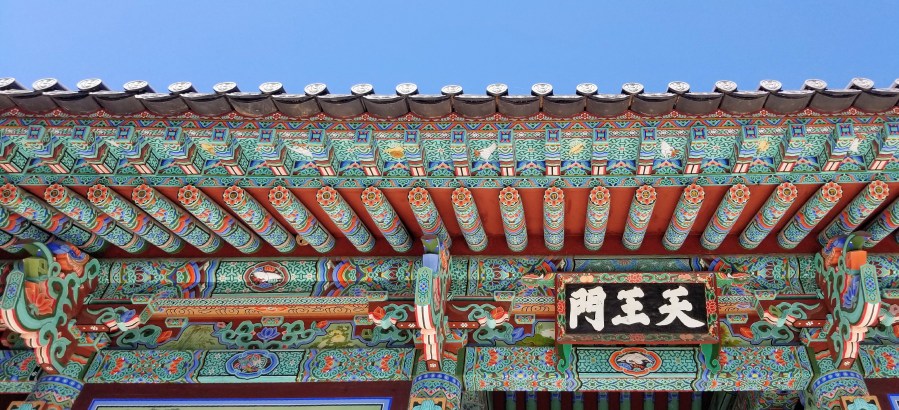
Beomeosa Temple Entrance 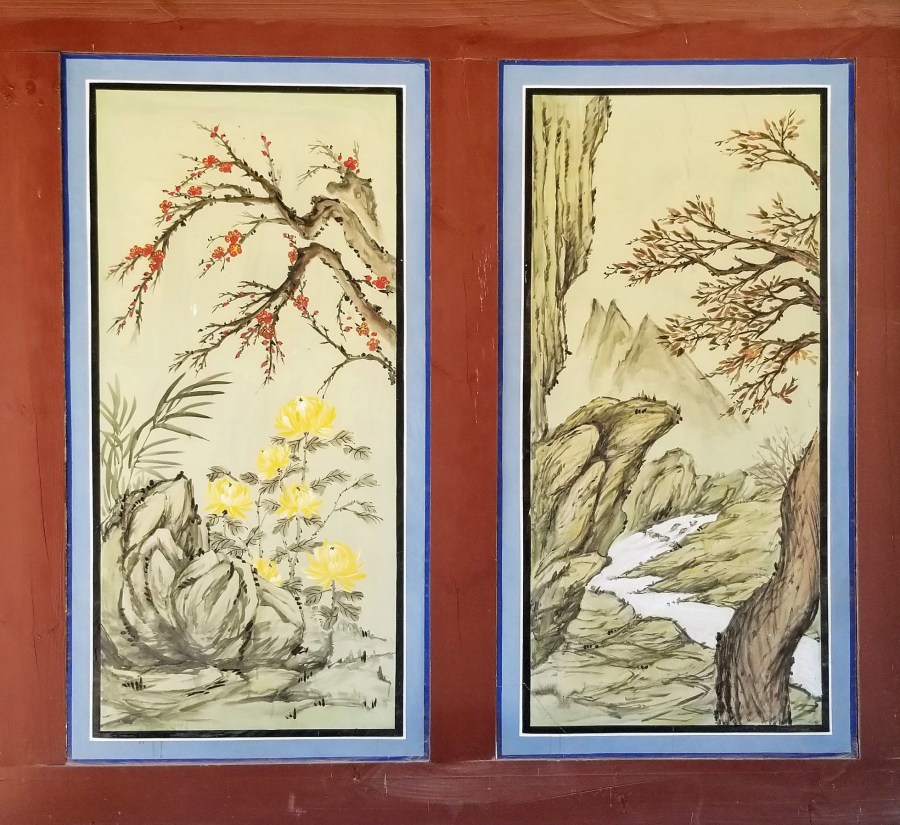
Beomeosa Temple Art 
Beomeosa Temple Art 
Beomeosa Temple Rooftop
Beomeosa is the most important temple in Busan, as it is one of the head temples of the Jogye Order of Korean Buddhism. It is also the largest temple in Busan, due in part to the 11 hermitages dotting the slopes of Mount Geumjeong around it.

Stone Lantern 
Stone Lantern Description 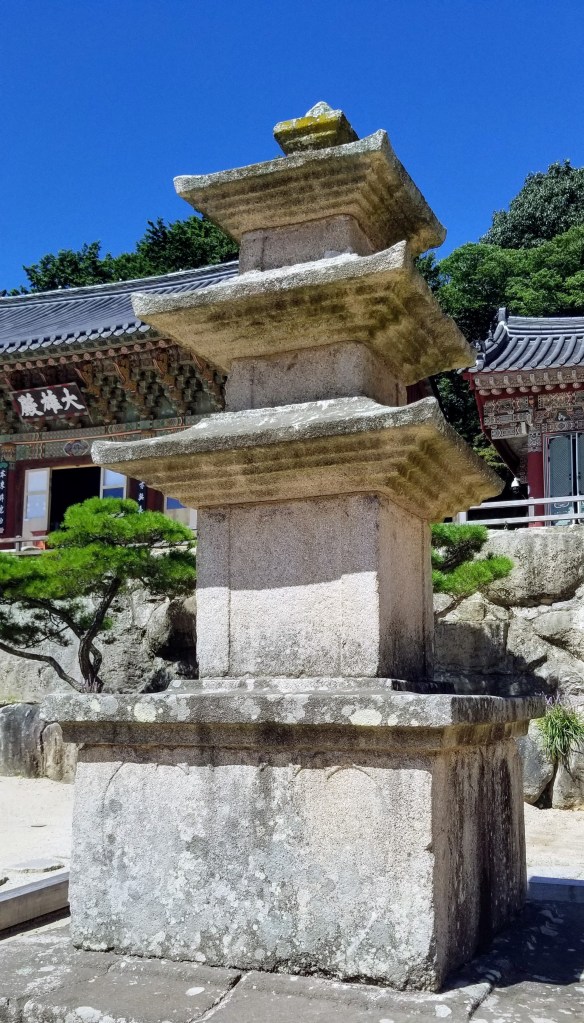
Three-Story Stone Pagoda 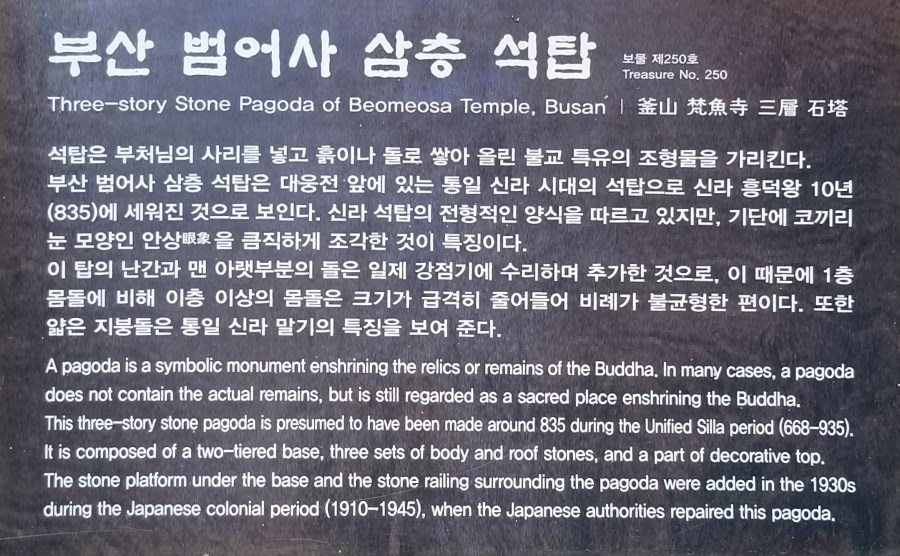
Three-Story Stone Pagoda Description 
Altar 
Gwaneumjeon Hall 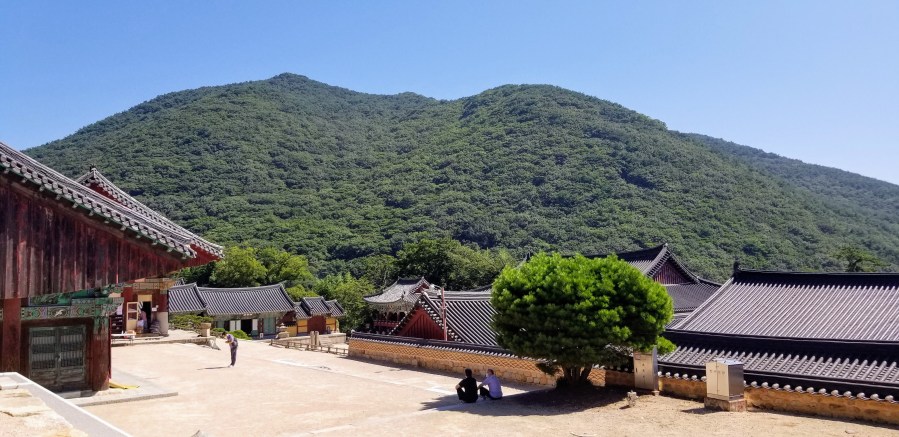
The view from Beomeosa 
Palsangjeon, Dokseongjeon, Nahanjeon Halls Description
Beomeosa is the only temple in Busan offering a temple stay program. During the temple stay, you can learn how to do Korean meditation and prostration, tour the temple grounds, make a beaded bracelet, dine on Buddhist vegetarian food, and chat with Korean monks for hours.
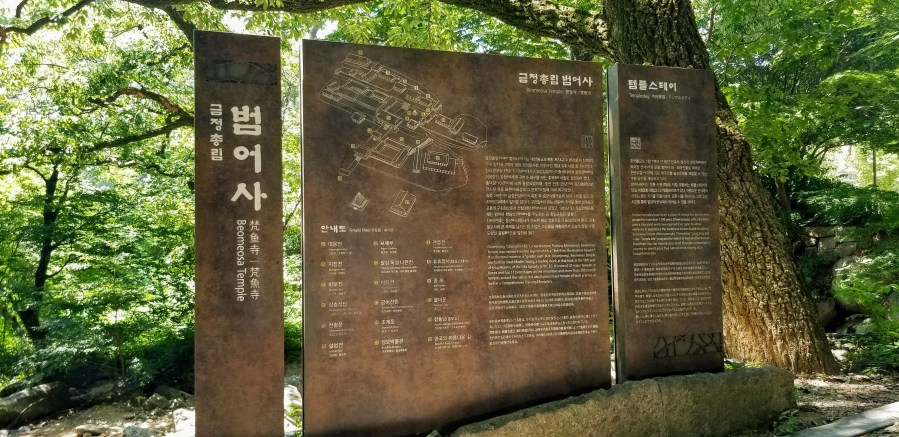
Busan Beomeosa Temple Sign 
Busan Beomeosa Temple 
Busan Beomeosa Temple Map 
Beomeosa Templestay 
Gregarious Wisteria Habitat Sign 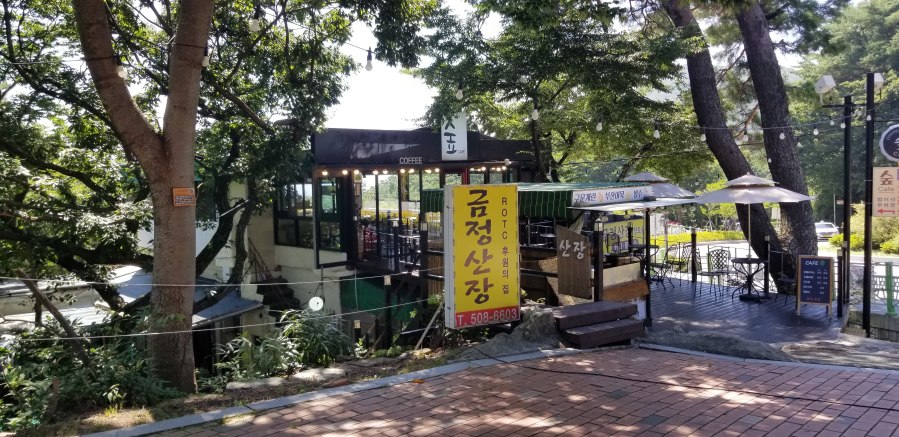
Little Cafe Outside of Beomeosa 
Little Cafe Outside of Beomeosa
Address: 250, Beomeosa-ro, Geumjeong-gu / 금정구 범어사로 250 금정산 범어사
Beomeosa Temple Website
Beomeosa Temple Stay Website
Samgwangsa 삼광사: Lantern Festival (Buddha’s birthday)
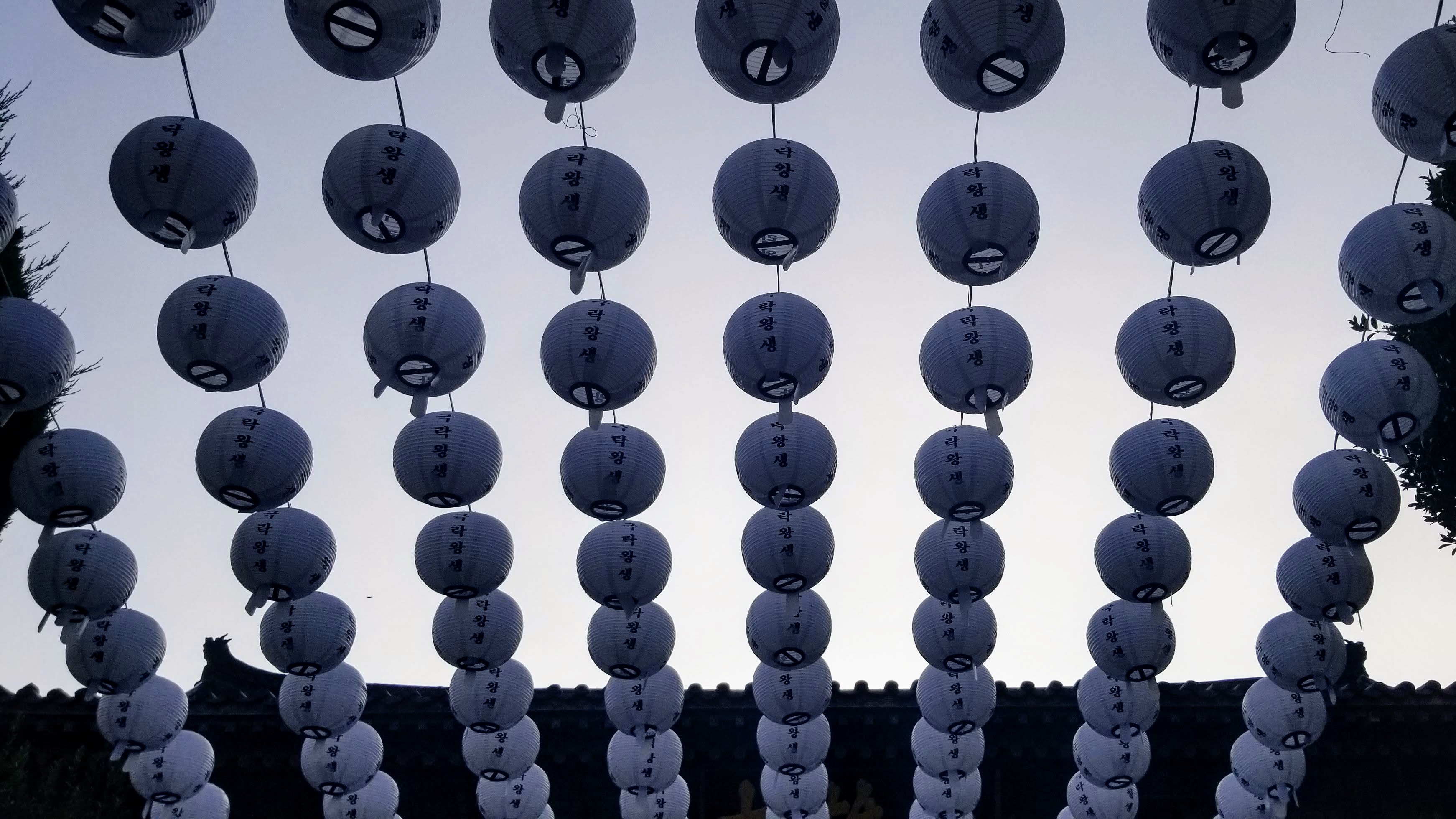
Every year on the Buddha’s birthday, temples across the country are decorated with thousands of paper lotus lanterns. Samgwangsa Temple in Busan hosts what is probably the most incredible display, with tens (or hundreds) of thousands of lanterns covering the temple’s various structures and forming a canopy over the enormous courtyard. The festival usually takes place in May, and the lanterns can be seen for about two weeks leading up to that date. However, you don’t have to wait for the Lantern Festival to visit Samgwangsa; the temple is beautiful to visit on any day of the year.

Lanterns
The icon for this temple is the chicken since it is said to have been the animal on the site when the temple was first founded.
Address: 77, Choeupcheon-ro 43 beon-gil, Busanjin-gu / 부산진구 초읍천로43번길 77
Seokbulsa 석불사

Seokbulsa from below 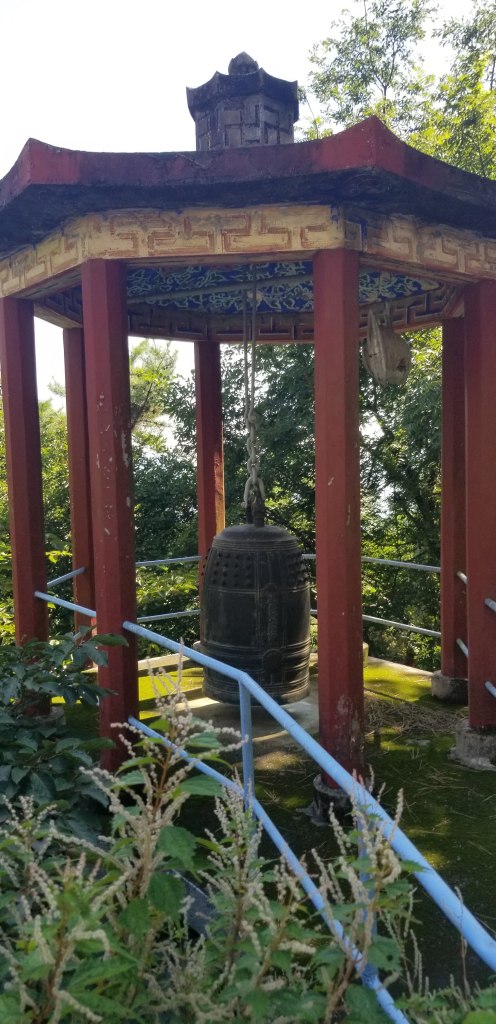
Seokbulsa Bell
If you want to get a little off the beaten track in Busan, then hiking to Seokbulsa is a truly rewarding experience. At the southern end of the same mountain group where Beomeosa is located, Seokbulsa is a much smaller and lesser-known temple.
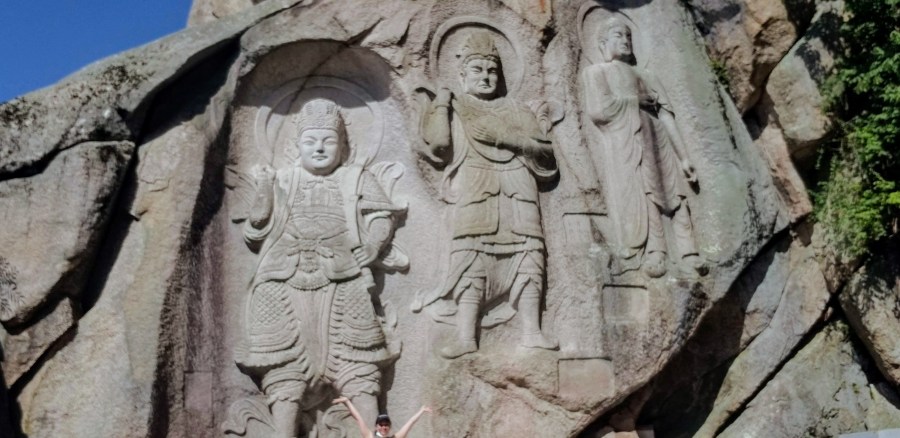
Seokbulsa Statues: Better Quality, Less Me 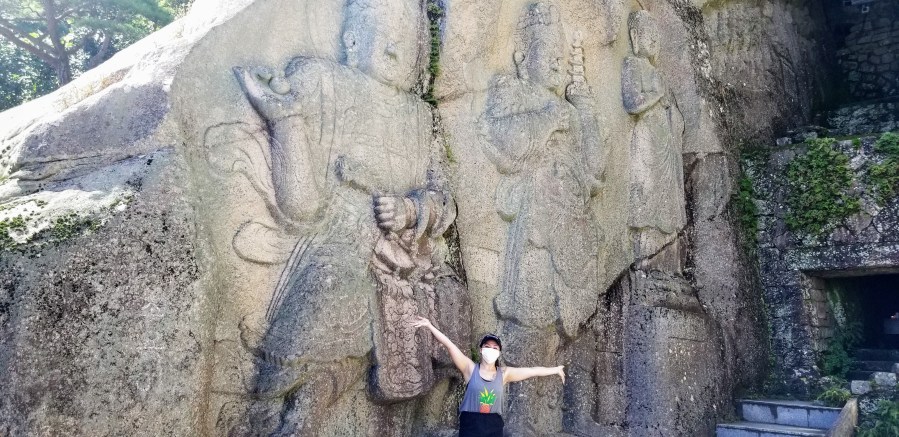
Seokbulsa Statues: More Me, Lower Quality 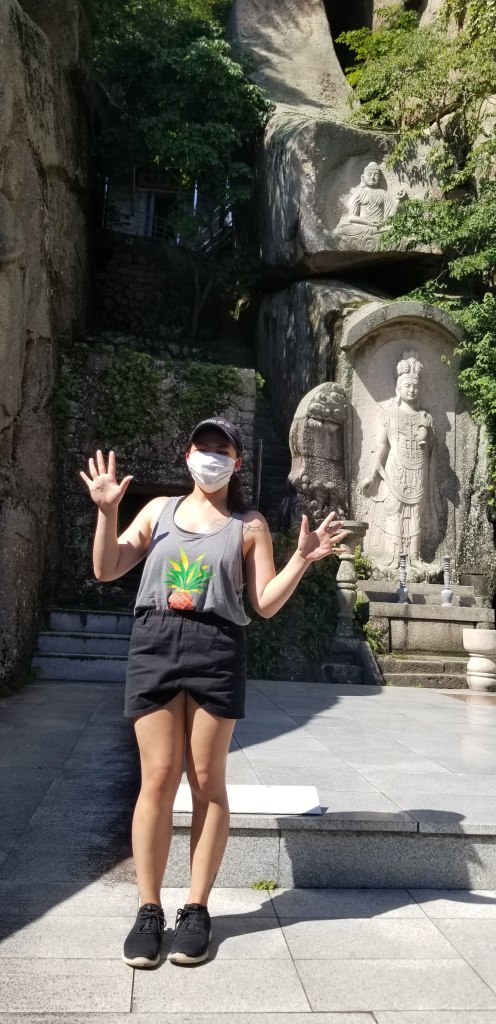
Seokbulsa Statues. Not including me. 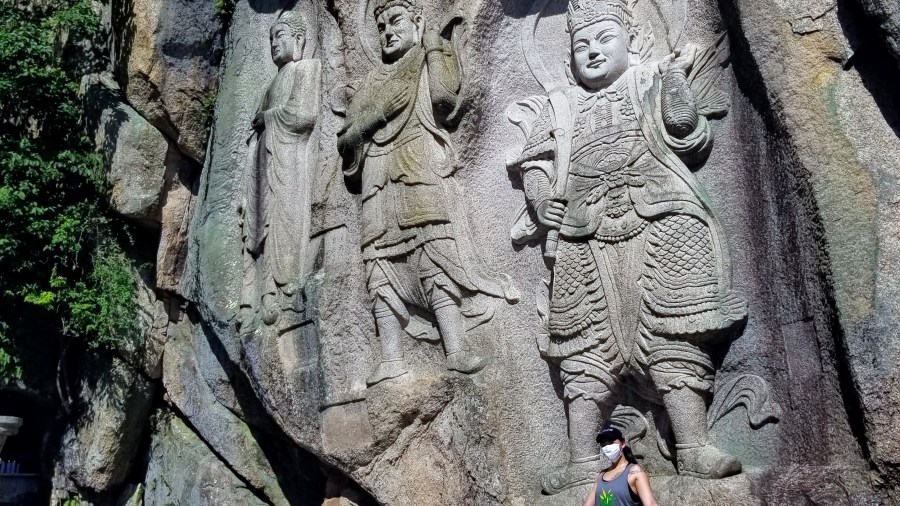
Seokbulsa Statues and me lol 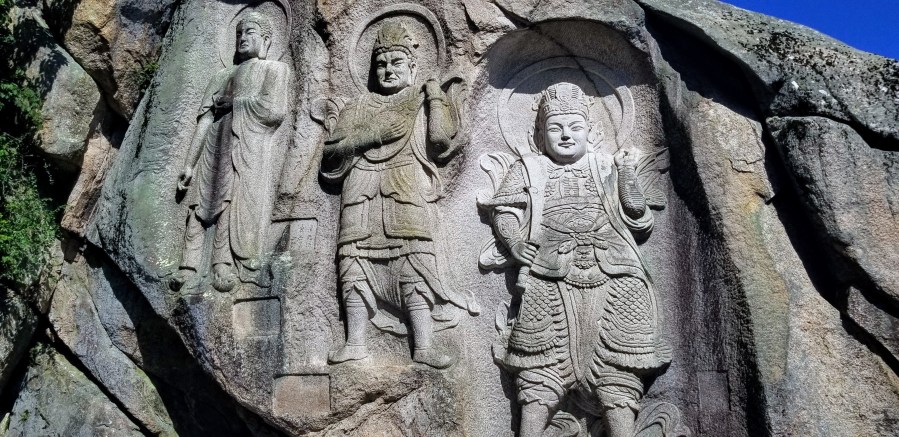
Seokbulsa Statues 
Seokbulsa Statues 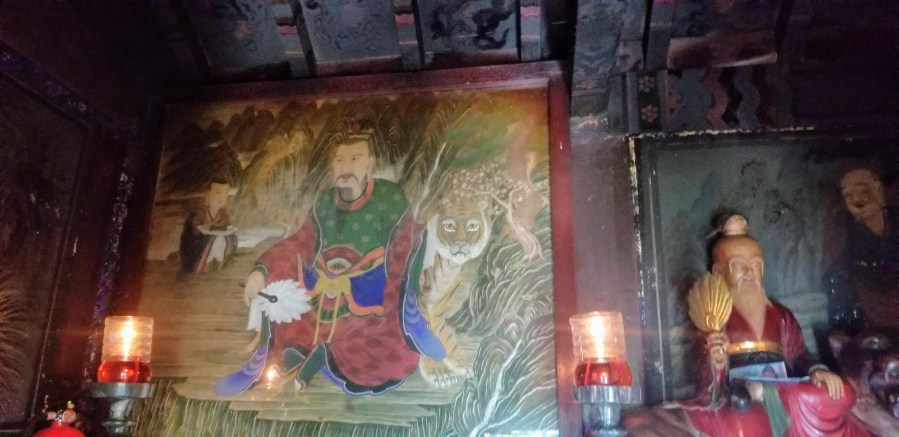
Seokbulsa: Altar 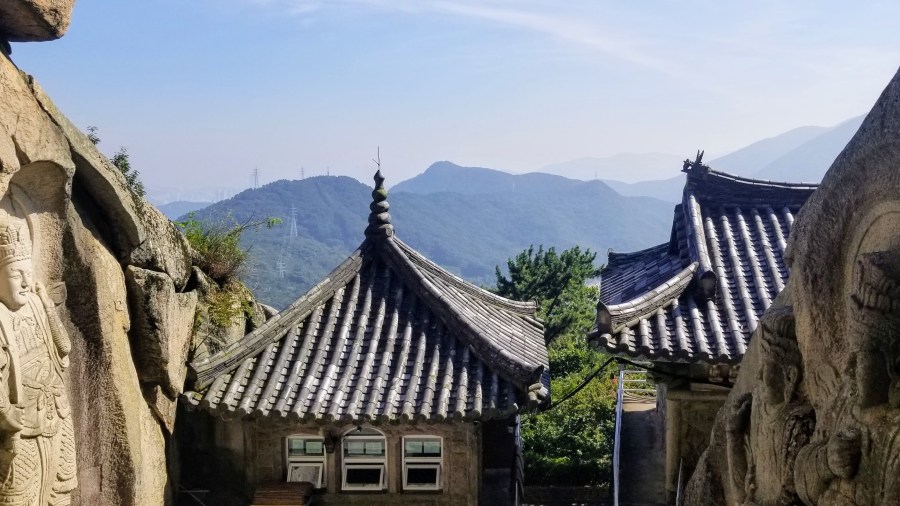
Seokbulsa: The View from Up Here 
Seokbulsa: Candles 
Seokbulsa Statues 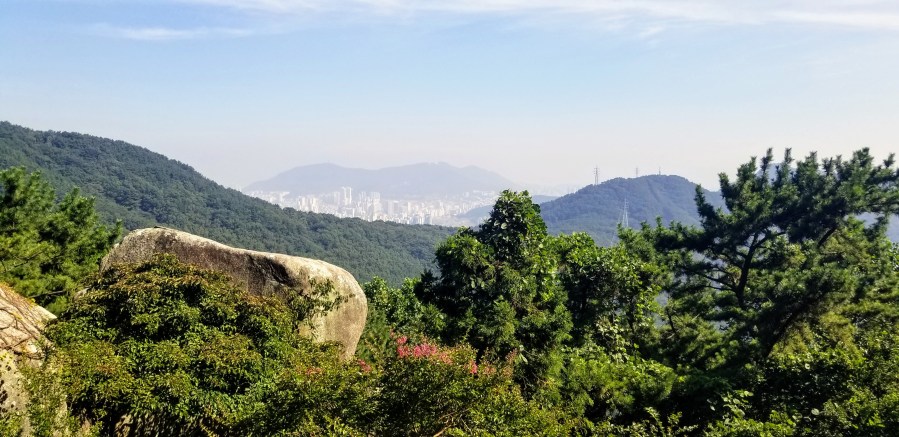
The View from Up Here
The main highlight of the temple is a hidden alcove in which 10-meter cliff walls are carved with towering Buddhas and temple guardians. Getting there is also half the fun, starting with a ride on the Geumgang Cable Car, followed by a three-hour return hike past Namun (South) gate, part of Geumjeongsan Fortress, the largest remaining city-fortress in South Korea.

Seokbulsa: Stone Pagoda 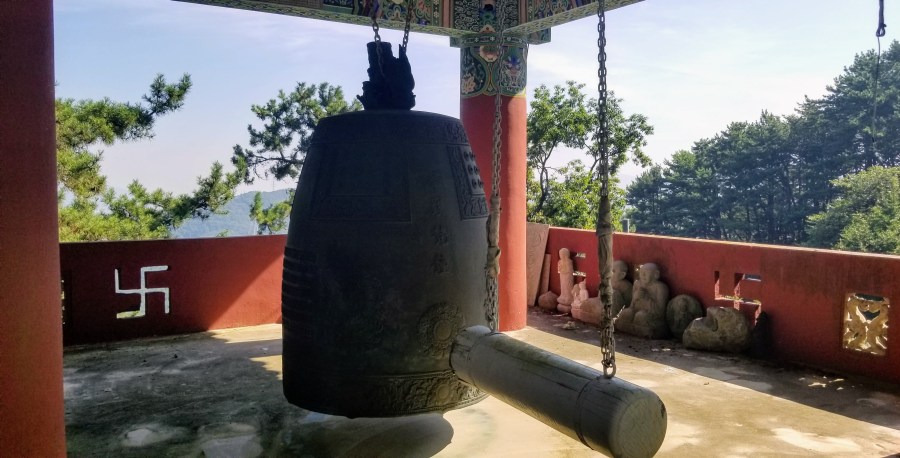
Seokbulsa: Bell 
Seokbulsa: Bell 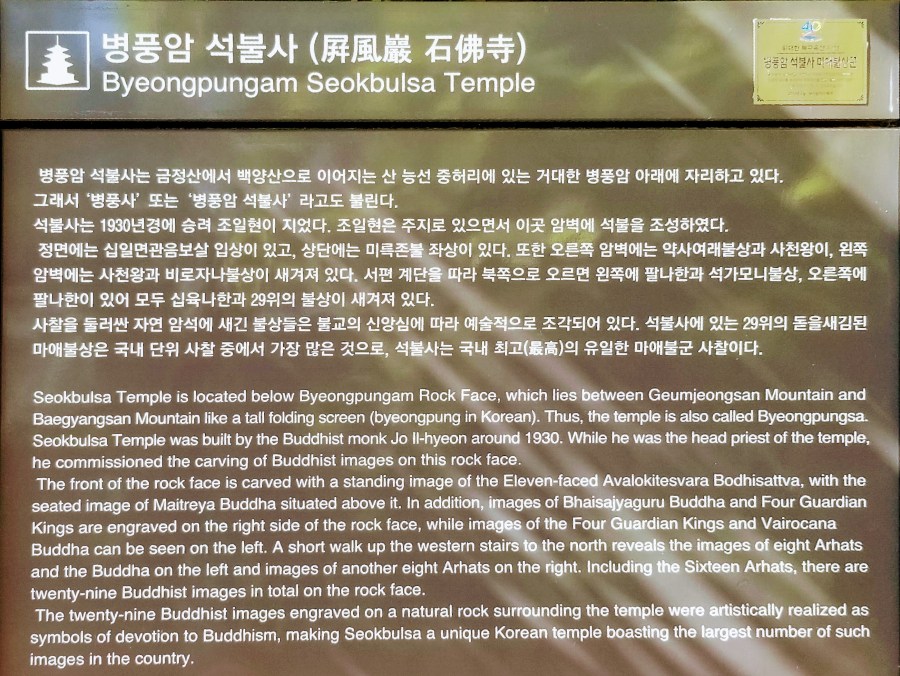
Seokbulsa Sign
Address: 143-79, Mandeokgogae-gil, Buk-gu, Busan / 부산 북구 만덕고개길 143-79
Seokbulsa Temple Website
Haedong Yonggungsa 해동용궁사, the Temple by the Sea
You’ll find tempestuous heaven at the Buddhist temple which sits calmly on cliff rocks overlooking the sea. It’s a favorite for photographers and looks as romantic as it sounds. On a normal day, Haedong Yonggungsa probably gets more visitors than the above three temples combined. This ancient temple now attracts masses of visitors who come to marvel at one of the country’s only temples by the sea. If you want to see the sunrise here, which is a popular thing to do, consider staying nearby.
Address: 86, Yonggung-gil, Gijang-gun, Busan / 부산광역시 기장군 기장읍 용궁길 86
Hours: Daily 05:00-Sunset
Haedong Yonggungsa Temple Website
Tongdosa 통도사
South Korea’s largest temple, Tongdosa, is so close to Busan that it deserves a mention on this list. Tongdosa Temple is one of Korea’s five “Palace of the Jewel of Nirvana” temples, where the relics of the Buddha substitute for a statue. Precept Master Jajang brought the relics, including part of the Buddha’s robes, from China and enshrined them (646C.E). Consequently, the temple represents the Buddha of Korea’s three Jewel Temples and it also is a Full Monastic Training Temple, with Yeongchuk Monastery.
Get there by taking the bus from gate 33-34 at Central Bus Terminal in the north of Busan. The ride takes 30 minutes.
Address: 108, Tongdosa-ro, Yangsan-si, Gyeongsangnam-do / 경상남도 양산시 하북면 통도사로 108
Hours: 00:00-24:00, Closed Mondays
Entrance Fee: Adult 3,000; Teenagers 1,500; Children 1,000
Tongdosa Temple Website
Tongdosa Temple Stay Website
Hikes, Parks, Landscapes, & Views
Taejongdae 태종대
Taejong-Dae park is known for its rocky cliffs and pine trees and has more than meets the eye. The views are spectacular, and there is a variety of sights to enjoy. The park occupies the southern end of Yeongdo Island and is accessed via a 4.3-kilometer loop road. It is named as a Busan monument and is the soul of the city. Taking a hike up to this cliffside lookout is a nice way to absorb nature, breathe in the salt air, and take in some temples. But when you get to the lighthouse, a stroll down to the rocky and watery edges below will find Sinseon Rock (named after gods and goddesses relaxing here). Among it, you will find many outdoor seafood tents selling fresh catch to your plate. Ajummas with large visors and long-sleeved shirts will hail to you to visit their restaurant area. Each vendor has their own area selling oysters and fish they’ve caught by the seaside and they’ll prepare a sashimi meal for you as you gaze languidly out to sea.
It’s possible to walk all of it, but most tourists hop on the convenient “Danubi Train”. The first two stop feature jaw-dropping coastal views, while the third takes visitors to a serene forest temple. Near the entrance to the park, seafood lovers can also make their way down to Gamji Beach, where dozens of stalls serve seafood from little tents with sea views. The park has a stunning view of the Busan coastline including the beautiful Yeongdo Lighthouse overlooking the sea. At the famous Sinseon Rock, there is a figure called Mangbuseok, named after the story of a woman who waited for her husband who had been taken to Japan.
Address: 24, Jeonmang-ro, Yeongdo-gu, Busan / 부산광역시 영도구 전망로 24 (동삼동)
Hours: 04:00-24:00
Restricted Mountain Areas: [Forest Fire Prevention Period] Feb 1 – May 15 / Nov 1 – Dec 15
Entrance Fee: Free
Taejongdae Website
MoonTan Road 문탠로드
Located on the Dalmaji-gil Road, Moontan Road is a walking trail with a meaning of easy stroll under the moonlight. With five different walking courses, it takes approx. 1 to 2 hours. Visitors can enjoy subsidy facilities including observatory, sports park, Dalmaji Eoul Madang, Haewoljeong Pavilion and more
Address: 120, Dalmaji-gil, Haeundae-gu, Busan / 부산광역시 해운대구 달맞이길 120 (중동)
Oryukdo Skywalk 오륙도 스카이워크
In recent years Oryukdo has become a major attraction among visiting tourists for its death-defying glass skywalk over the sea. The skywalk is only 15 meters, but the surrounding area and views are stunning, and getting that skywalk photo may be worth the trip for others. The old regional name for the area of Oryukdo Skywalk was Seungdumal, as the shape resembles a saddle, and it was originally called Seungduma as well as Jallokgae by residents and women divers. This is a glass walkway with a beautiful view of the ocean all around it. Visitors will be thrilled with the view of the waves while looking down through the transparent floor. The sea stretches out ahead of the skywalk as well as the best spot to see Daemado Island on sunny days.
The construction of Oryukdo Skywalk finished on September 12, 2012 at the Seungdumal area, which is regarded as the dividing point between the East Sea and the South Sea, and started operating on October 18, 2013, with the theme of “Walking over the sky.”
Iron columns were set up over a 35-meter-high coastal cliff, and a 15-meter glass bridge made of 24 glass plates and shaped like a horse’s hoof connecting the iron columns. The bottom of the glass was specially produced with four attached 12-millimeter glass pieces coated with a bulletproof film that has a thickness of 55.49 millimeters, making the structure quite safe and so you can see the dramatic cliff rocks and waves below.
Address: 137, Oryukdo-ro, Nam-gu, Busan / 부산광역시 남구 오륙도로 137 (용호동)
Hours: 09:00-19:00
Entrance Fee: Free
Oryukdo Skywalk Website
Cheongsapo Daritdol Observatory 청사포 다릿돌전망대
The newest of Busan’s three over-the-sea walkways, this 72.5-meter long, 20-meter high walkway is shaped like a pretty, blue dragon, stretches impressively over the East Sea, and people say it is especially lovely around sunset. Visitors are able to see the ocean under their feet from the transparent glass floor for the thrilling experience of walking on the sea.
Cheongsapo Daridol Skywalk opened in August 2017, located at one end of the beautiful Cheongsapo fishing village in Haeundae, Busan. Cheongsapo is so famous for its clam and seafood BBQ restaurants that it has been dubbed “Cheongsapo Seafood Town” or “Cheongsapo Clam Village.” The harbor also features a lovely pink lighthouse.
Just next to the entrance of the Cheongsapo Daridol Skywalk is the abandoned railroad of the Donghae Nambu Line used to run along the seashore. It provides a great photograph opportunity of the old railroad memories. Visitors can also dine at one of the many fresh seafood restaurants at Cheongsapo Village or chill out at one of its 2-3 storeys high cafes overlooking the sea beautifully.
Address: 3-9, Jung-dong, Haeundae-gu, Busan / 부산 해운대구 중동 산 3-9
Hours: Daily 09:00-18:00, Jun-Aug from 09:00-20:00
Entrance Fee: Free
Cheongsapo Daritol Observatory Website
Igidae Park 이기대
After andesitic volcanoes erupted 80 million years ago, the volcanic ashes and pyroclastics formed various rock formations. After many years of waves crashing on the rocks, the eroded sea cliffs, wave-cut platforms, and sea caves were formed to what is now called Igidae Park. Visitors can enjoy a coastal walking course that leads to Oryukdo Island as well as see various geological features and geomorphological landscapes.
Address: Yongho-dong, Yeonje-gu, Busan / 부산광역시 연제구 용호동
Igidae Park Website
Gwangandaegyo Bridge 광안대교
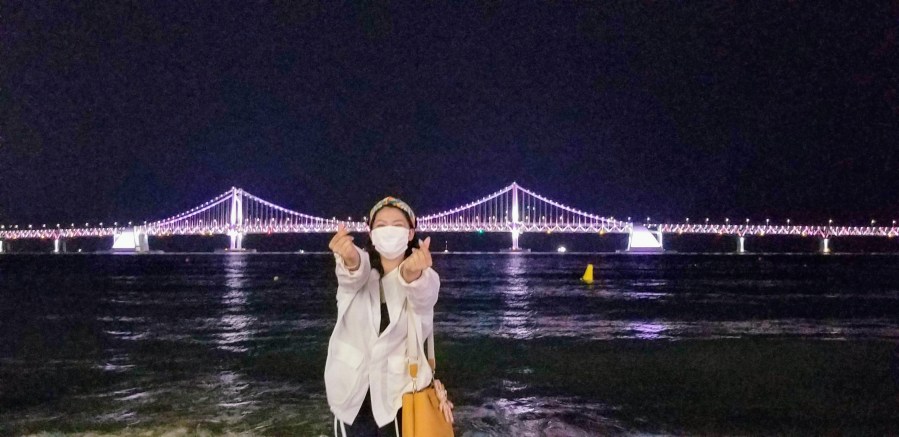
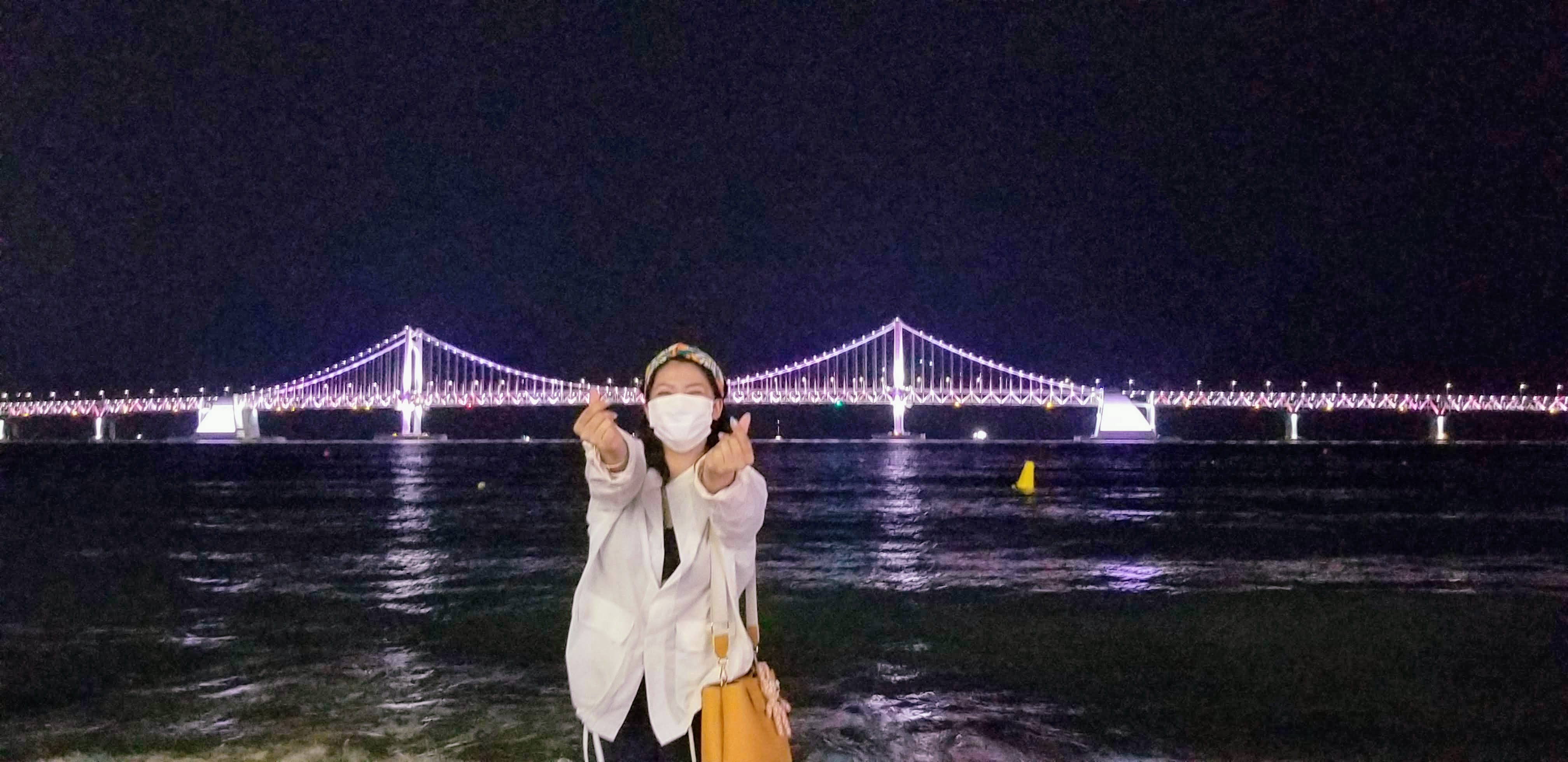
Busan Gwangandaegyo Bridge (Busan 66, also called Gwangan-daero) stretches over 7.4 kilometers from Namcheon-dong in Suyeong-gu, Busan to Centum City in U-dong, Haeundae-gu. It is the longest bi-level bridge over the ocean in Korea. In addition to providing a quick way to get around, the bridge offers breathtaking views of nearby attractions, including the endlessly unfolding ocean, Oryukdo Island, Hwangnyeongsan Mountain, Gwangalli Beach, Dongbaekseom Island, and Dalmaji Hill.
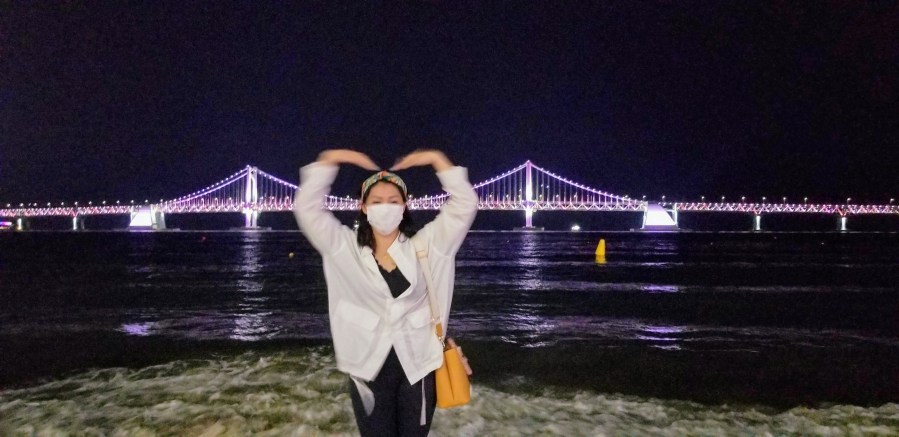
❤
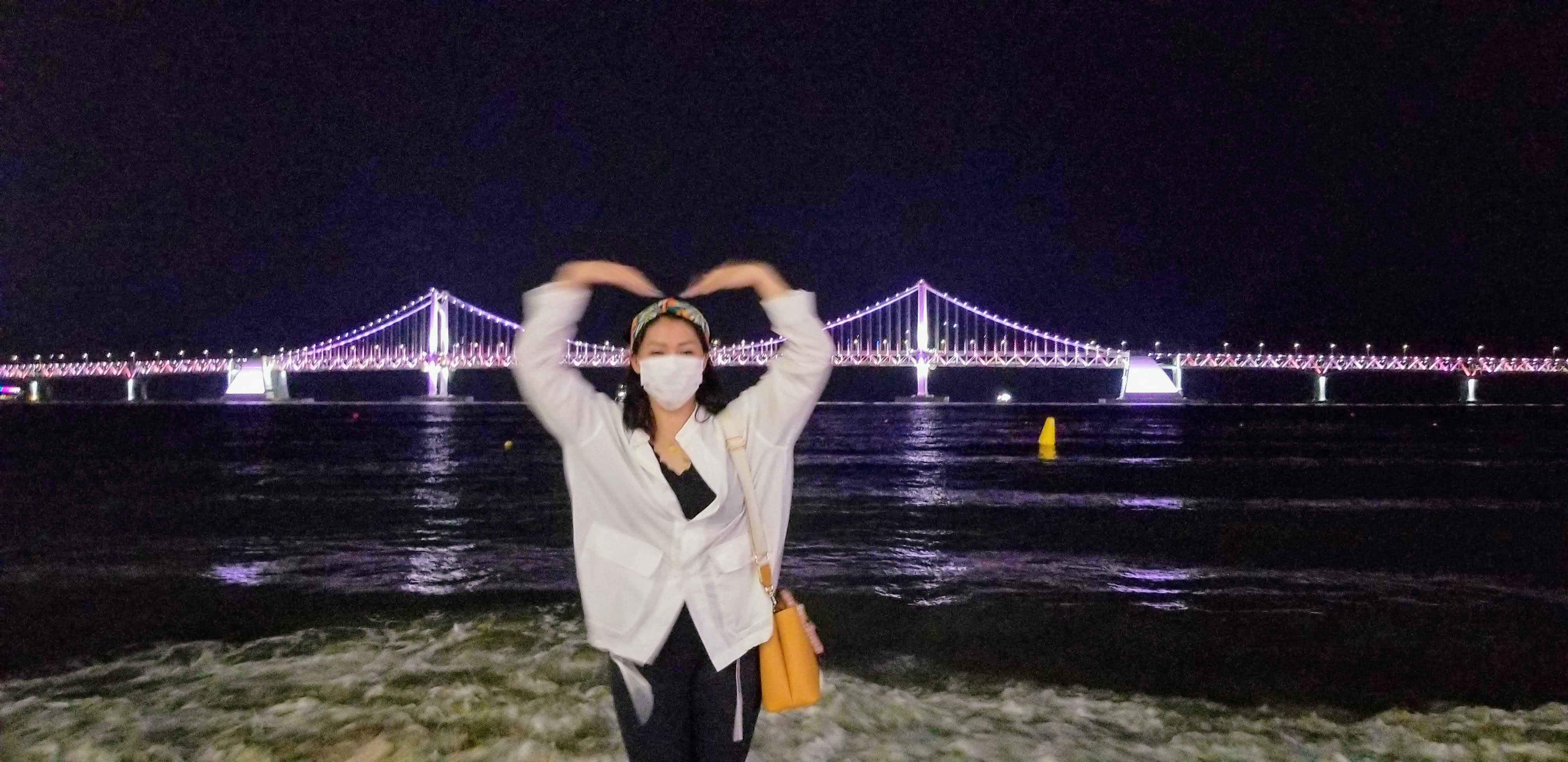
Equipped with thousands of LED lights, the bridge showcases a beautiful lighting exhibition at night that changes with the seasons. The bridge offers a majesty beauty when combined with nearby attractions during the day and a romantic atmosphere at night, attracting many residents and tourists.
❤ ❤
Address: 203, Suyeonggangbyeon-daero, Haeundae-gu / 해운대구 수영강변대로 203
Operating Hours: [Bridge Lighting]
Nov-Apr: Weekdays sunset-24:00 / Weekends sunset-02:00 next day
May-Jun & Sept-Oct: Weekdays sunset-01:00 next day / Weekends sunset-02:00 next day
Jul-Aug: Weekdays & Weekends sunset-02:00 next day
Gwangandaegyo Bridge Website
Yeongdo Bridge 영도대교
Yeongdodaegyo Bridge, connecting Jung-gu and Yeongdo-gu districts in Busan, was the first mainland-island connecting bridge in Busan. The bridge lifts to allow ships to pass between the south and north ports, rising anywhere from two to seven times in one day. When the bridge was first constructed, many people would gather to watch the strange spectacle of a bridge rising up to point to the heavens, and even now, it has become a famous landmark of Busan.
The bridge itself is something of a tourist attraction, as it is the first bascule bridge in Korea (dating to 1934) and first one connecting the mainland to an island. If you are lucky, you may see the bridge being lifted up to allow ships to enter the Busan Port. If you walk across Yeongdo Bridge, which connects Nampodong to Yeongdo Island, you can enjoy magnificent views, especially of the front of the massive Jagalchi Market.
Address: 46, Taejong-ro, Yeongdo-gu, Busan / 부산광역시 영도구 태종로 46 (대교동1가)
Hours: [Bridge Lift] Daily 14:00-14:15
Yeongdo Bridge Website
Hwangnyeongsan and Geumnyeonsan Mountains 황령산 & 금련산
Spanning three districts between Central Busan and Gwangalli Beach, Hwangnyeongsan and connected Geumnyeonsan Mountains offer hiking trails and lookout points with some of the city’s most impressive views. Hwangnyeongsan Mountain offers a lush green forest easily accessible from downtown Busan. Geumnyeonsan Mountain is located in the heart of Busan. Surrounded by a wonderful natural landscape, Geumnyeonsan is a place to relax. The mountain is popular for hiking, as well as taking in the nightscape. The mountain stretches across Busanjin-gu, Nam-gu, and Suyeong-gu districts, and with an altitude of 427 meters, it is the second tallest mountain in the Geumnyeon Mountain Range. Despite this distinction, the summit can be reached after a two to three-hour hike. Choosing which mountain trail to take depends on the transportation options available.
Dalmaji Road: Cherry blossoms 해운대 달맞이길
Called Busan’s Montmartre, Dalmaji-gil Road is famous for its views of the blue ocean, white sandy beach, Camellia forest, and pine tree forest, creating one of Busan’s eight scenic sites. Haeundae Dalmaji Hill and the moon seen from Cheongsapo are added to the eight scenic sites for their beautiful ambience.
If you happen to be visiting Busan during the cherry blossom season (late March to early April), one of the best places in Busan to see cherry blossoms is Dalmaji -Gil, near the coast between Haeundae and Songjeong beach. The neighborhood around winding Dalmaji road is filled with an impressive number of cherry blossom trees, including cafés with views of the flowers. Even outside of the cherry blossoms season, it’s a lovely area for a romantic stroll with many pine trees and nice sea views.
Address: 190, Dalmaji-gil, Haeundae-gu, Busan / 부산광역시 해운대구 달맞이길 190 (중동)
Haeundae Website
Geumgang Park Ropeway and Geumjeong Fortress 금정산성
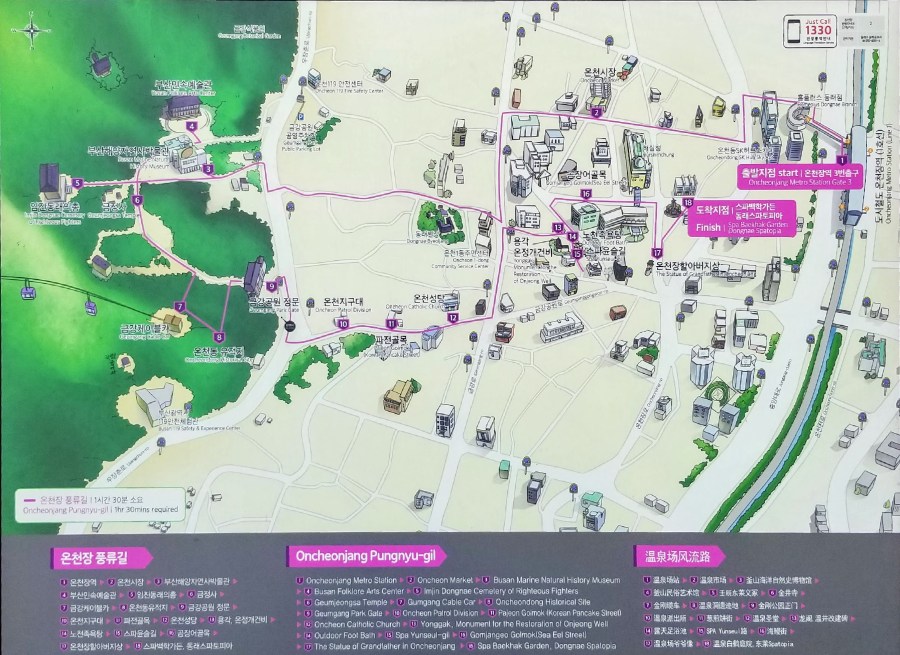
Busan Tour Map 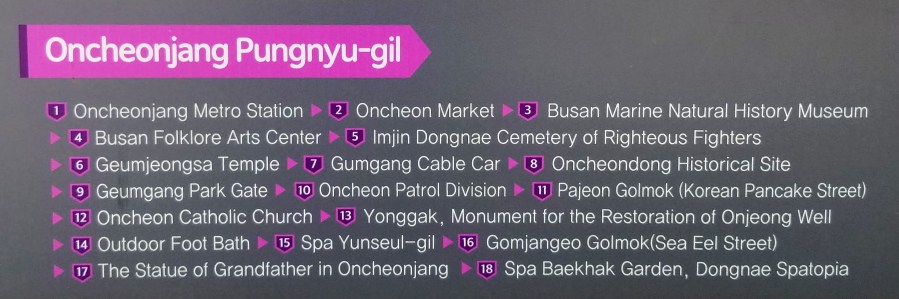
Busan Tour Map Specifics 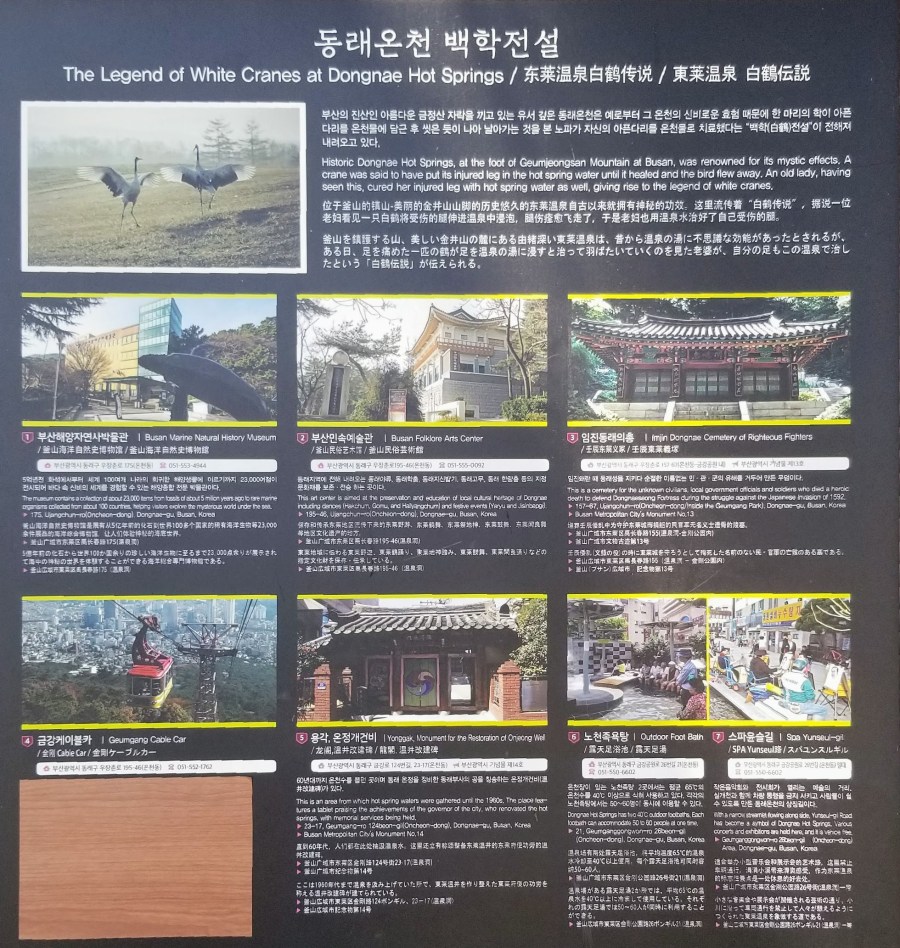
Busan Tour Map Highlights 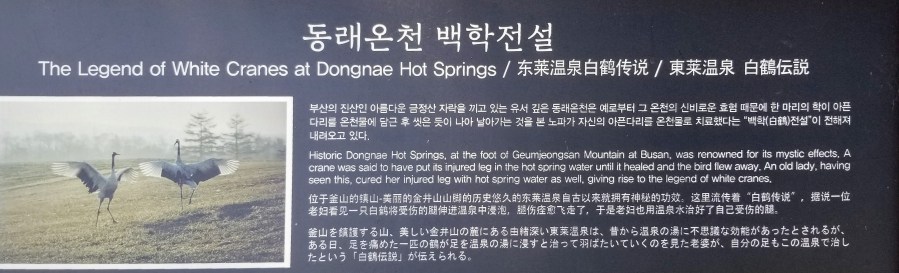
Legend of the White Cranes at Dongnae Hot Springs
In Northern Busan, the best views to be had are from Geumjeongsan (Mt. Geumjeong), the tallest mountain in Busan, at 801.5 meters. The best way to get up there is by riding the Geumgang Park Ropeway.
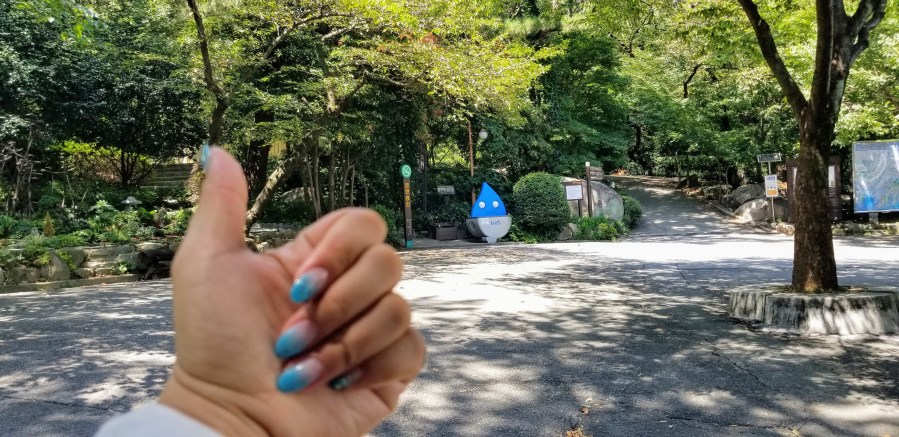
Geumjeong Mountain Water Station 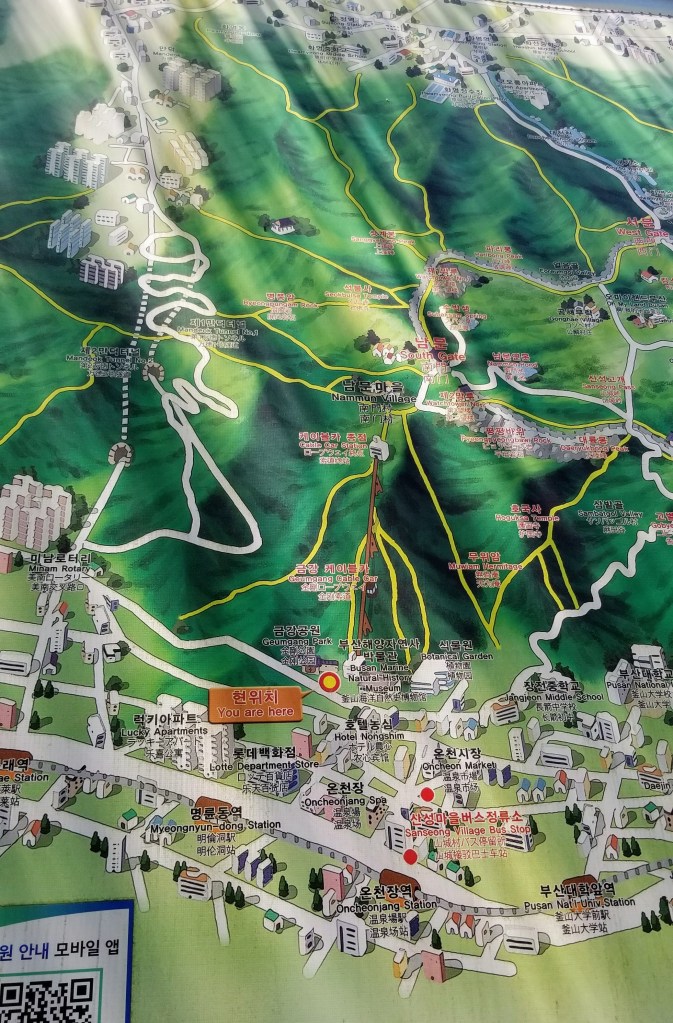
Geumjeong Mountain Map 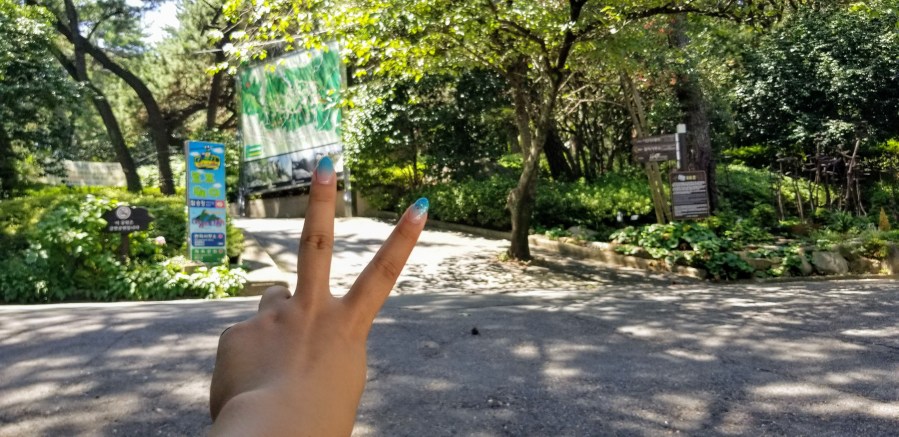
Geumjeong Mountain 
Geumjeong Mountain whoops haha 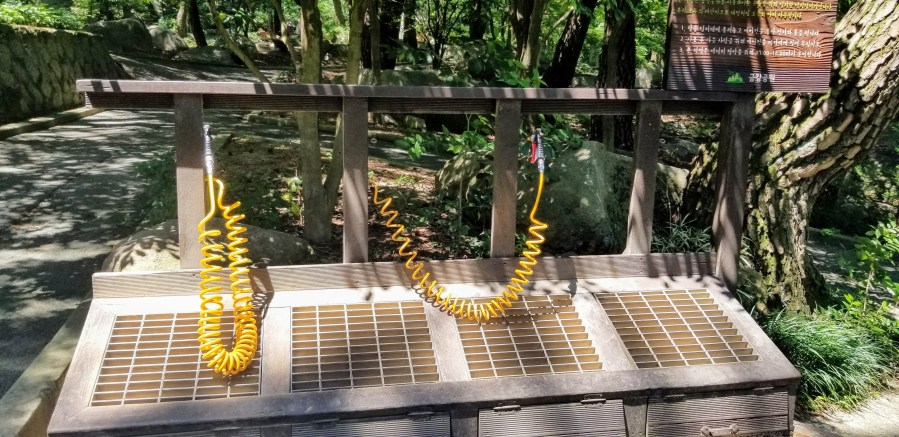
Geumjeong Mountain Air Hose 
Cable Car Prices (August 2020) 
Cable Car Ticket
The Geumgang Park Ropeway (Cable Car), located inside Geumgang Park is the longest ropeway at 1,260m in Korea. It started operation in September 1966 and has been operated by the private sector since 1972. The ropeway will bring visitors to the summit, unfolding an expansive view of the city and mountain ranges beyond in the 6 minutes ride. At the summit of Geumjeongsan, there are hiking trails leading to watchtowers, Geumjeongsanseong Fortress, Seokbulsa Temple, Geumjeong Fortress (the largest remaining city fortress in South Korea), as far as Beomeosa Temple, and foot of the mountain. Alternatively, one can take the ropeway back to Geumgang Park. Besides the ropeway, there are other attractions one can explore at Geumgang Park like Geumgang Botanical Garden, Busan Marine Natural History Museum and Busan Folk Art Museum.
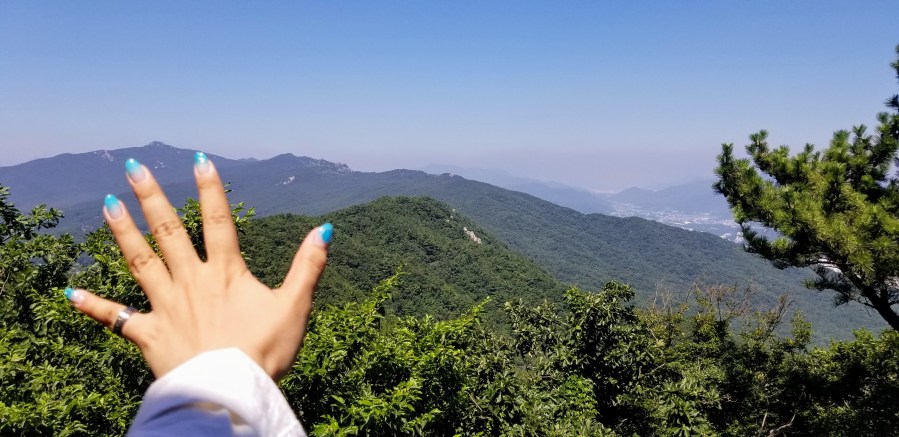
Geumjeongsanseong Hike 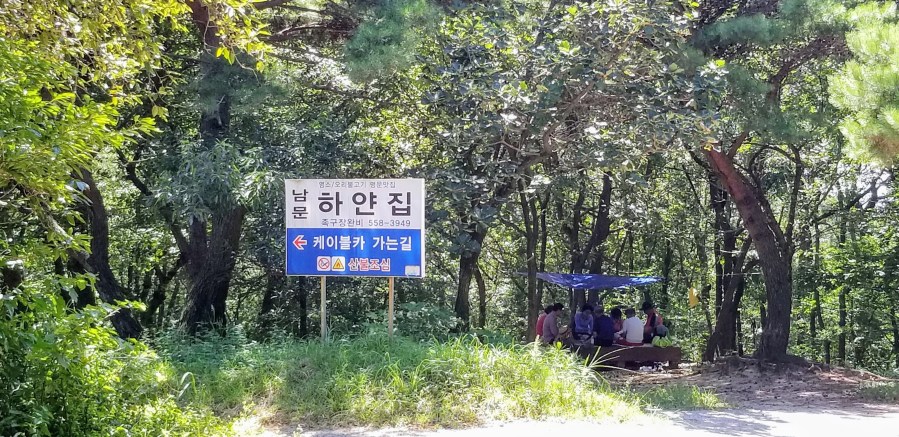
Geumjeongsanseong Pals 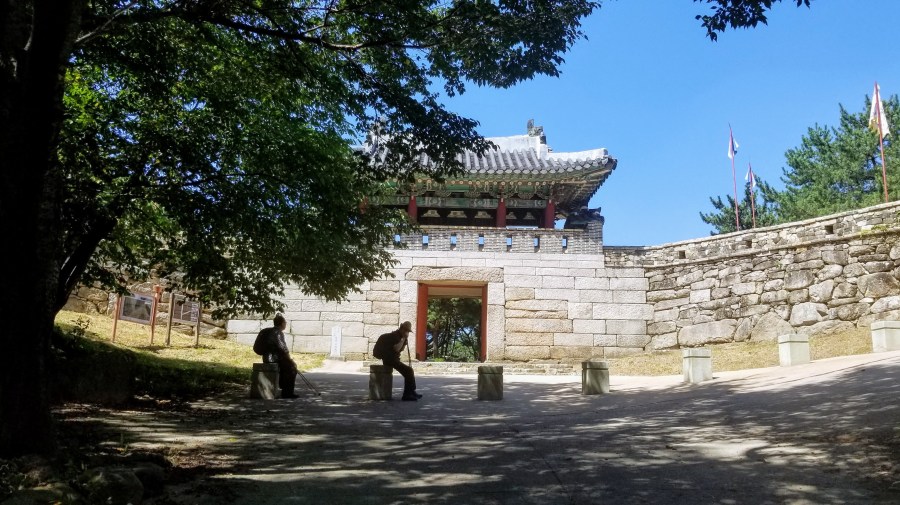
Geumjeongsanseong Fortress 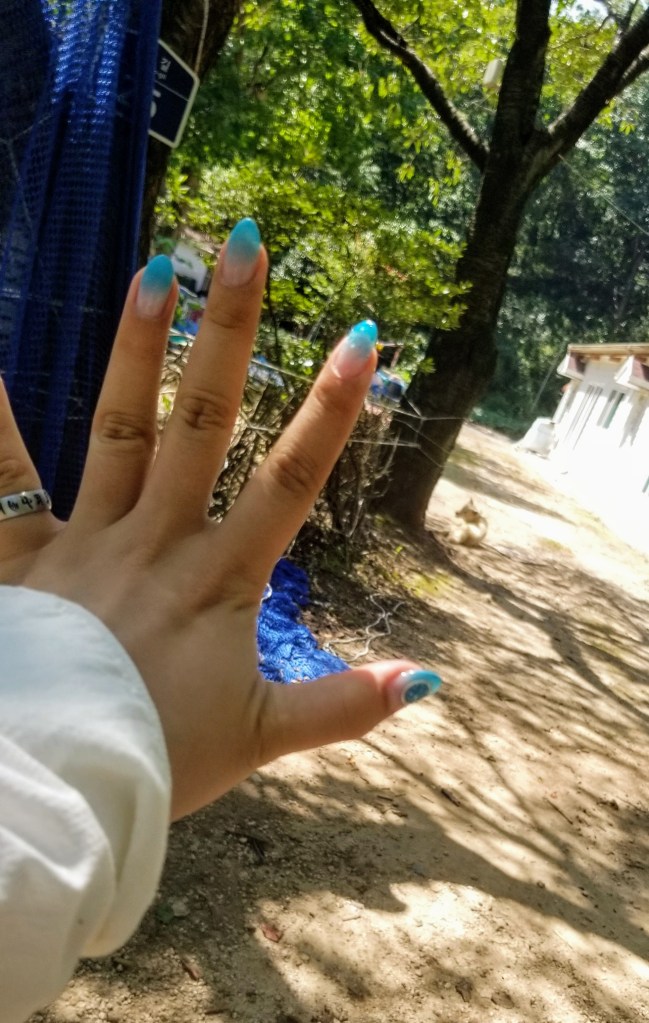
Geumjeongsanseong Dog 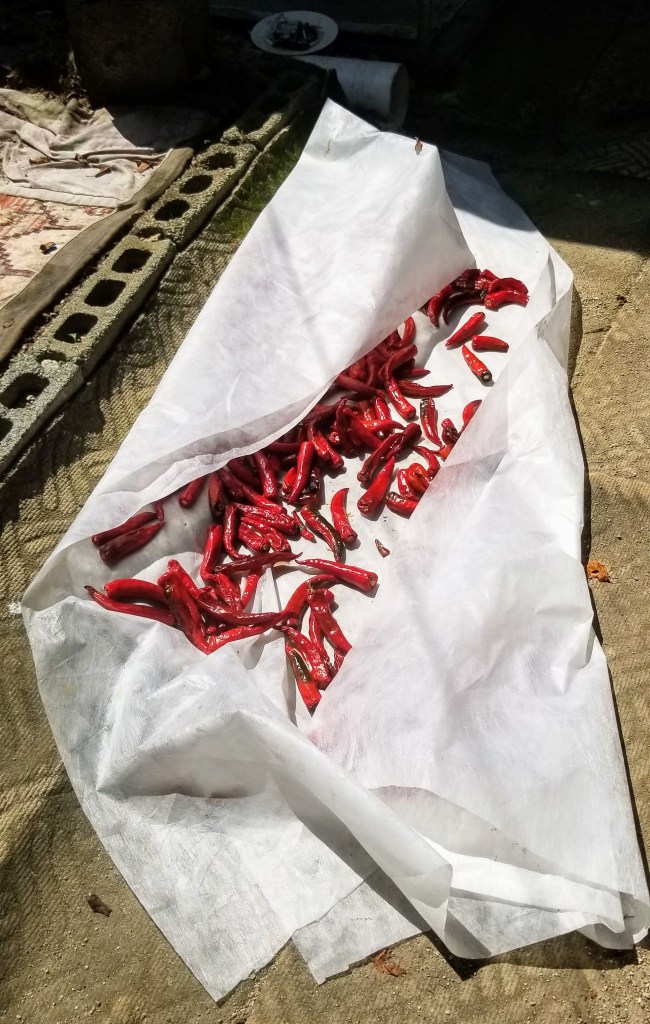
Red Hot Chili Peppers 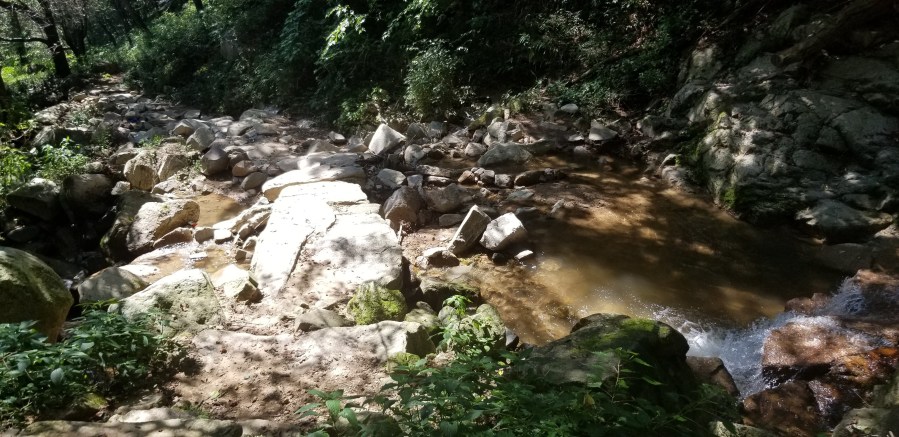
Stream Pals
Address: 155, Ujangchun-ro, Dongnae-gu, Busan / 부산광역시 동래구 우장춘로 155
Geumgang Park Ropeway Hours: 9:30-18:00. Every 20 mins, 6 mins ride.
Geumgang Park Ropeway Fee: Round-Trip (Adult) 9,000; One-Way 6,000
Geumgang Park Website
Choryang Ibagu-Gil & Sanbok Road 초량 이바구길 & 산복도로
Located near Busan Station, Choryang Ibagu-gil street was formed when people started building houses on top of the hill during the time of poverty. An observatory, Ibagu Archive Center, Yu Chi-hwan Postbox, and other places perfect for photos can be seen along the road leading up to the hilltop. Atop the hill, a wide road known as the Sanbok Road features an open view of Busan’s downtown within sight. The night scene is especially beautiful from this road, as the lights from the neighborhood twinkle and gleam as the surrounding area gets darker.
For a pretty unique view over the city center’s rooftops and the Busan Port, especially at night, walk up the winding road to these two streets. There are several lookout points, colorful wall paintings, and artworks along the way.
Address: 부산 동구 초량동, 산복도로
Citizen’s Park: Skylight Waterfall 부산시민공원
Enormous, 133-acre Citizen’s Park is the largest park space in the Busan city center. Once a Japanese then American army base, it has now been converted into a sprawling park featuring numerous ponds, squares, performance venues, water fountains, gardens, and over 1 million trees.
One feature that stands out is the 25-meter Skylight Waterfall, an artificial waterfall. The waterfall runs for an hour at 12:00, 15:00, 18:00, and 21:00 on weekdays and 10:00, 12:00, , 14:00, 16:00, 18:00, and 20:00 on weekends between April and October.
Address: 73, Civic Park-ro, Busanjin-gu, Busan 47197 / 부산 부산진구 시민공원로 73
Hours: 05:00-24:00
Citizen’s Park Website
The Bay 101 더베이101
The Bay 101 is a luxury public yacht club & marine center that draws droves of tourists and photographers for its unbelievable views across the water at a wall of skyscrapers in Haeundae district, especially at night. The center includes multiple upscale restaurants, both indoors and outdoors, and is a starting point for luxury cruises around Busan. It’s free to enter and enjoy the view.
Address: 52, Dongbaek-ro, Haeundae-gu, Busan / 부산광역시 해운대구 동백로 52 (우동)
The Bay 101 Website
Beaches
Haeundae Beach 해운대해수욕장
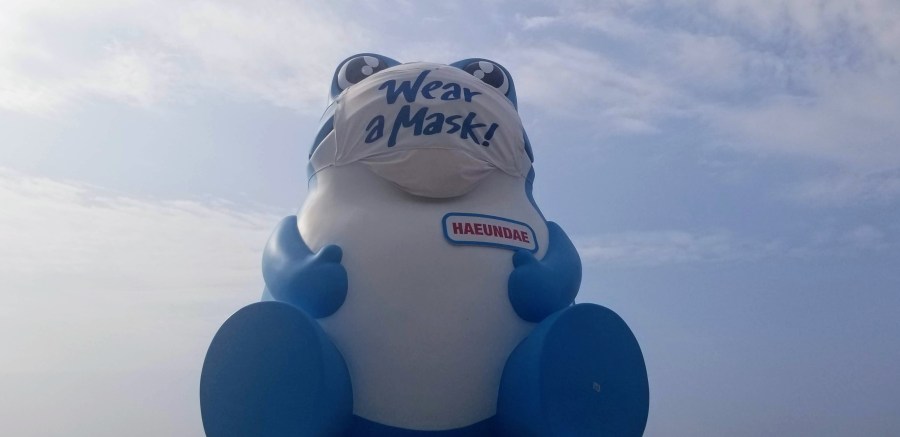
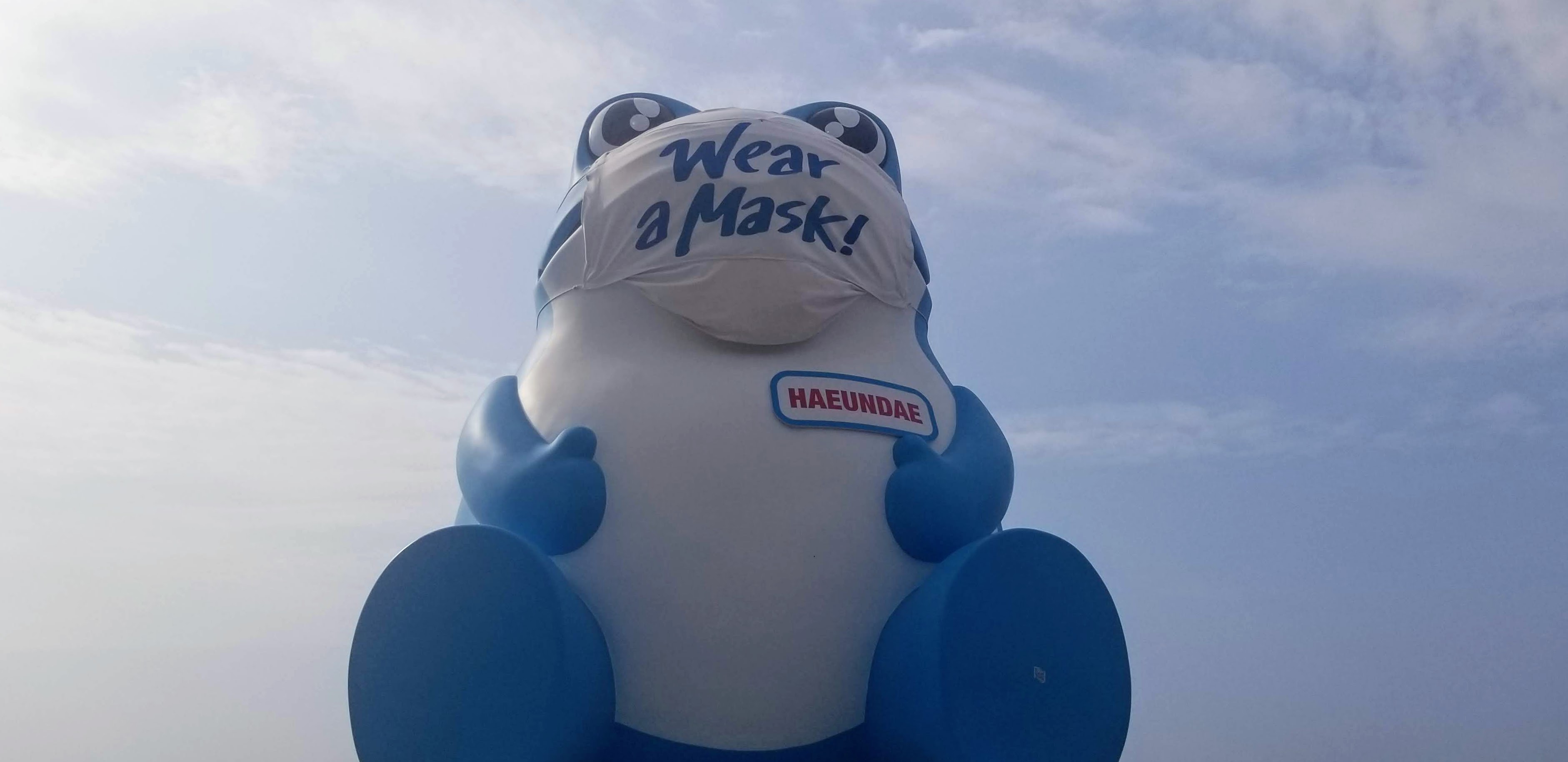
Jinro Frog: Wear a Mask!
Haeundae is generally recognized as South Korea’s most famous beach. The insanely long (1.5 km), curving stretch of sand can pack in 120,000 beachgoers, which won’t feel like an exaggeration if you visit in summer.
Haeundae Beach, that same morning 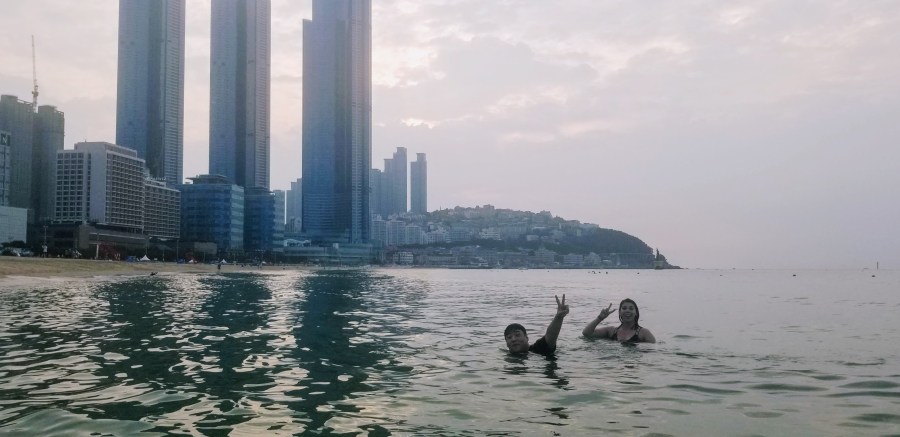
Haeundae Beach, new pals 
A fun morning. I’m the one in the white on the right. 
I made some amazing friends.
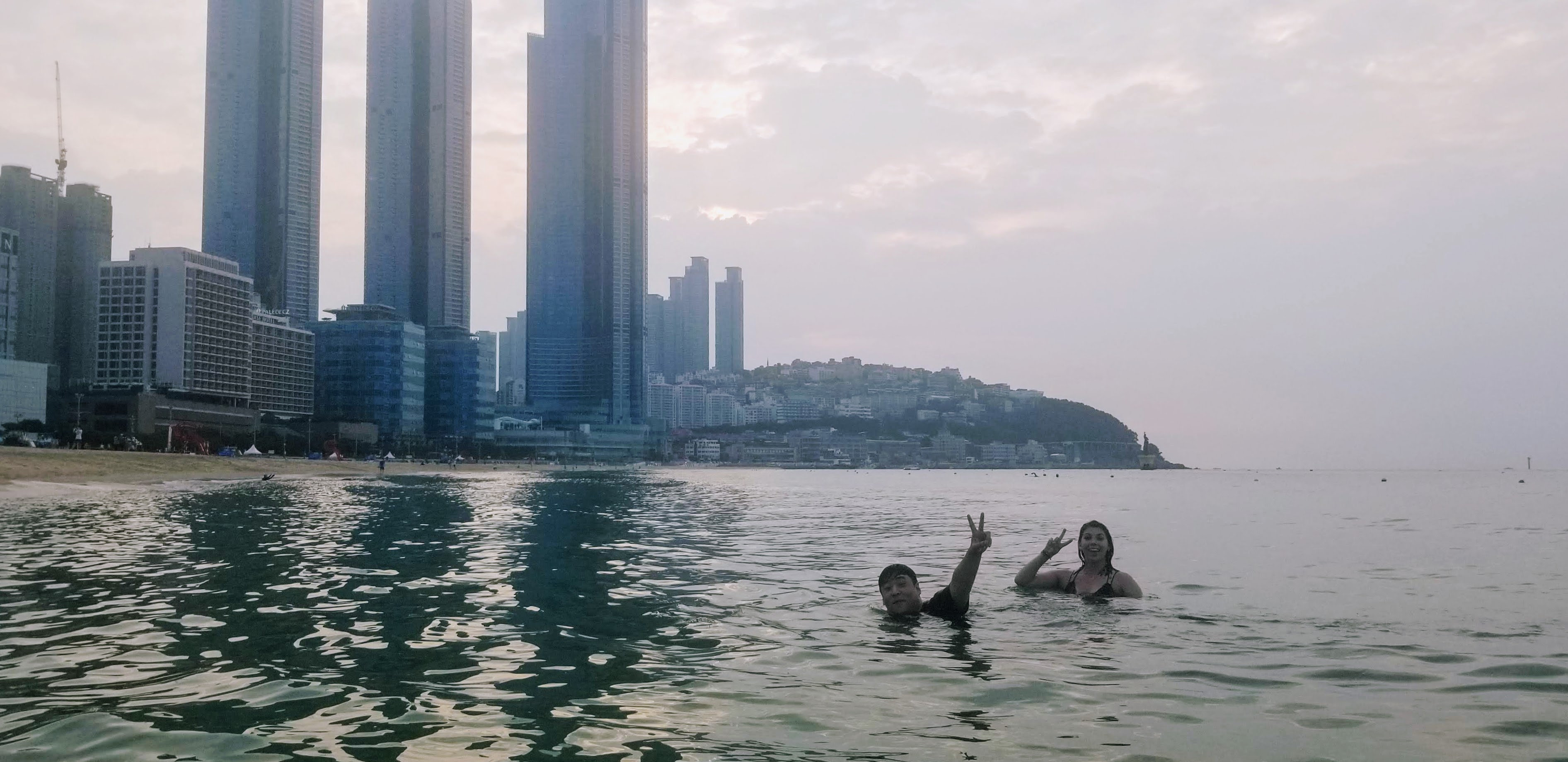
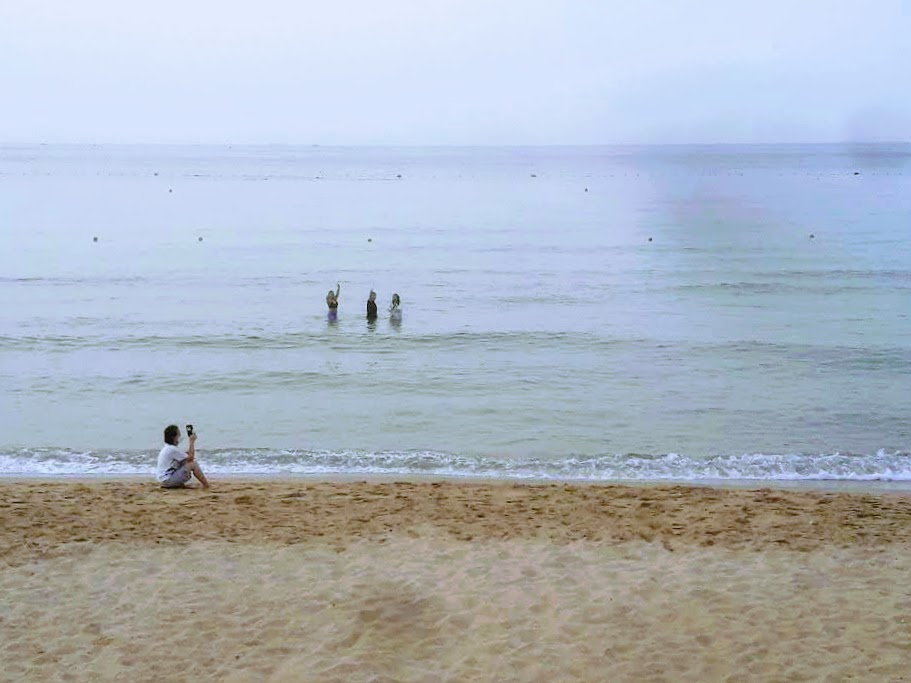
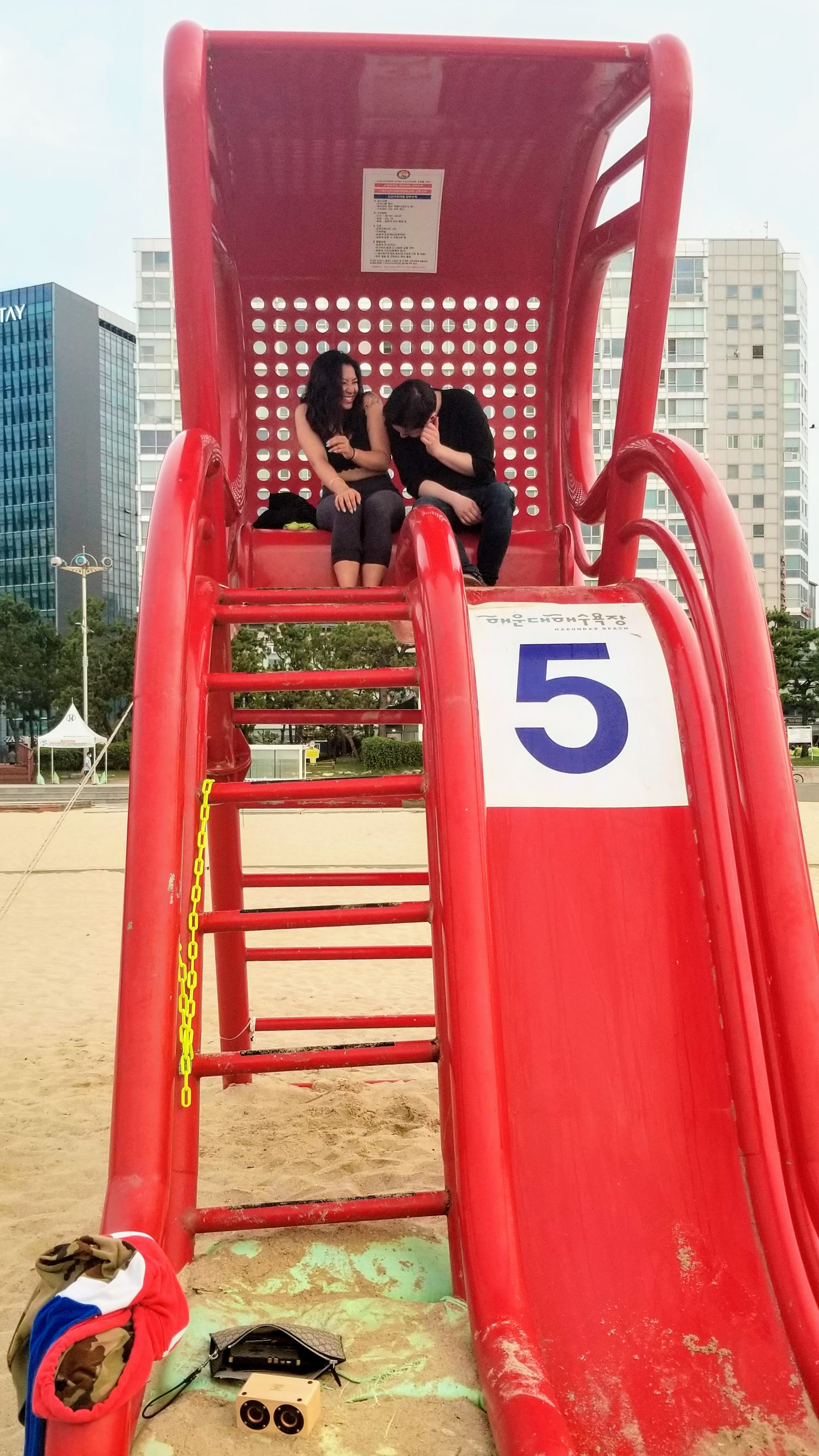
Even in winter, when you can’t swim, the beach is still quite beautiful. The neighborhood around Haeundae houses the Sea Life Busan Aquarium, some of the city’s best luxury resorts, numerous cafés and eateries, museums and art galleries, and the Haeundae food market. You can even go for a full-on spa treatment!
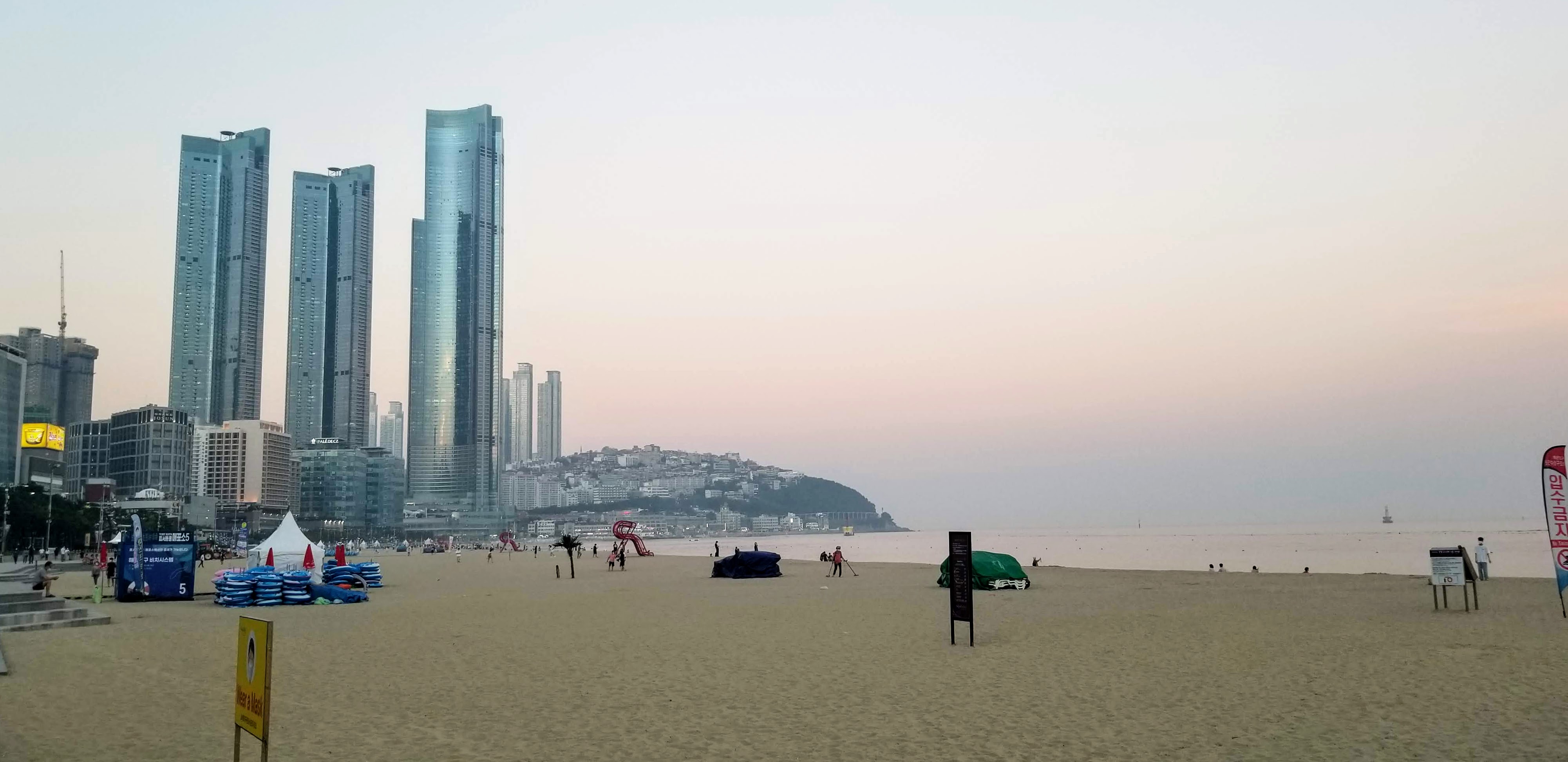
On a nice day, Haeundae Beach strikes a nice balance of casual beach chillaxing and people-watching. Young couples stroll the boardwalk fashioning trendy outfits from the Korean version of couples’ Vogue – heels, man-purses, and sportcoats. It’s very Seoul, but ala beach. All around, you see family beach picnics, frisbee playing, and beach volleyball. Haeundae is also a popular place for expats to live and the location of many festivals.
Near a cafe 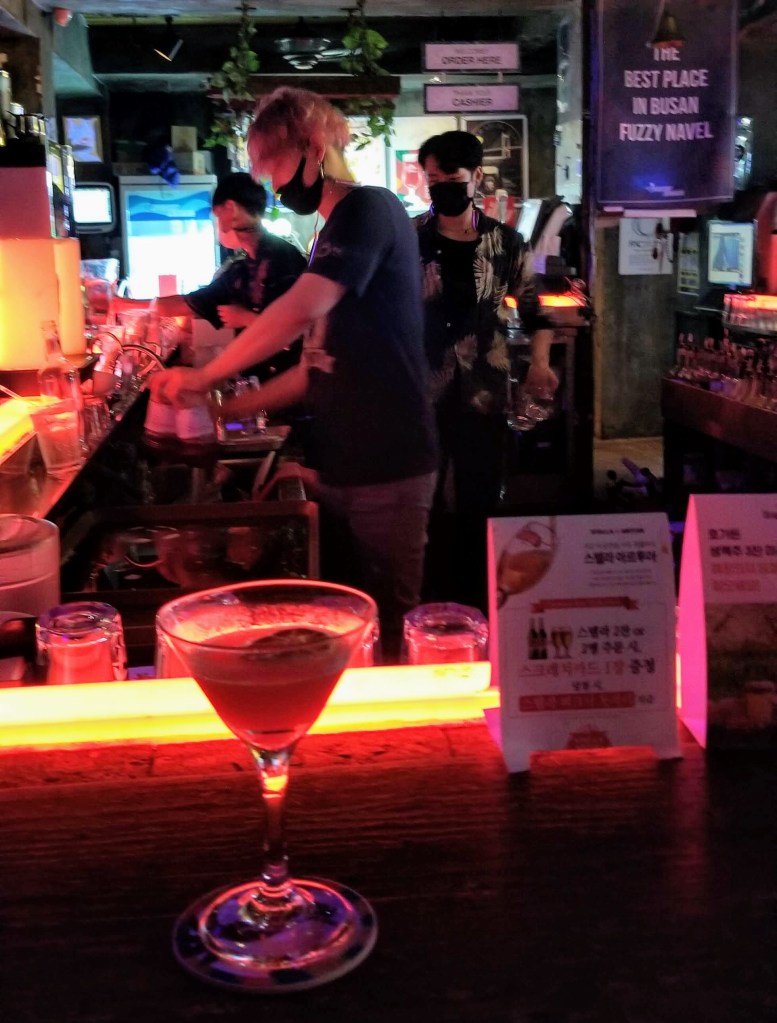
Fuzzy Navel 
Fuzzy Navel


Address: 264, Haeundaehaebyeon-ro, Haeundae-gu / 해운대구 해운대해변로 264 (우동)
Hours: 09:00-18:00
Haeundae Beach Website
Dongbaekseom Island 동백공원, Haeundae
If Dongbaekseom Island doesn’t look like an island on the map to you, that’s because it isn’t…anymore. The “Island of Camellias” (a type of flower) is now connected to the mainland and sticks out into the sea at the western end of Haeundae Beach and makes for a wonderful escape into nature from Busan’s most luxurious beach. Dongbaekseom Island is very small, and many dongbaek trees and evergreens thrive there. At the top of the island, there is a statue and a monument of Choe Chi-Won, a scholar and writer during the Silla Kingdom. The island also has Dongbaek Park (동백공원) and a 2.5 m high statue of a mermaid near the beach which many tourists can easily visit on their way to the beach.
To reach the coastal path around Dongbaekseom, walk past the Westin, which dominates the western end of the beach. As you circumnavigate island, you’ll pass the famous mermaid statue and the large, round Nurimaru APEC House, a conference house by the sea. The trail terminates at the Bay 101, an upscale yacht club.
Address: U-dong, Haeundae-gu, Busan / 부산광역시 해운대구 우동 (동백섬)
Hours: 10:00-17:00
Dongbaekseom Island Website
Gwangalli Beach 광안리해수욕장
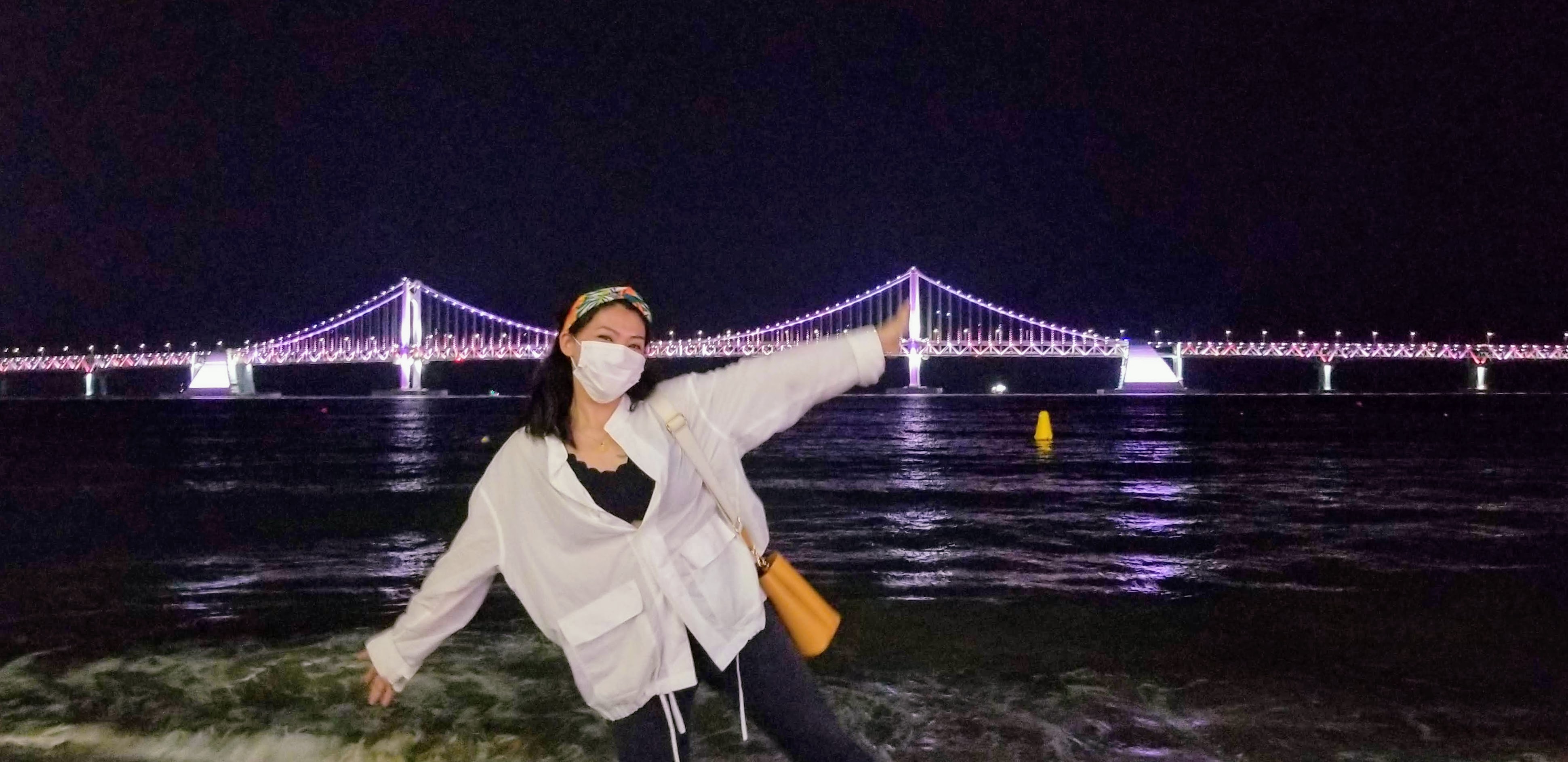
Gwangalli Beach in Gwangan neighborhood nearly rivals Haeundae in popularity but has more of a relaxed city-by-the-sea vibe. One of the most impressive features of the beach is the incredible view of Gwangan Bridge, which runs over the sea parallel to the beach, especially at sunset and at night. Gwangalli also hosts a popular fireworks festival in autumn, and visitors like to shoot fireworks from the beach throughout the year. It is six subway stops before Haeundae on the same line, so it’s a little faster to reach from other parts of the city.
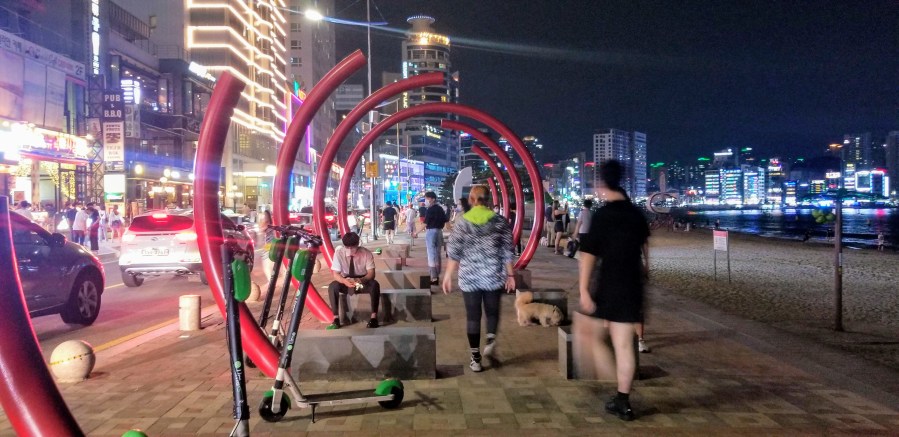
Gwangali Beach at night. 
This pose 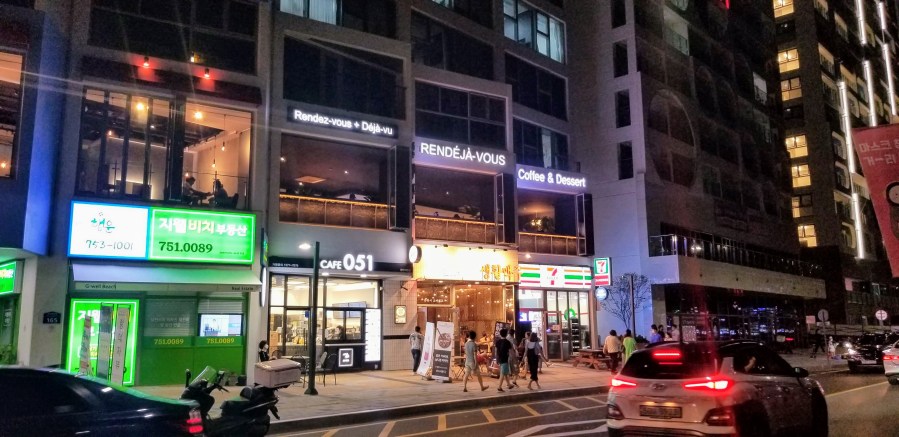
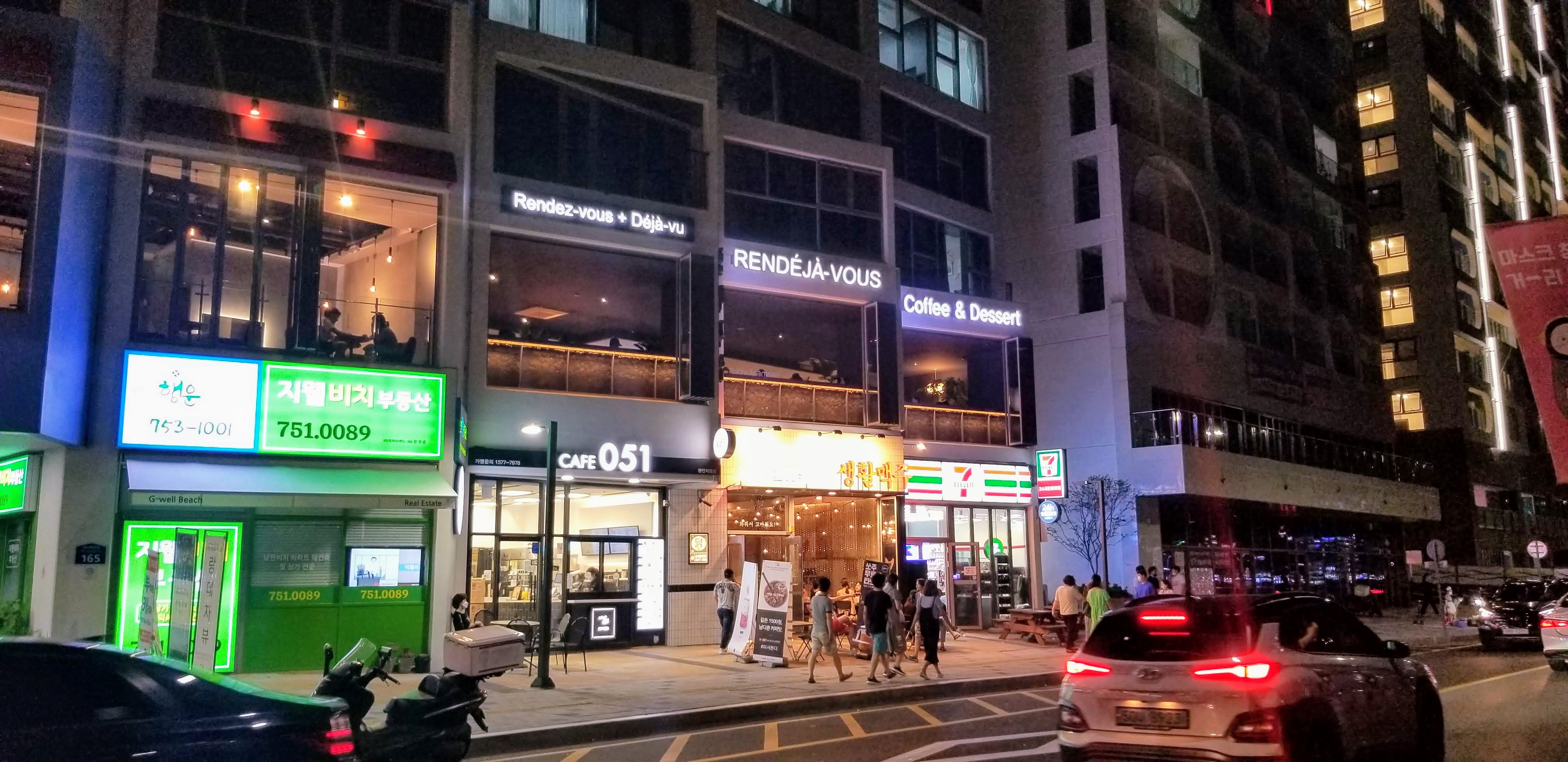
Gwangali Beach cafes

Address: 219, Gwanganhaebyeon-ro, Suyeong-gu / 수영구 광안해변로 219 (광안동)
Hours: 09:00-18:00
Gwangalli Beach Website
Songdo Beach 송도해수욕장
Traveling Busan would not be complete without visiting a share of beaches and what beach with a raised 365-meter beach walk promenade wouldn’t strike your fancy? Songdo is another very popular beach in Busan, and easier to reach if you are staying in Nampo-dong, Gwangbok-dong, or Yeongdo Island. Songdo Beach was the first public beach in Busan. The beach is famously the site of the first cable car in Korea and two awesome ocean walkways. There is even a lovely red bridge connecting Songdo Beach to Amnam Beach. Songdo beach itself is a good place to swim and popular among locals and visitors alike. There are public showers and a large water fountain roughly in the middle, and colorful whales and other statues stick out from the sea.
Address: 50, Songdohaebyeon-ro, Seo-gu / 서구 송도해변로 50 (암남동)
Hours: 09:00-18:00
Songdo Beach Website
Songdo Cable Car 송도해상케이블카
The Songdo cable car opened in 1964 and then reopened in 2017 adding on more distance to its cable route. Now, the Songdo Cable Car goes from Songnim Park to Amnam Park Observatory. The cable car whisks passengers from Songdo Beach over the sea to Amnam Park at the tip of the peninsula. The ride includes awesome views down over the beach, Songdo Cloud Trails, ocean, and further afield. Some cars have glass bottoms so you can see the blue and glassy seas below.
Address: 171 Songdohaeebyeon -ro, Seo-gu, Busan / 부산광역시 서구 송도해변로 171
Hours: Weekdays 09:00-20:00, Weekends and Holidays 09:00-21:0
Songdo Cable Car Website
Songdo Cloud Walk 송도 구름다리 and Red Walkway: Songdo Beach’s Two Walkways
Songdo Beach features two great walkways: popular Songdo Cloud Trails, located on the side of the beach near the Songdo Cable Car station, and a lesser-know walkway along the cliffs at the other end of the beach.
104-meter-long Songdo Cloud Trails features spiraling walkways. It starts on the eastern side of Songdo Beach, connecting to Geobukseom Island, and it terminates at a platform with fantastic views of Yeongdo Island. The skywalk features sections with a clear glass floor that creates the feeling of walking on top of the ocean. The amazing panoramic view of the surrounding has made the skywalk a popular destination.
Songdo’s second walkway is a red metal walkway hugging the cliffs of the peninsula that leads from Songdo Beach to Amnam Park, the same place the cable car goes to. Great sea views and the cable car passing by overhead make for an awesome experience, and the walkway is much less crowded. In total, it takes about 30 minutes to reach Amnam Park on the walkway.
Address: 129-4, Amnam-dong, Seo-gu, Busan / 부산광역시 서구 암남동 129-4
Hours: 06:00-23:00 (subject to change due to weather conditions)
Songdo Cloud Walk Website
Dadaepo Beach 다대포해수욕장
Located in the southwest of the city and created by deposits from Nakdonggang River as it reaches the sea, Dadaebo is popular among local families but less crowded than the above entries and off the radar for most short-term visitors to Busan. Dadaepo Beach features shallow water and wide sand beach suitable for children to enjoy; water activities such as paddleboarding, kiteboarding and more; and a beautiful walking path that has allowed the beach to become bigger year after year. At the entrance of the beach, the large plaza has the biggest musical fountain in the world. Visitors can enjoy the musical fountain from late-April to October. Come here for a relaxed beach day trip a little further from the city center, to let the kids run wild, or to enjoy the huge Dadaepo Sunset Fountain of Dreams water, lights, and music display at 8 p.m.
The beach serves as a location for several events such as the Busan Sea Festival. It has several amenities such as foot baths, showers, and restaurants. It’s super popular on Instagram for wedding photos, sunset, and sunrise photos as well.
Address: 14, Morundae 1-gil, Saha-gu, Busan / 부산광역시 사하구 몰운대1길 14 (다대동)
Hours: Dadaepo Beach, Daily 09:18:00; Nakjo Fountain, Tuesday-Sunday (late-April-October)
Dadaepo Beach Website
Songjeong Beach 송정해수욕장
Songjeong Beach stretches for 1.2 kilometers with a width of 57 meters. The white sandy beach is ideal for surfing and for families with young children because of its shallow waters. The beach offers clean water and a more peaceful atmosphere than the popular Haeundae and Gwangalli Beaches in downtown Busan. It is also very popular as a photography venue for pre-wedding photoshoots. The area around the beach offers many hoe (sliced raw fish) restaurants.
Jukdo Park is located north of the beach at the entrance to Songjeonghang Port. The white and red lighthouses of the harbor are a popular photo spot, as well as the view of the beach from Songiljeong Pavilion at the peak of Jukdo Park. The path leads through a grove of evergreens. Fishermen often line the breakwaters to the lighthouses.
Address: 62, Songjeonghaebyeon-ro, Haeundae-gu / 해운대구 송정해변로 62 (송정동)
Hours: Daily 09:00-18:00
Popular Sights
Busan Tower & Yongdusan Park 부산타워 & 용두산공원
One of the best spots to view the city is at Yongdusan Park and Busan Tower. Yongdusan Mountain is shaped like a dragon’s head (yongdu) and is one of Busan’s top three mountains. It houses a park, monuments and Busan Tower, easily Busan’s most recognizable landmark. The 120-meter tower pokes up into the sky from a hill in the middle of Yongdusan Park in Gwangbokdong. The top of the tower holds an observation deck that is modeled on Bulguksa Temple’s Dabotap Pagoda. The entrance to the park is one of the coolest things about it. A metallic, retro-style multi-level escalator ascends from Gwangbokdong Cultural & Fashion Street to the southern end of the park. The 360-degree view from the tower is unbeatable. Save money by booking your ticket first online!
Address: 13, Daecheong-ro 116beon-gil, Jung-gu, Busan 48950 / 부산 중구 대청로116번길 13
Tower Observatory Hours: 10:00-23:00
Entrance Fee: Adult, 8,000
Busan Tower Website
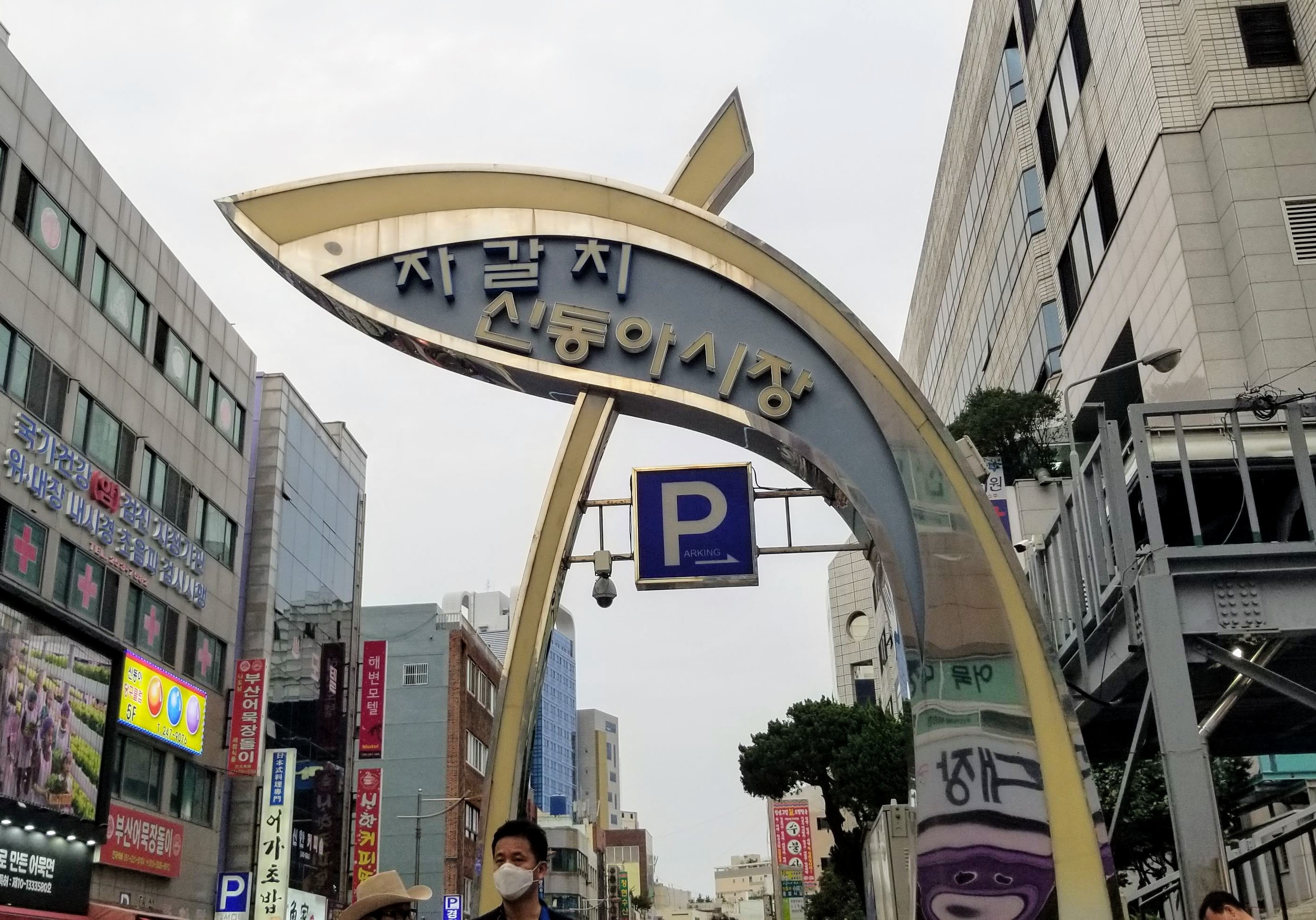
Jagalchi Fish Market 자갈치시장
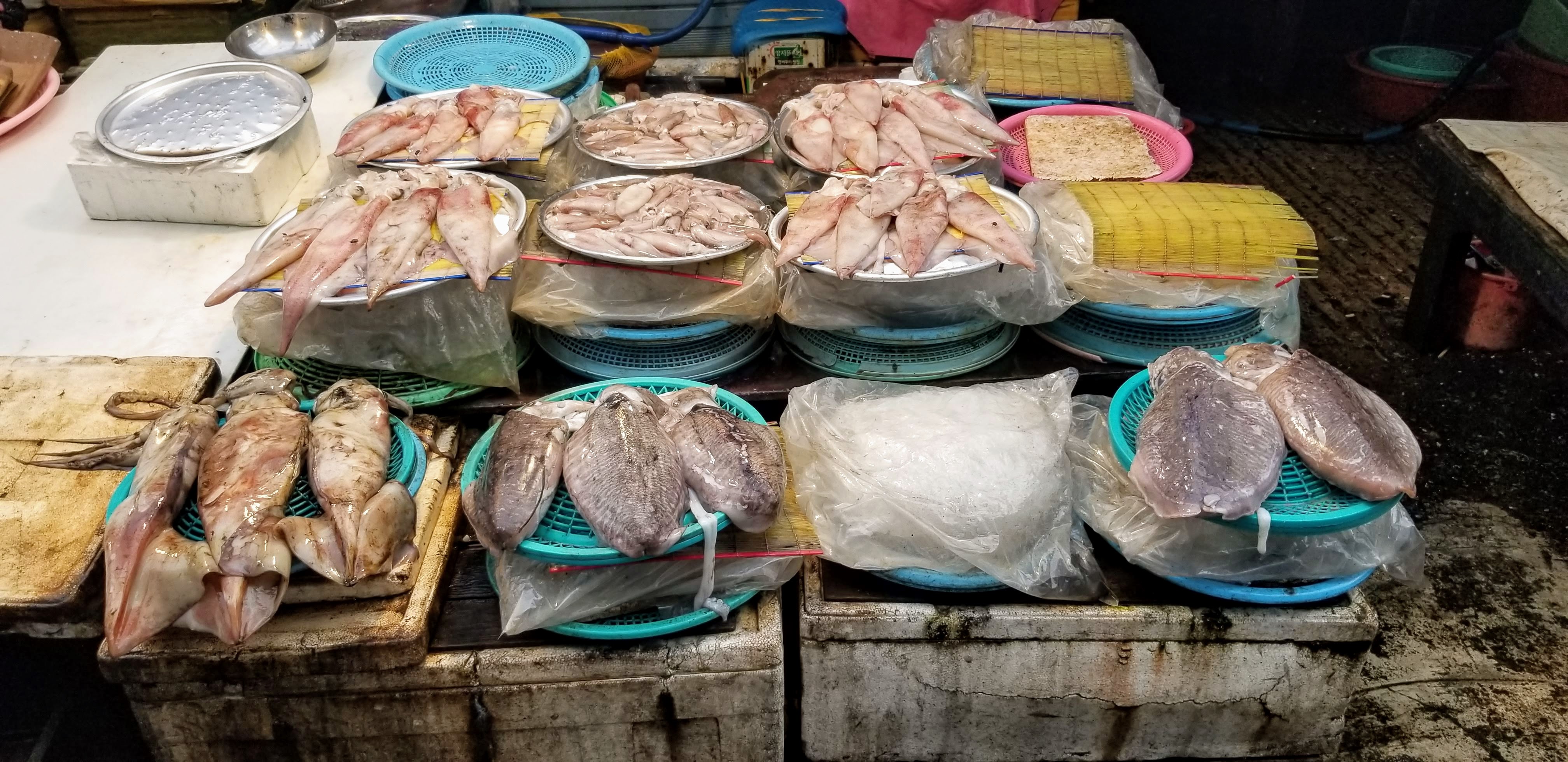
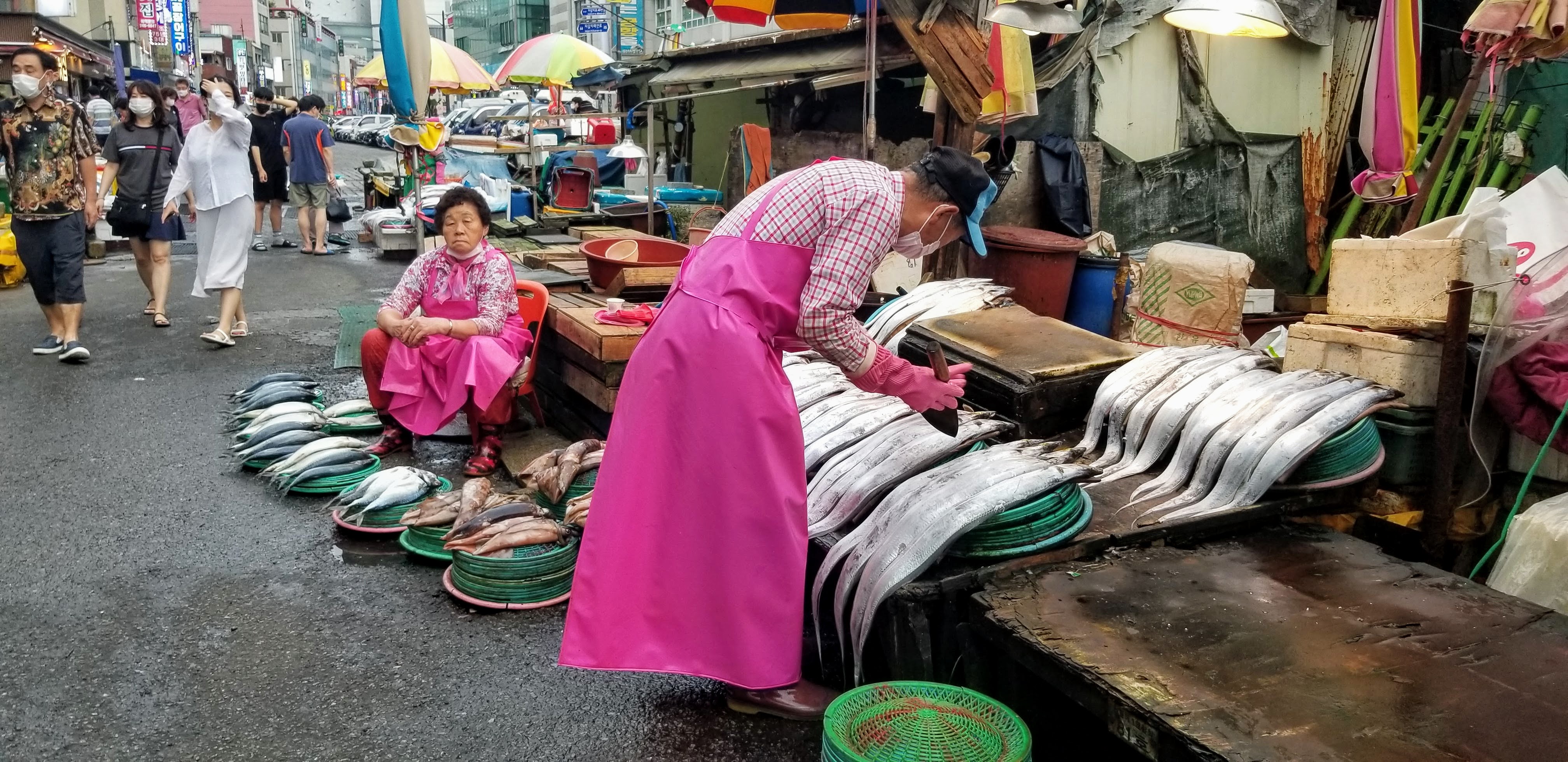
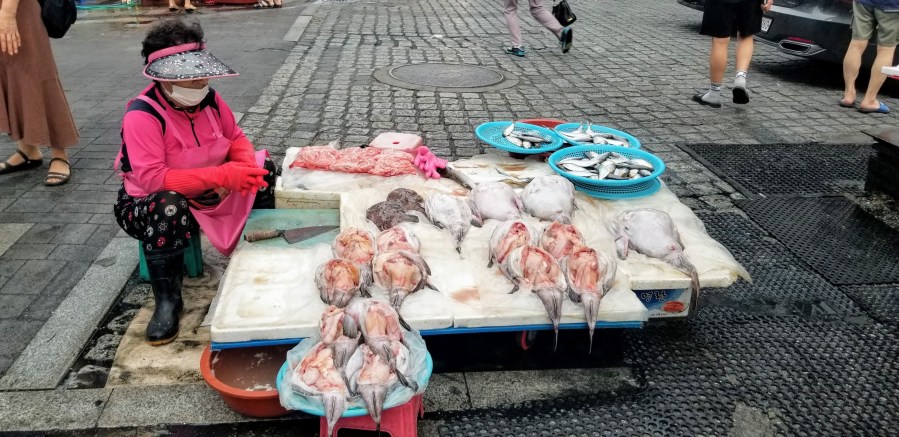
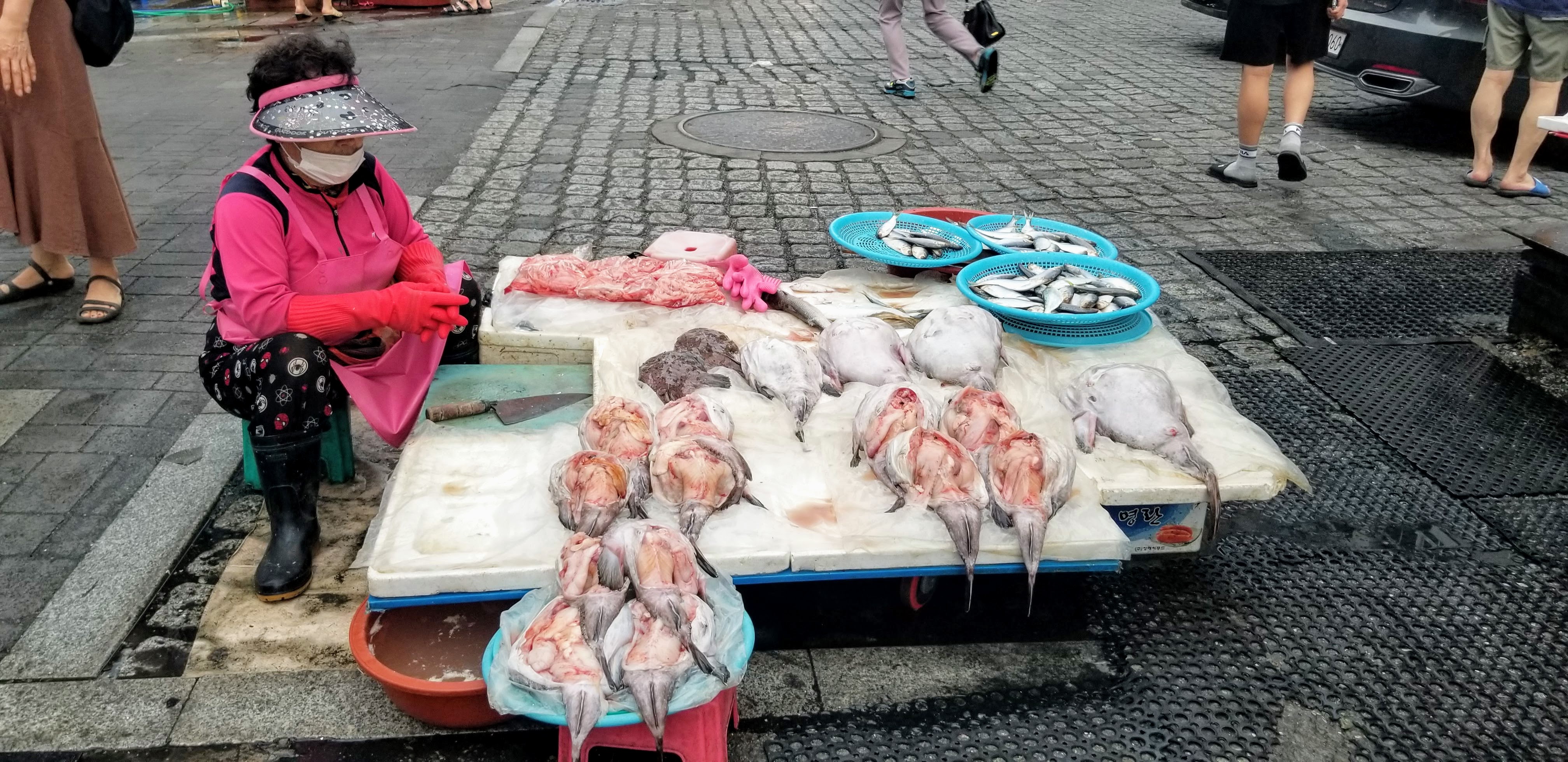
A Busan trip would not be complete without sampling the seafood pleasures. If there’s a photogenic grit or raw edge to traveling Busan, the wharf area of Jalgachi Fish Market hits a memorable note. Often touted as the #1 Busan attraction, Jagalchi Fish Market is a cruise ship-sized landmark to the city’s love for creatures from the sea. You can think of Jagalchi as more of an entire neighborhood devoted to seafood than one market. The main building is seven stories tall, but most visitors head directly to the fish market on the first floor. You’ll see a lot of rubber boots, ajummas, and ajusshis at this fish market’s working population as well as fish in a way you’ve never seen them before.

Jalgachi Market 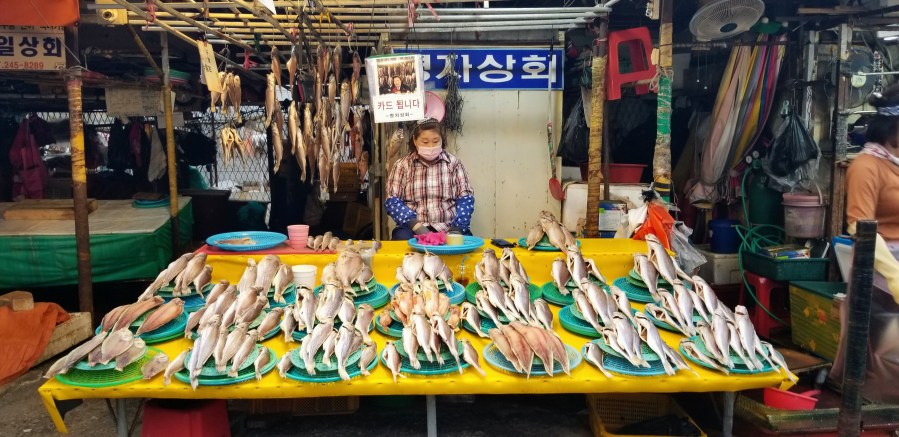
Jalgachi fish
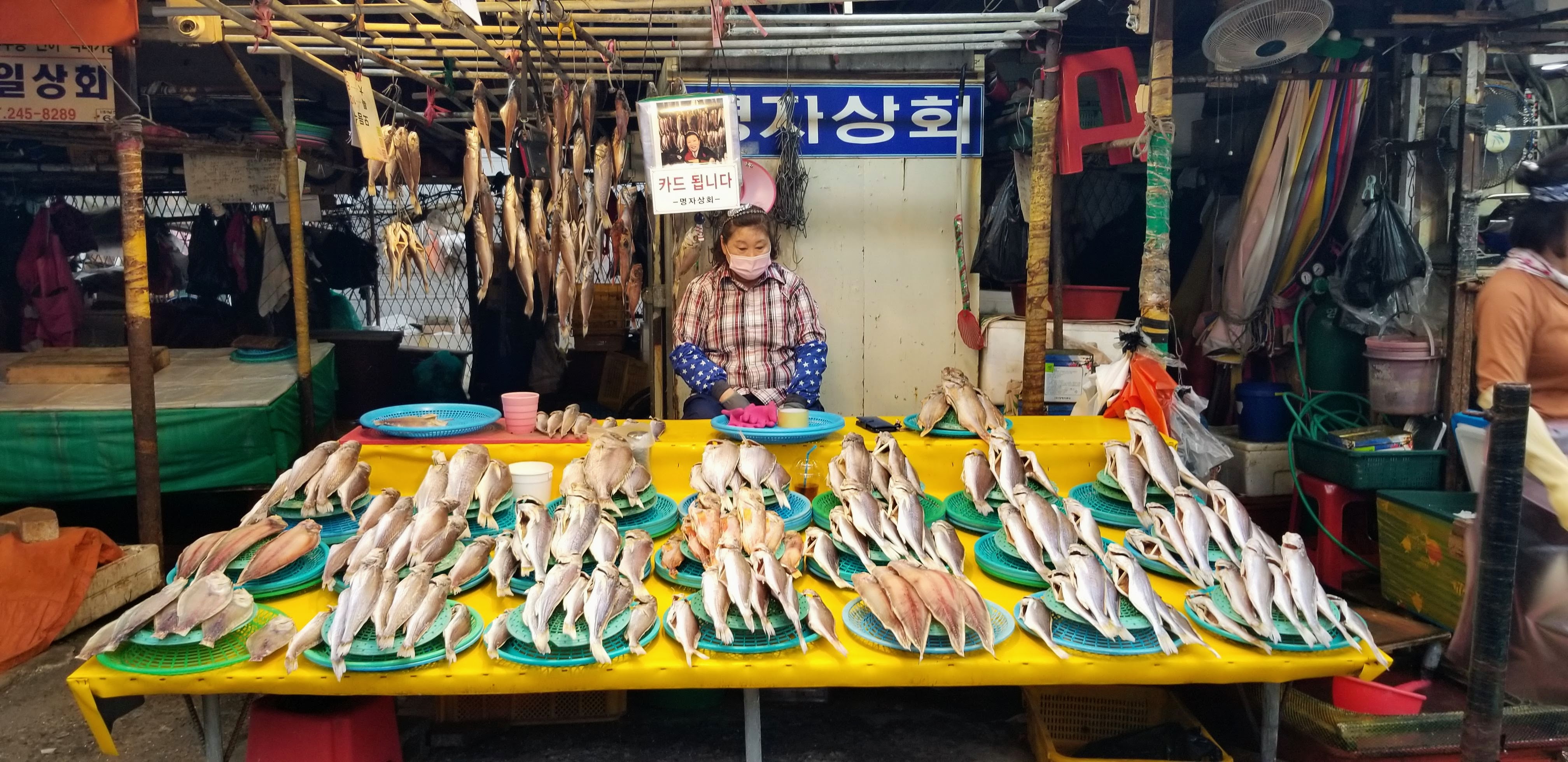
There you can choose what you like and take it to the second floor to be prepared, or trust one of the dozens of seafood restaurants to choose for you. Try to visit with a friend or group, since these restaurants don’t have small orders, so you’ll spend a small fortune if eating alone. There are many recommendations for Jacky’s Seafood (stall #8 on the second floor), where they can speak English.
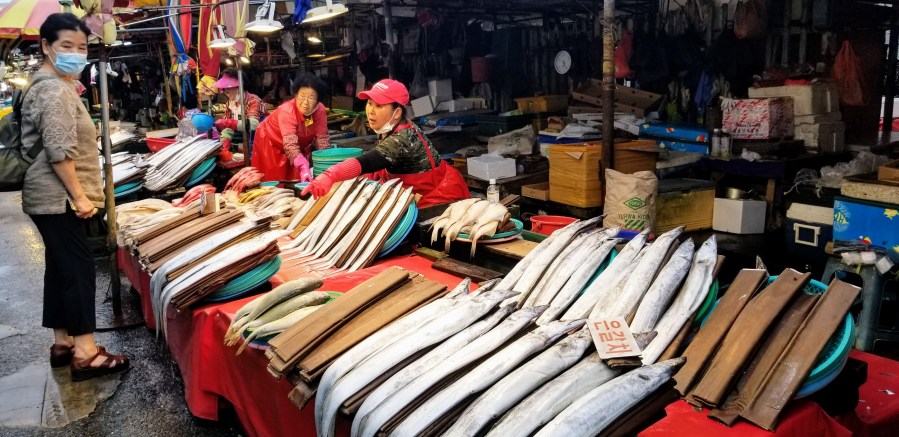
This is one of my favorite photos of markets I took in Busan 
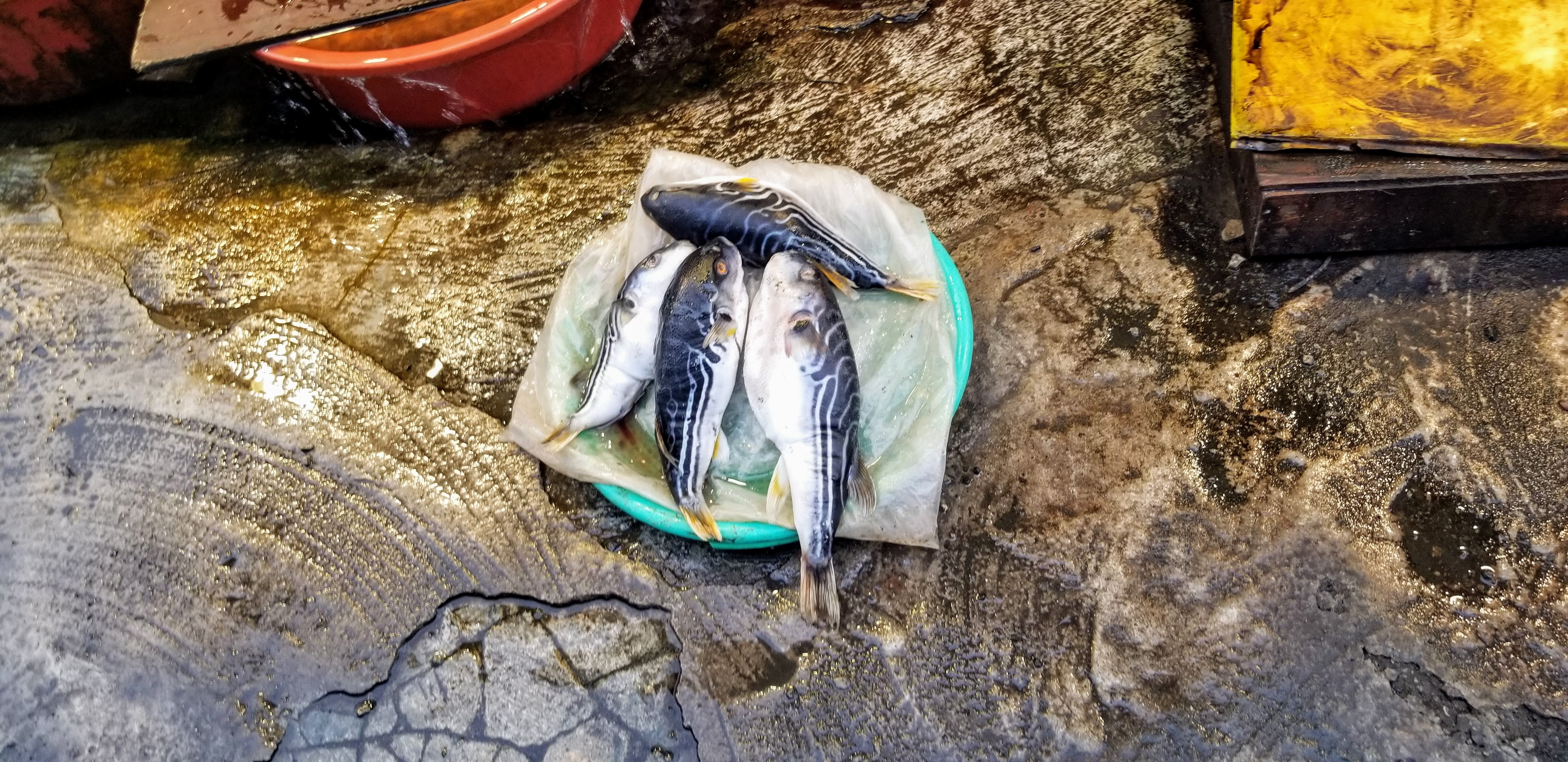
Puffer fish?? I think??

Don’t forget your camera, as you are going to see marine life forms you didn’t know existed. Whether dried and hanging, toothpick splayed, skinned, or live, there is art and pride to the fishes on display. You can check out the daily catch and then have the seller cook it up for you inside. Just make sure you don’t get splattered on.
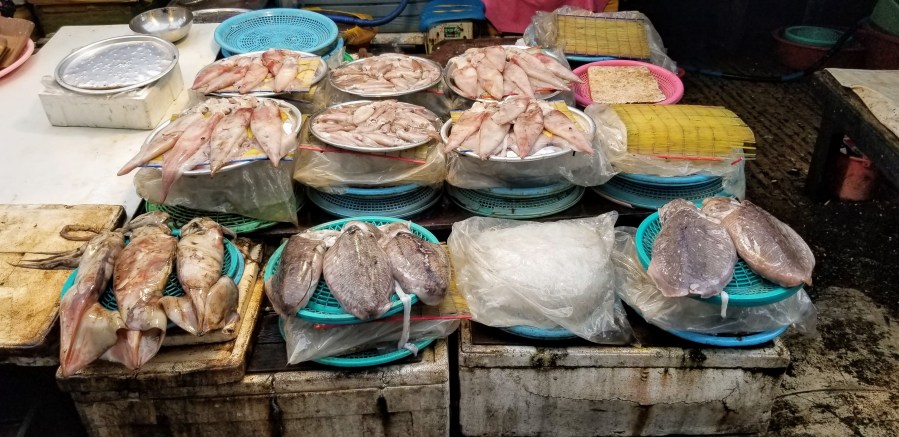
Buckets of ’em 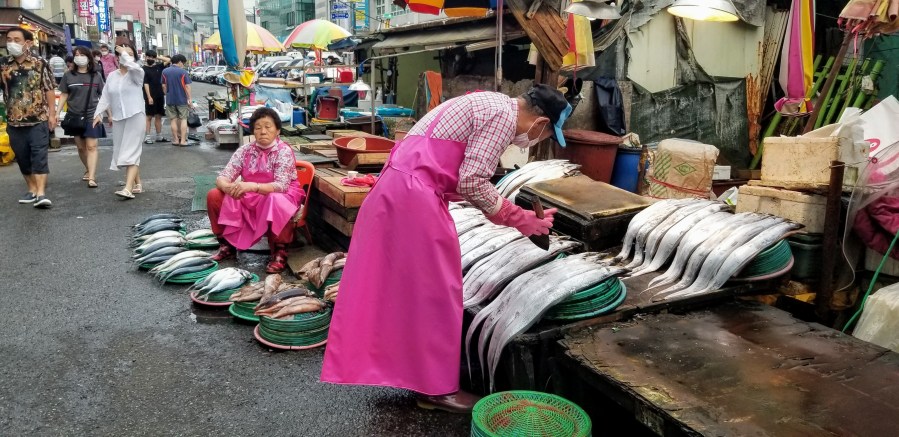
Pink Jalgachi man
While most visitors don’t make it past the first two floors of Jagalchi Market, you can take the elevator up to the 7th floor for a pretty epic view of the Busan Port. It’s not quite as amazing as the view from the top of nearby Lotte Department Store, but it offers a different angle, and is easy to do if you are going to Jagalchi anyway.
Just chilling.
Address: 52 Jagalchihaean-ro, Jung-gu / 중구 자갈치해안로 52
Hours: Daily 08:00-22:00 (opens at 2 am for vendors to set up their stalls)
Jagalchi Fish Market Website
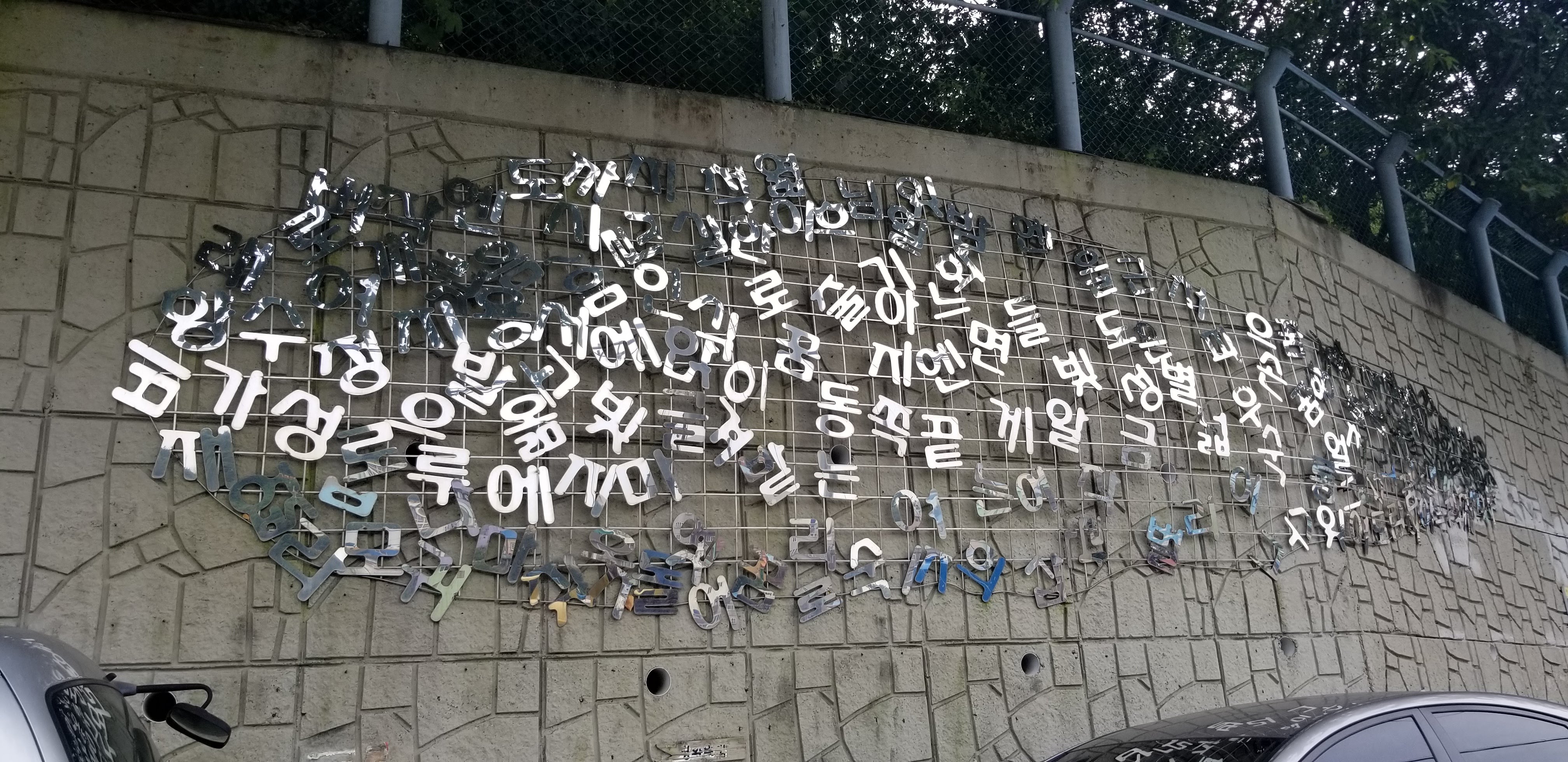
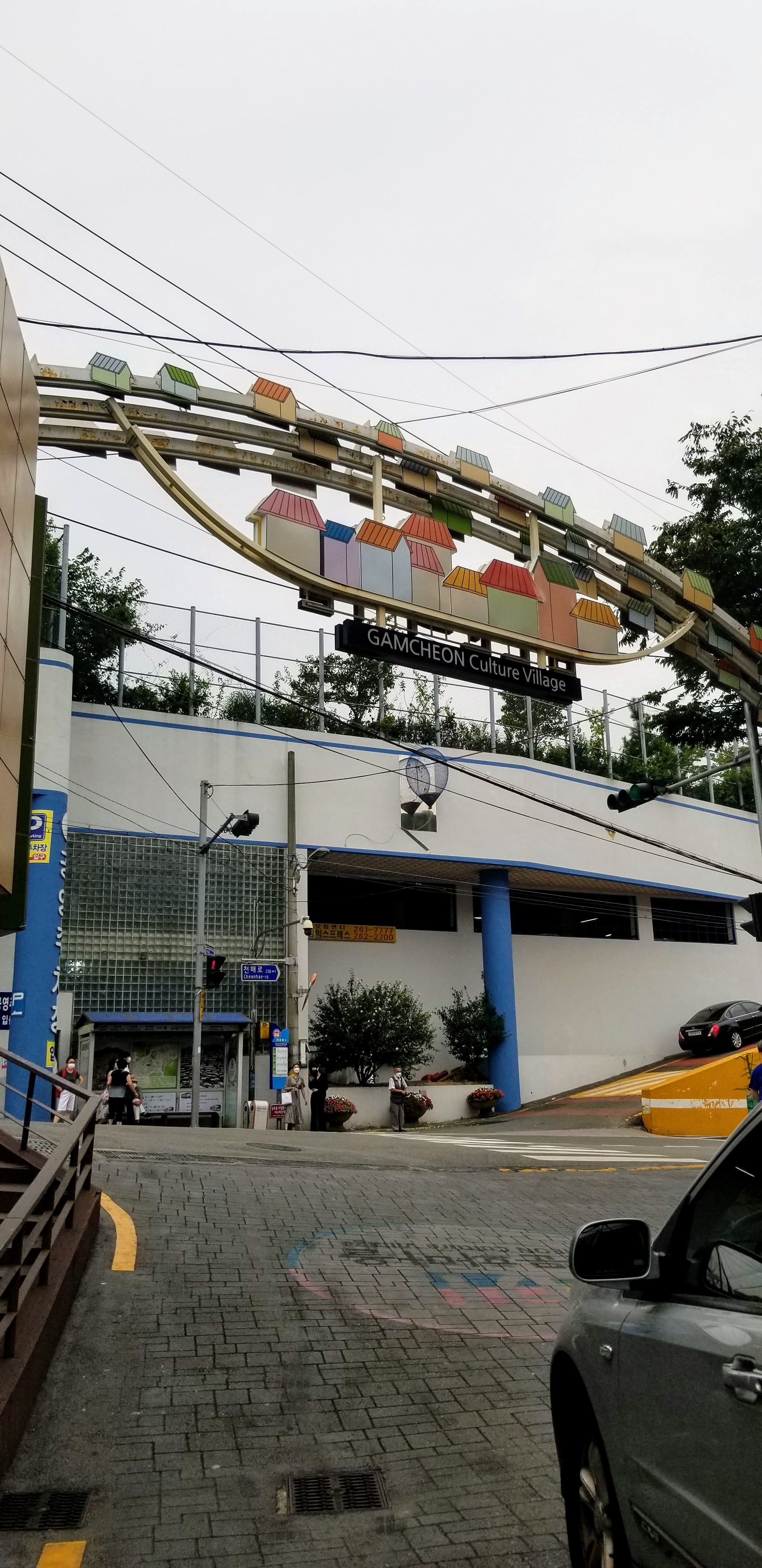
Gamcheon Culture Village 감천문화마을
Gamcheon Cultural Village 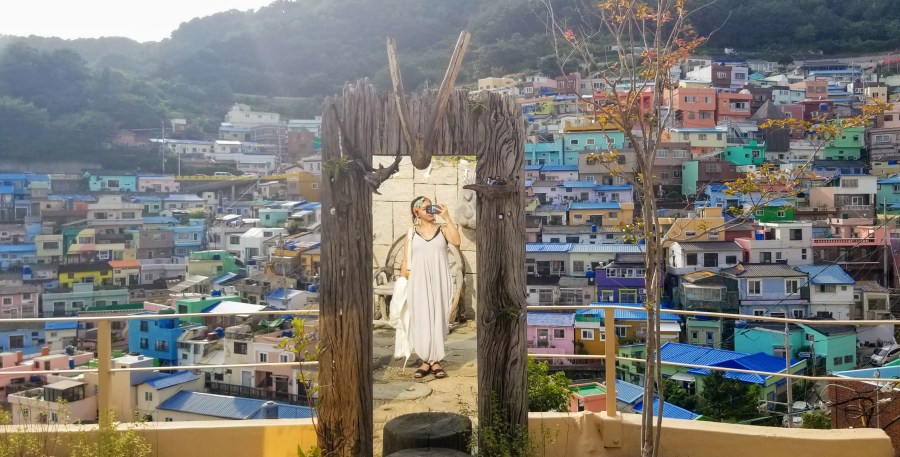
Me and Gamcheon Cultural Village 
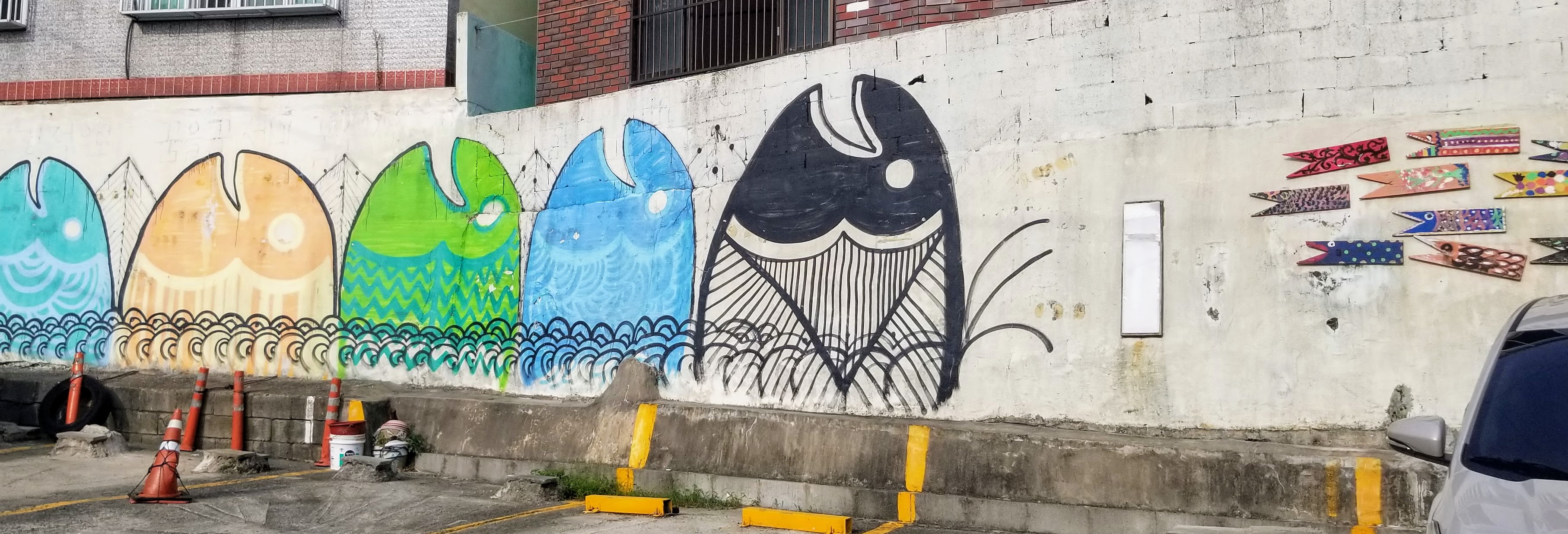
Fish 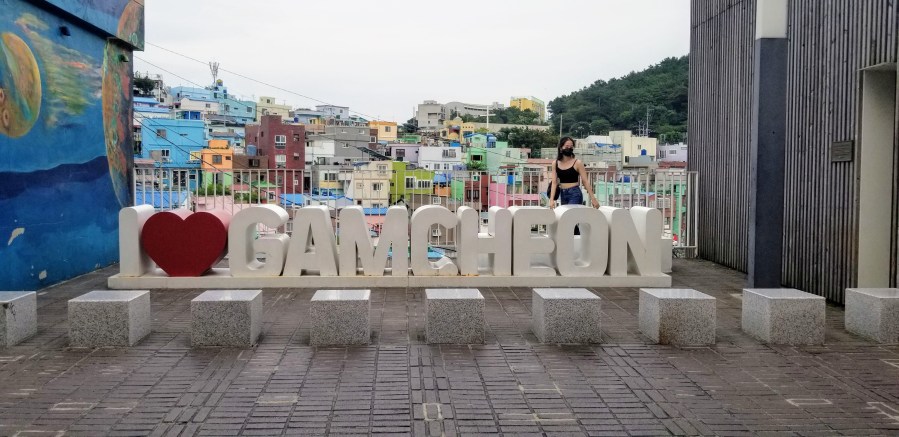
I ❤ Gamcheon 
Gamcheon Cultural Village Fish 
Gamcheon Cultural Village Fish 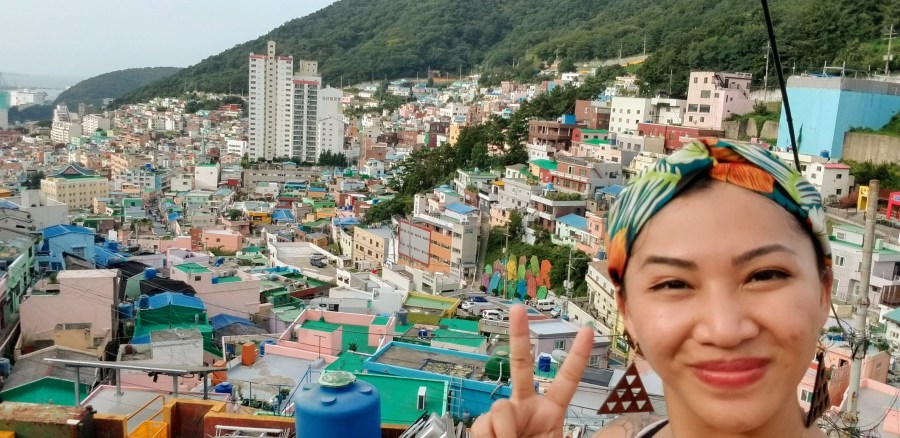
hey~ 
Gamcheon Cultural Village


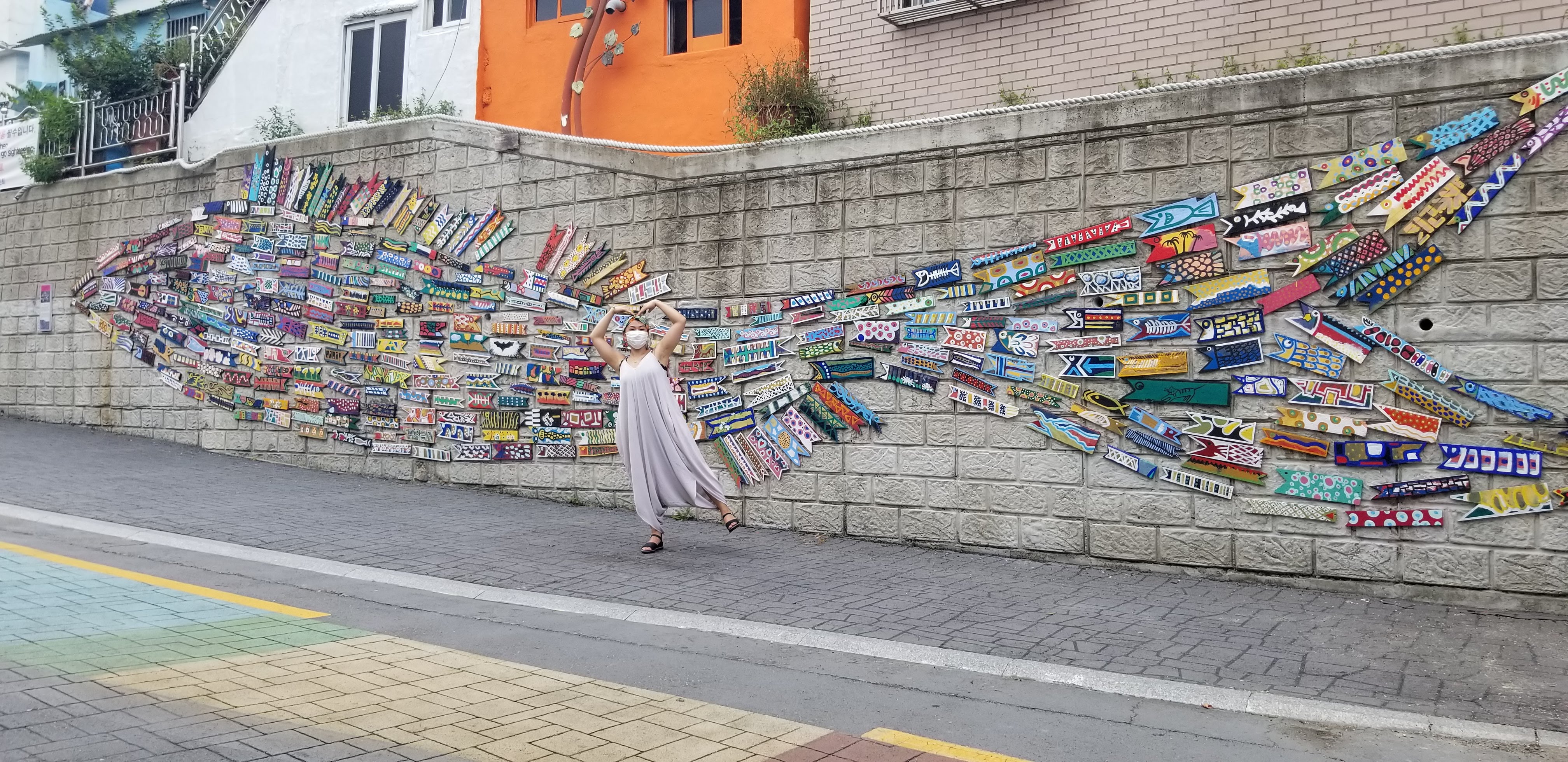
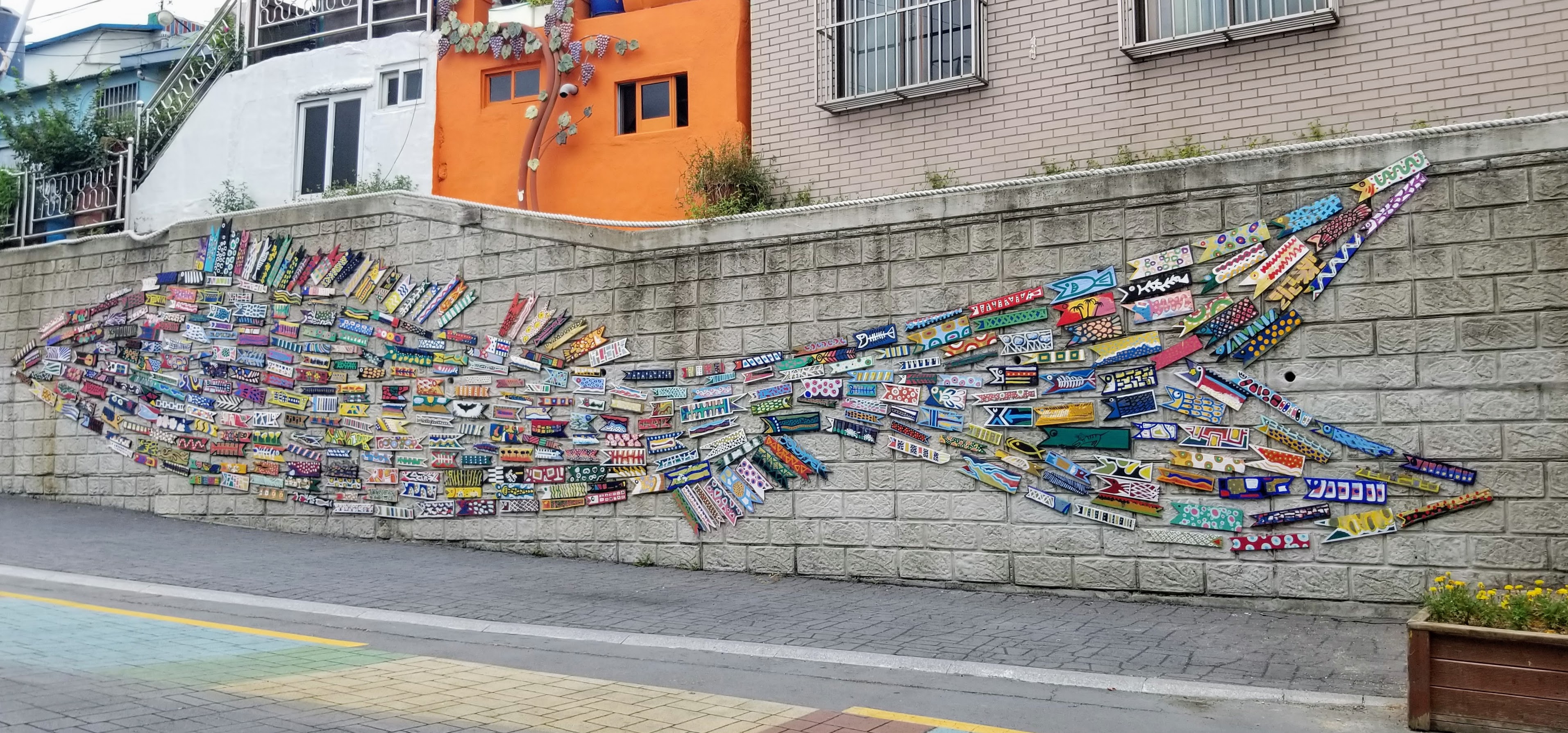
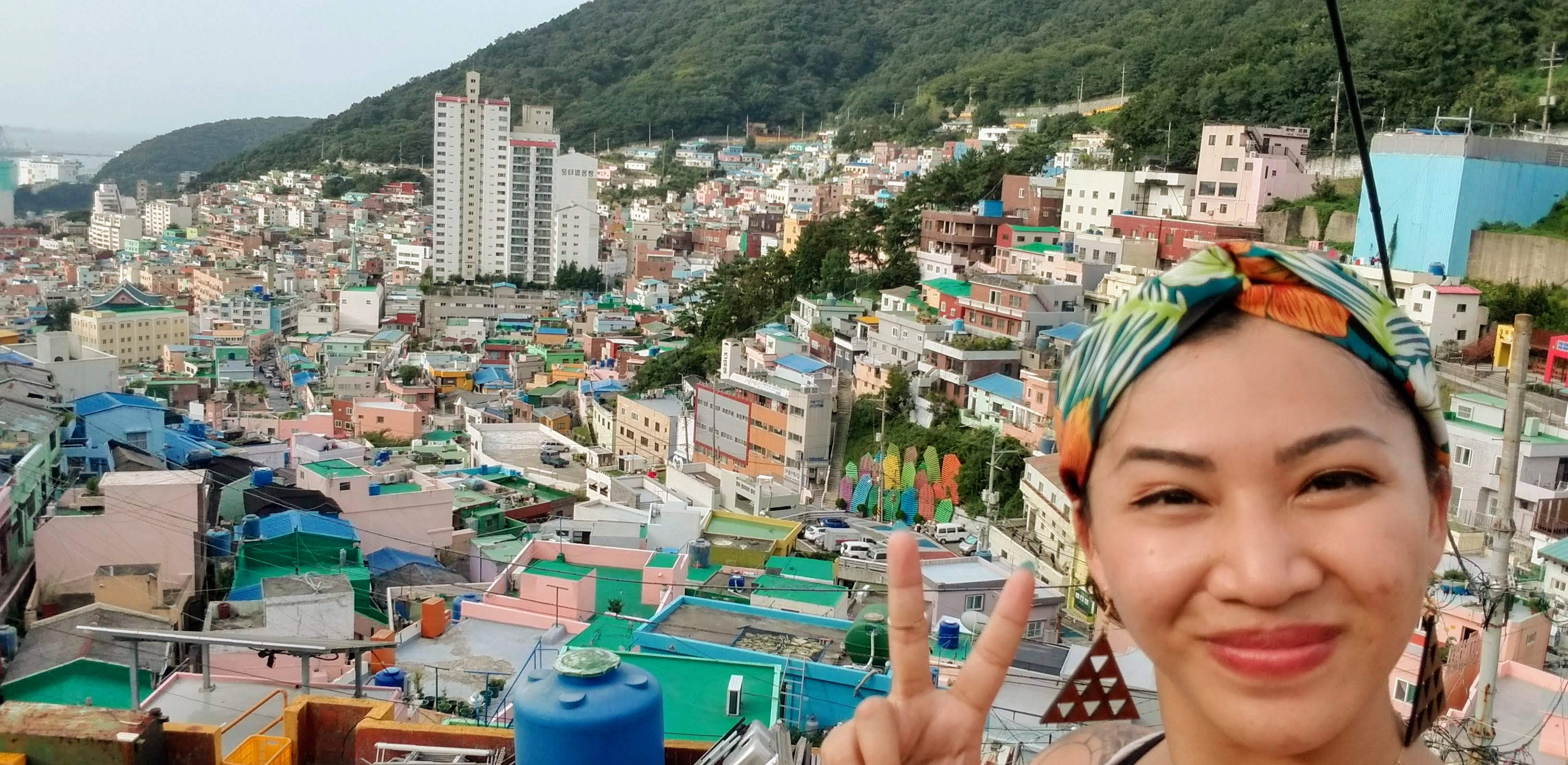
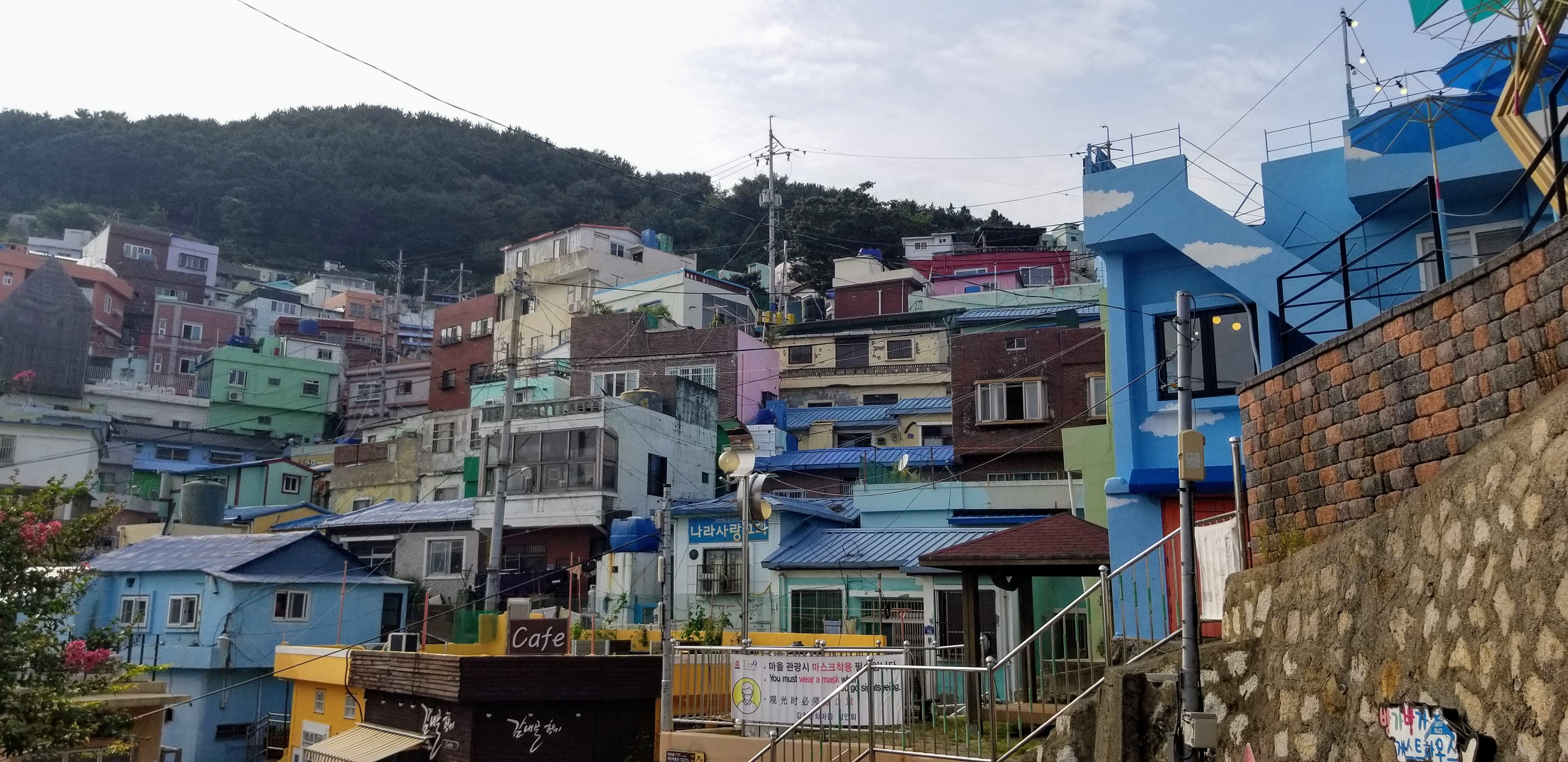
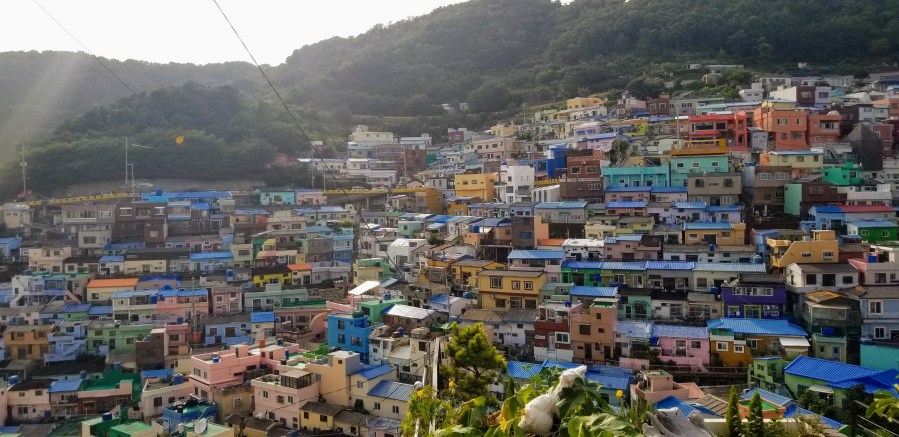
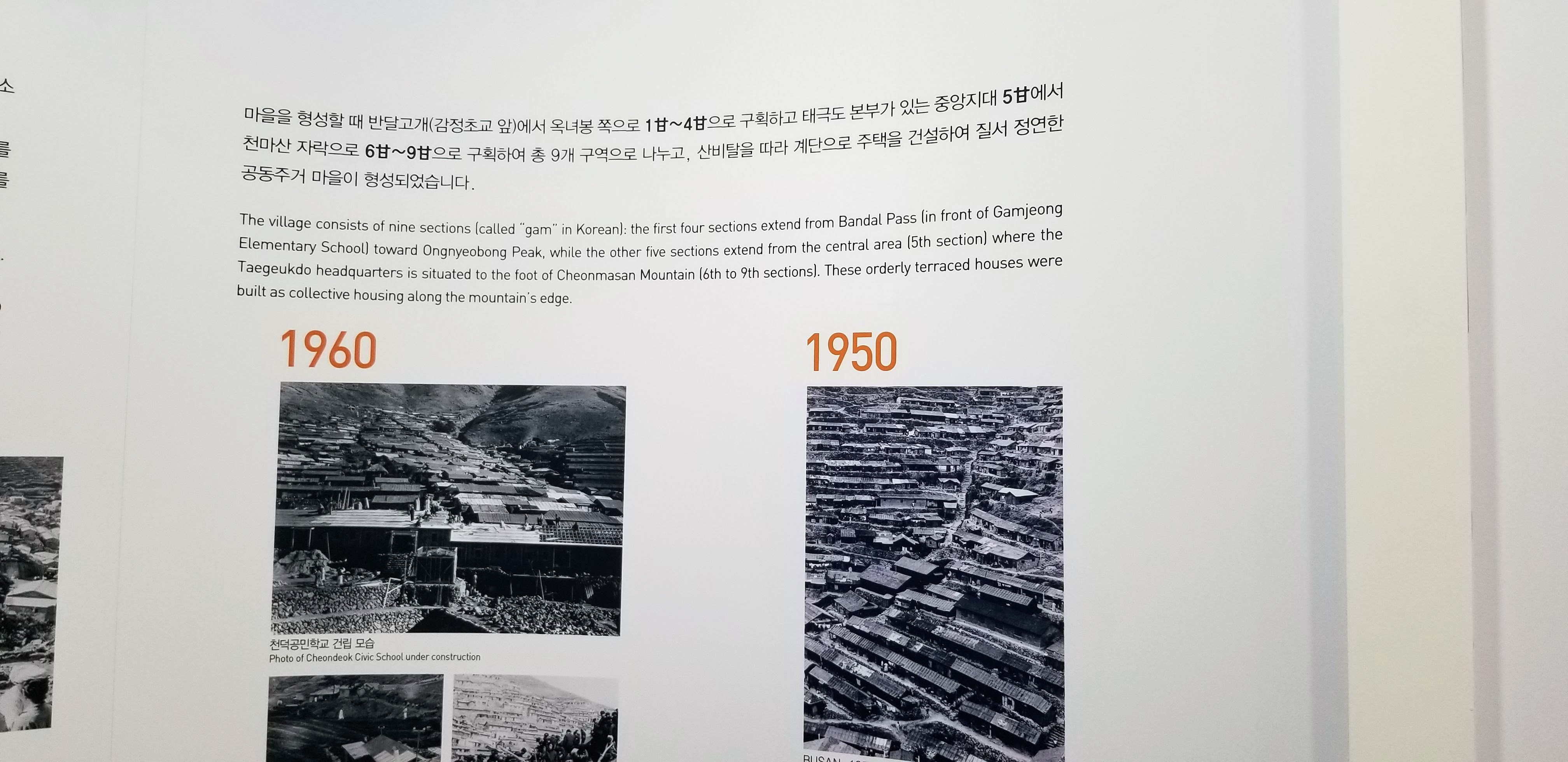
This large seaside neighborhood was originally a ghetto built by refugees of the Korean War in the 1950s. Later, the neighborhood received government funding to transform it into a brightly colored arts district.
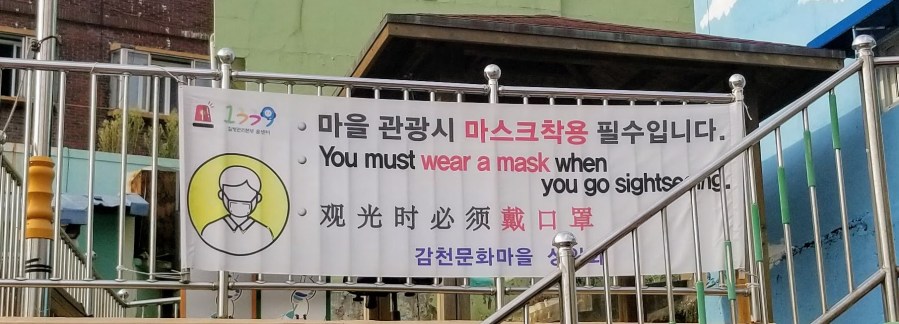
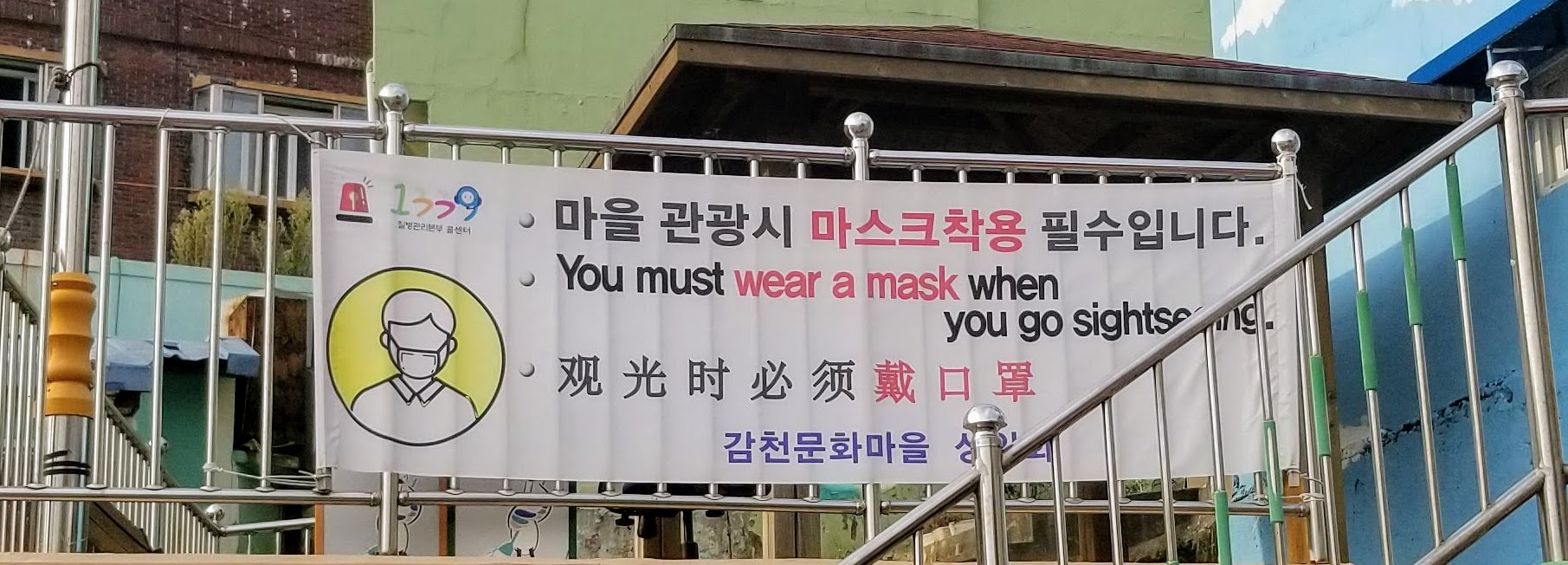
“You must wear a mask when you go sight seeing.” 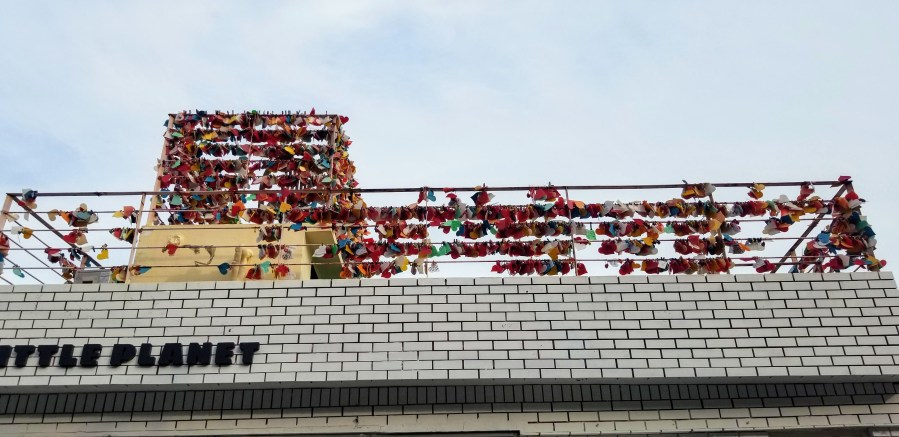
Cafe with locks 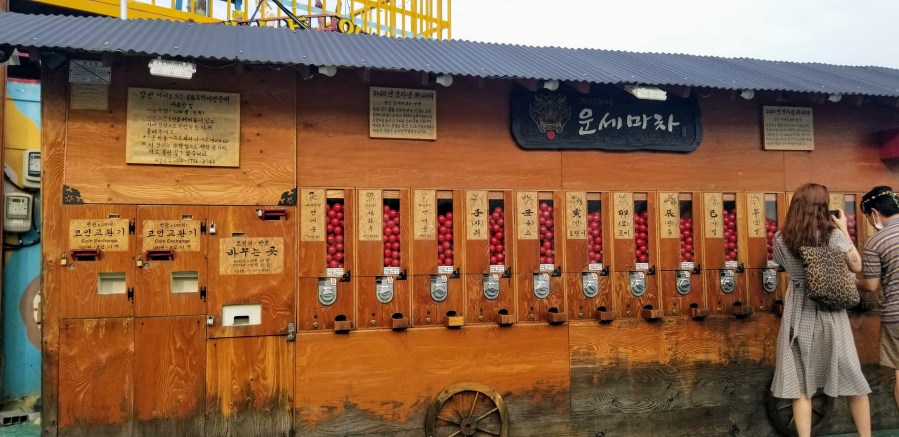
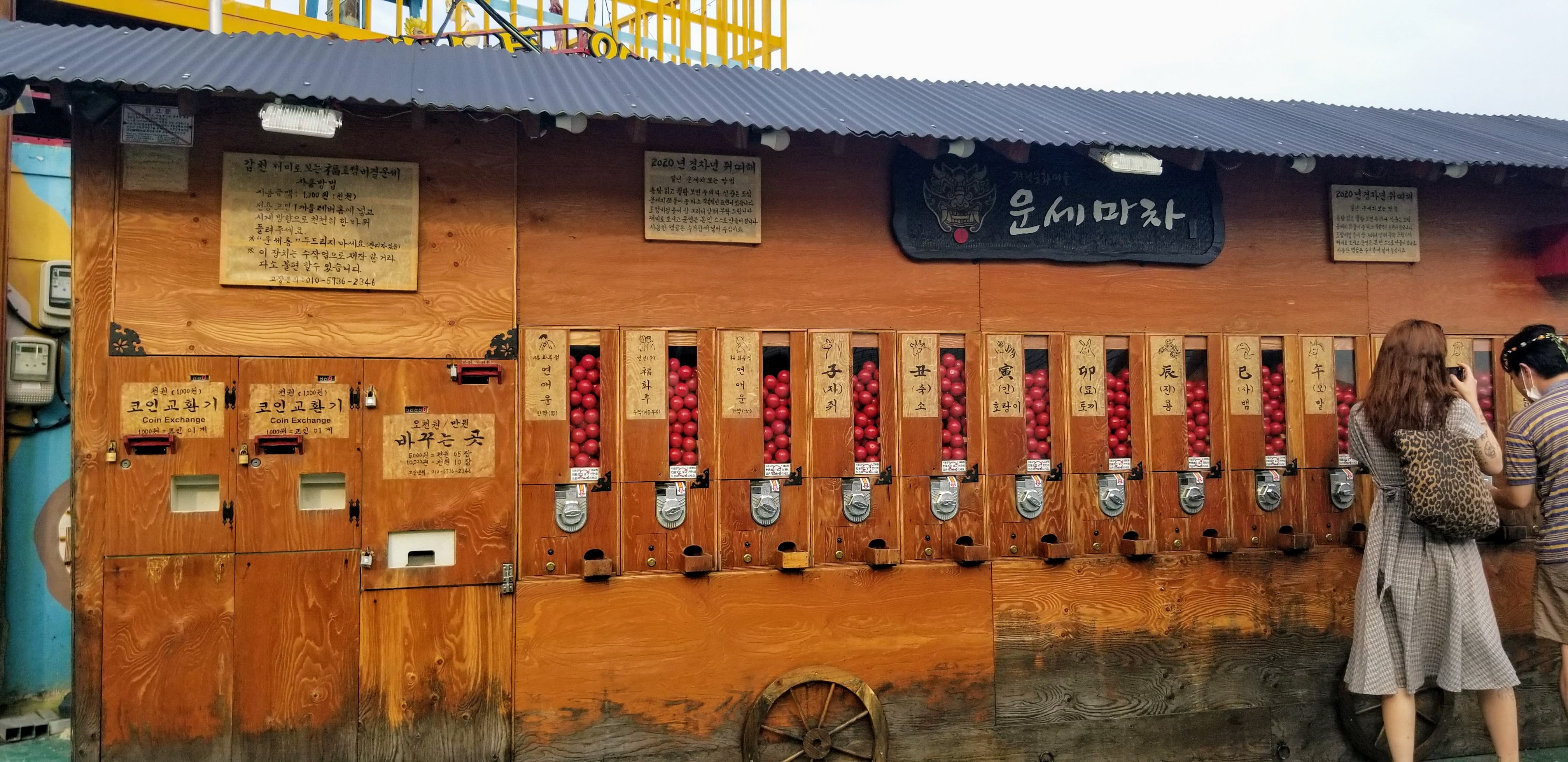
Gamcheon Cultural Village Fortunes 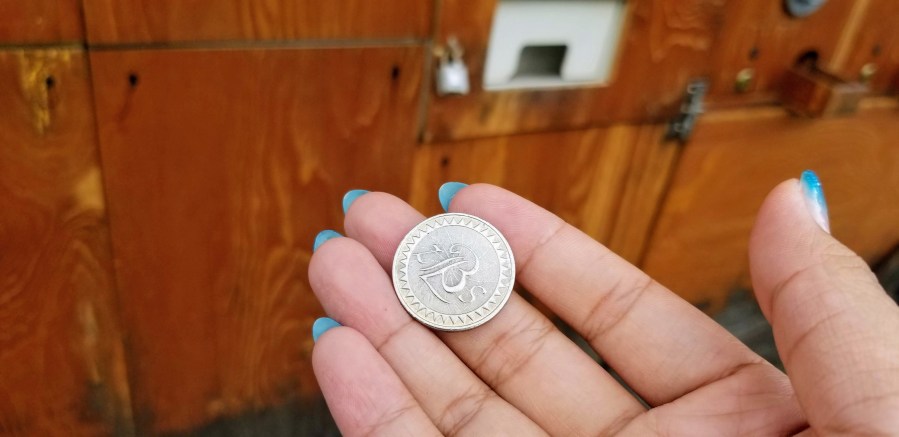
Gamcheon Cultural Village Fortune Coin 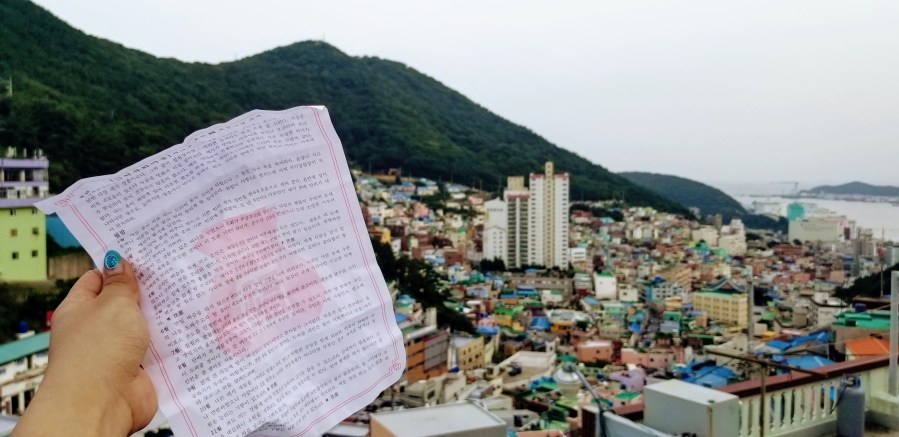
My Gamcheon Cultural Village Fortune 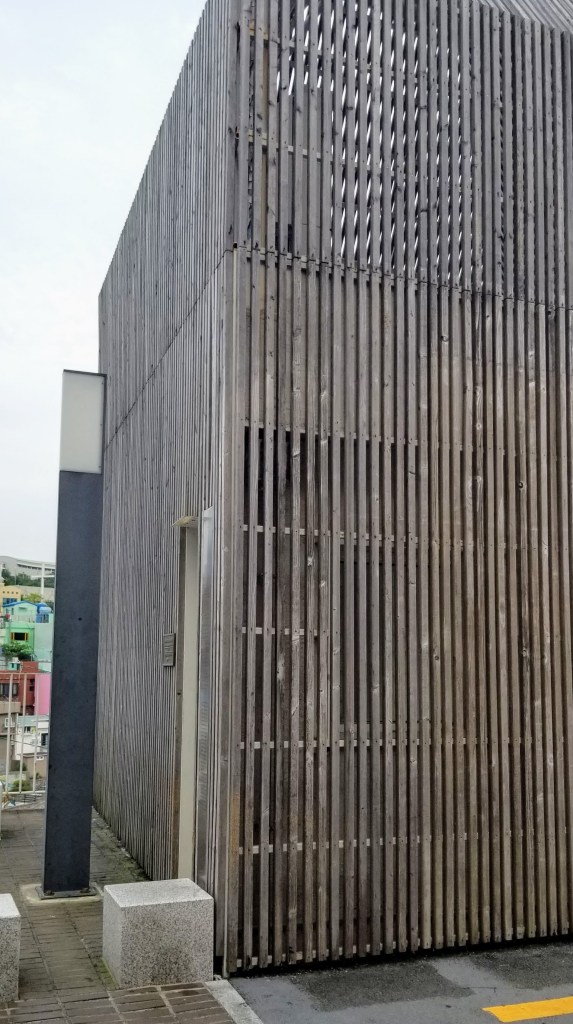
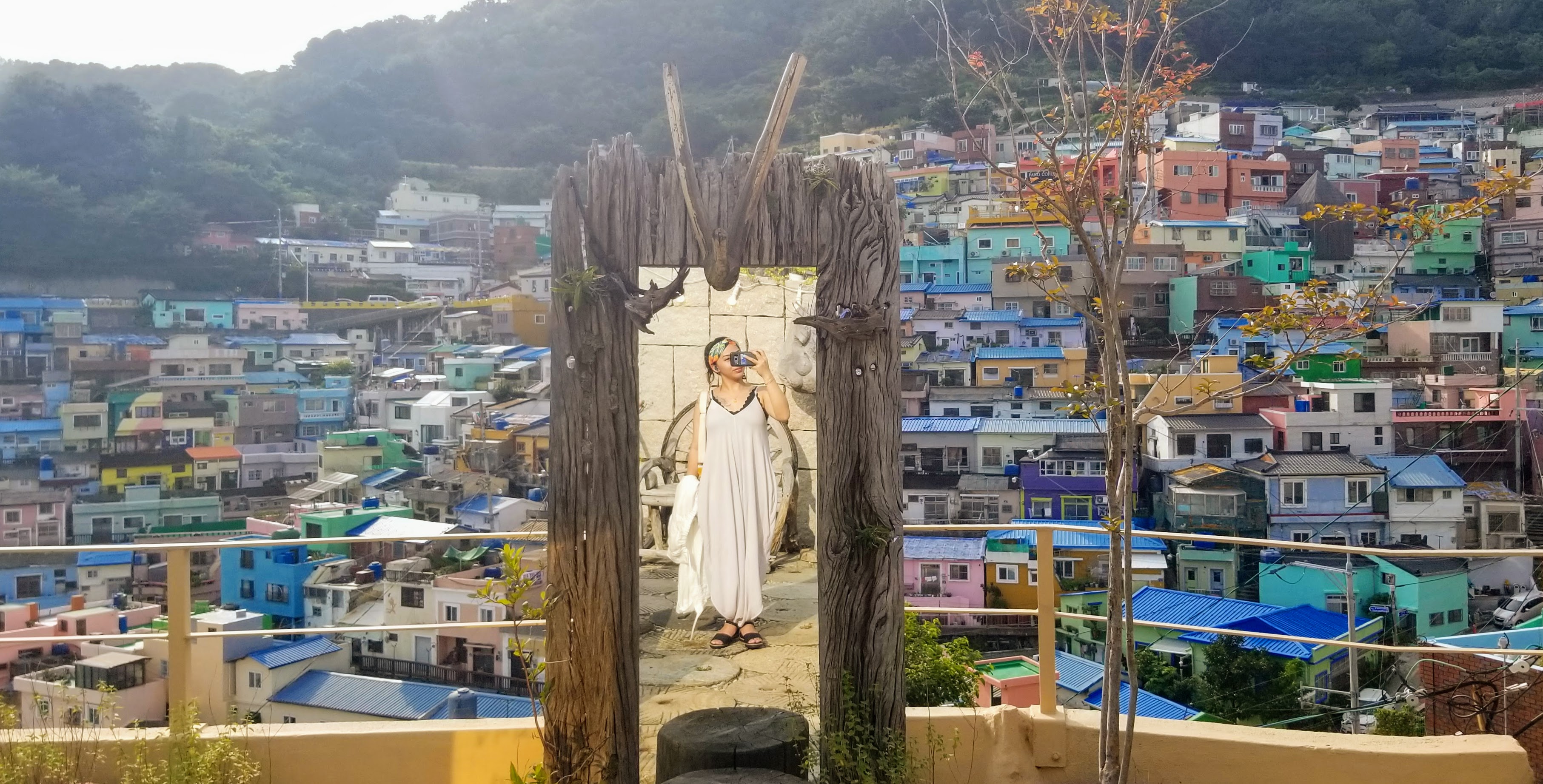
Wooden structure I found. Watch your head. 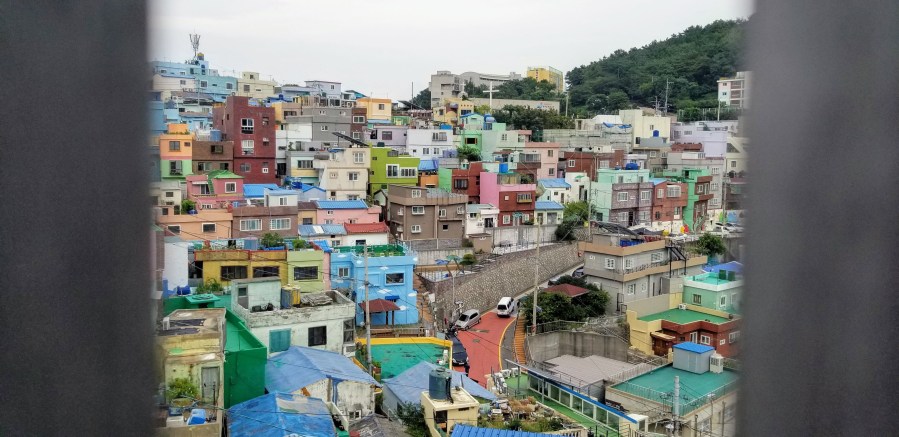
The view from the wooden structure 
Little Princes

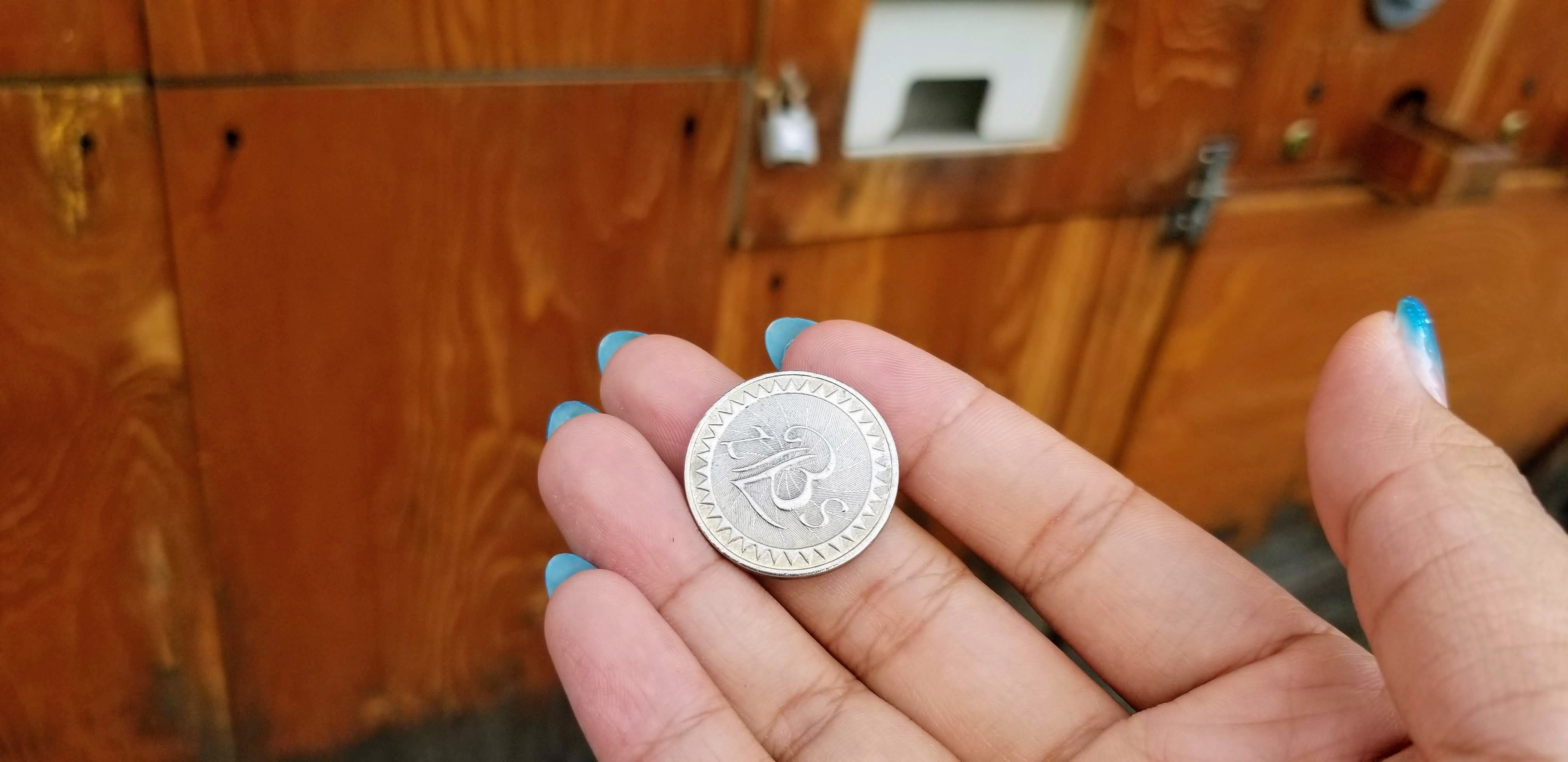
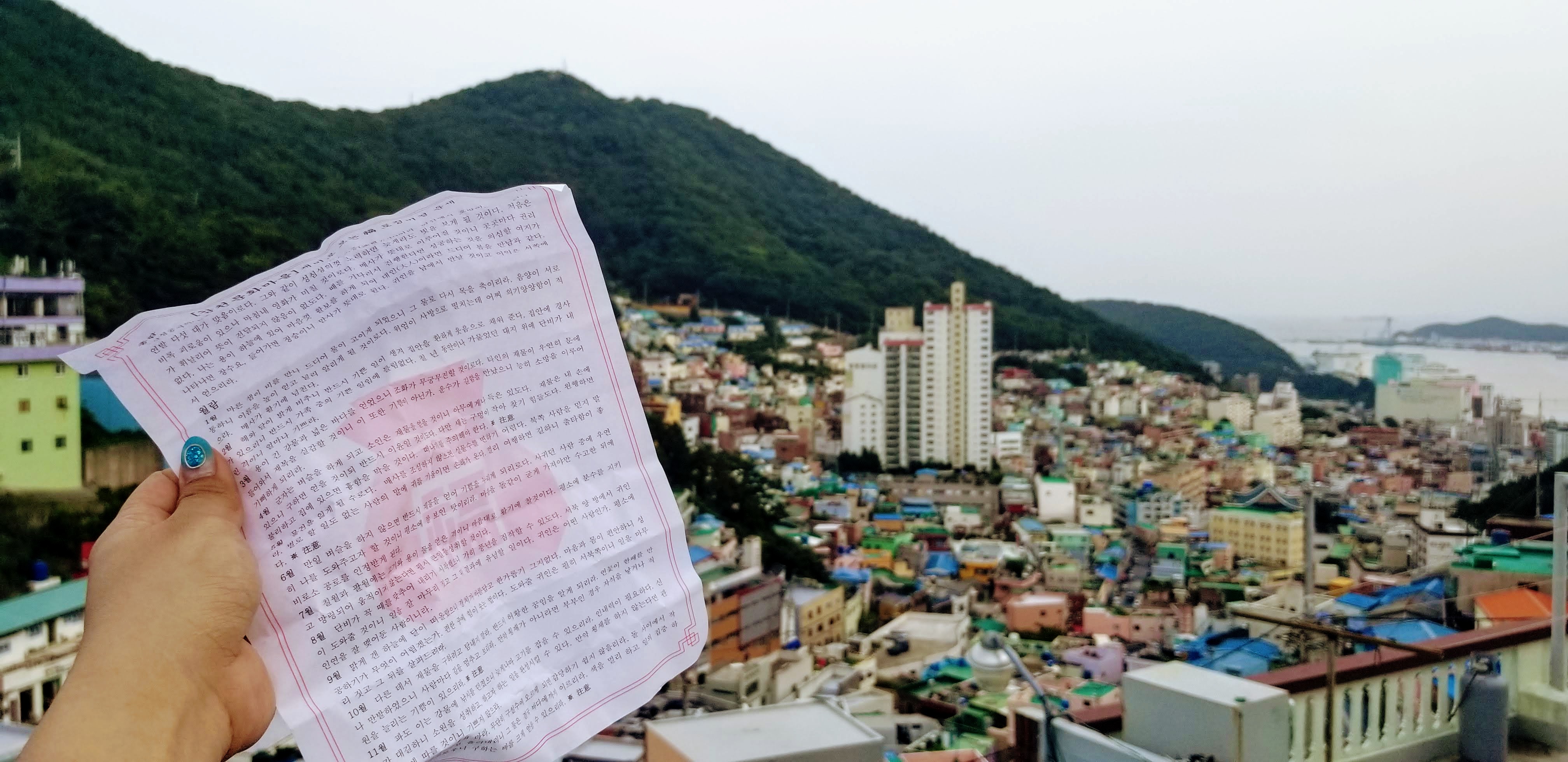
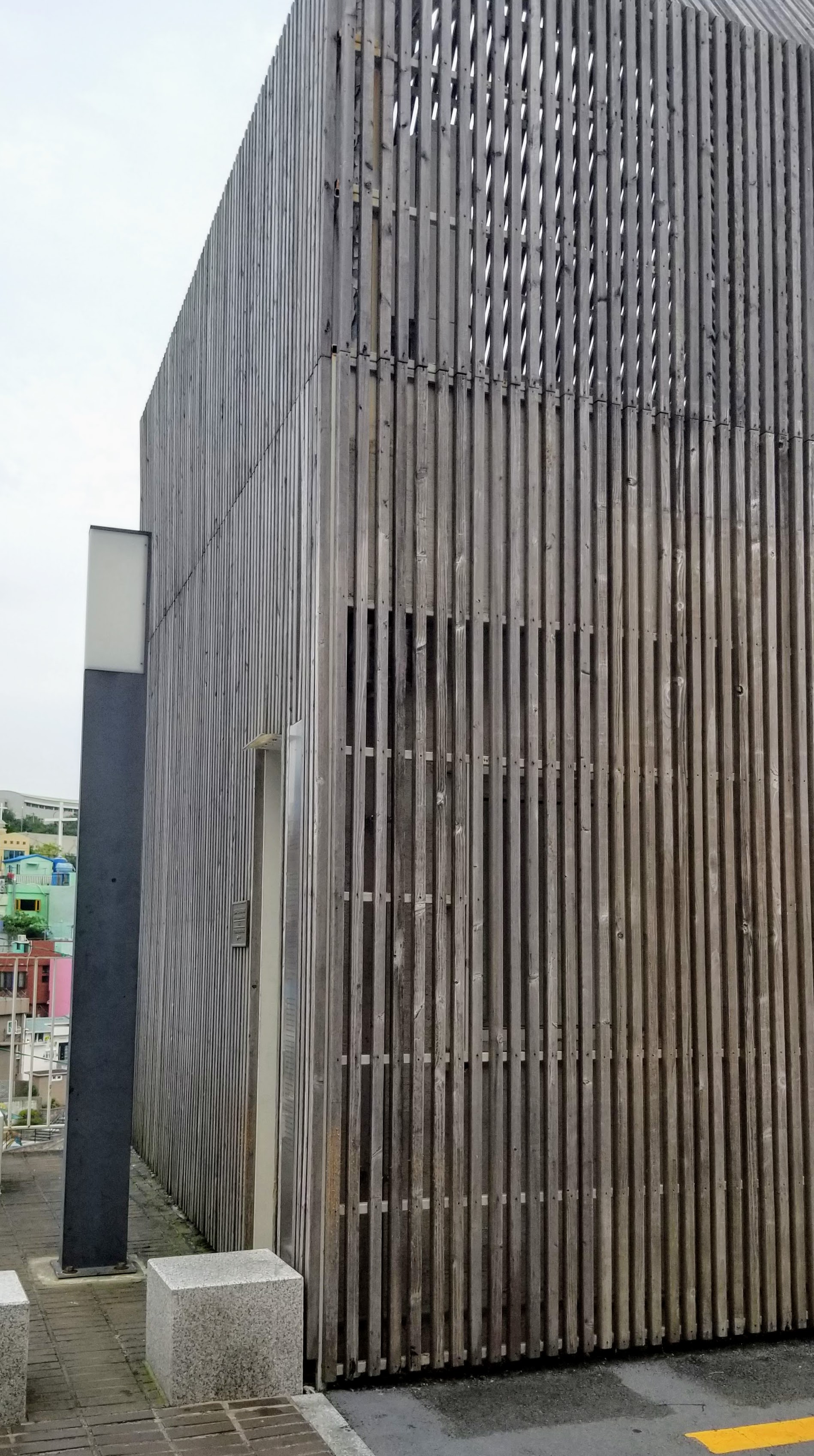
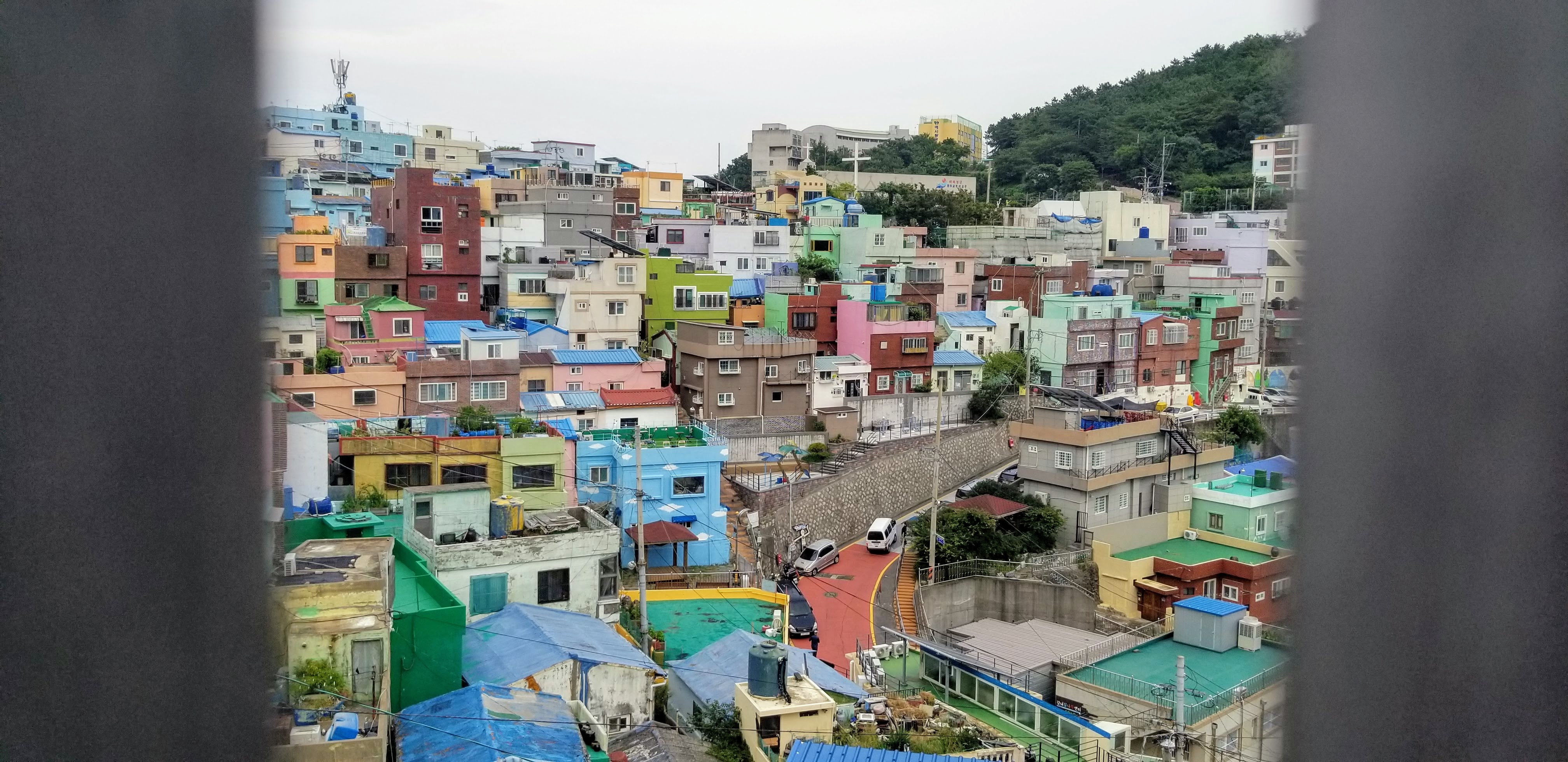
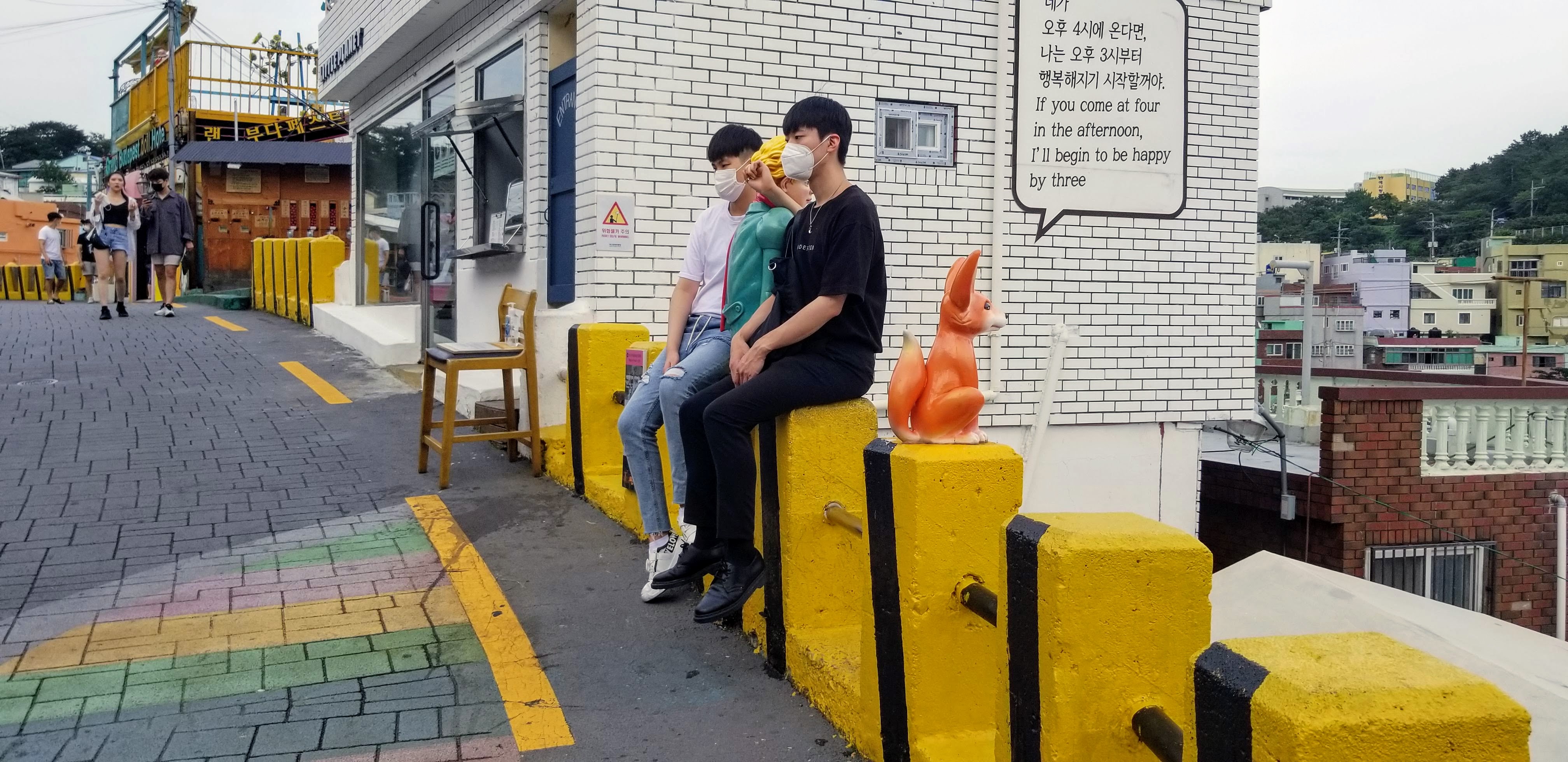
Today the area features winding roads filled with public art, cutesy cafés, restaurants, art galleries, shops, and numerous lookout points. It’s not a place you’ll want to miss.
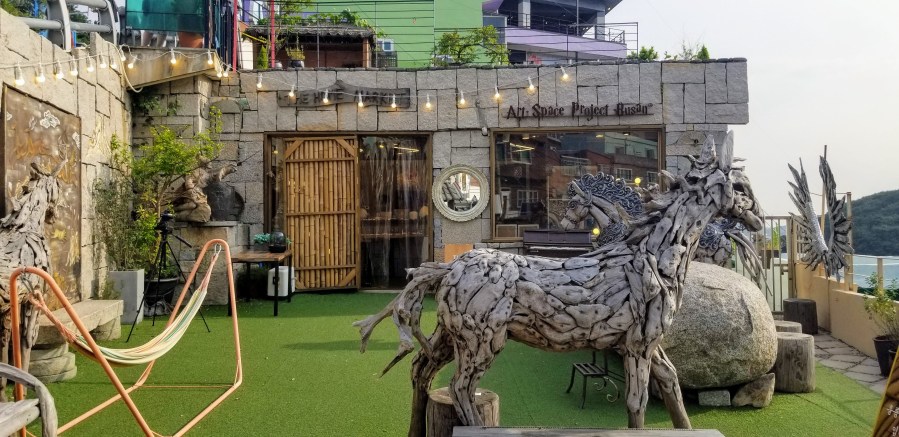
Cute cafe in Gamcheon Cultural Village where I took the picture in the mirror with Gamcheon Cultural Village in the background. 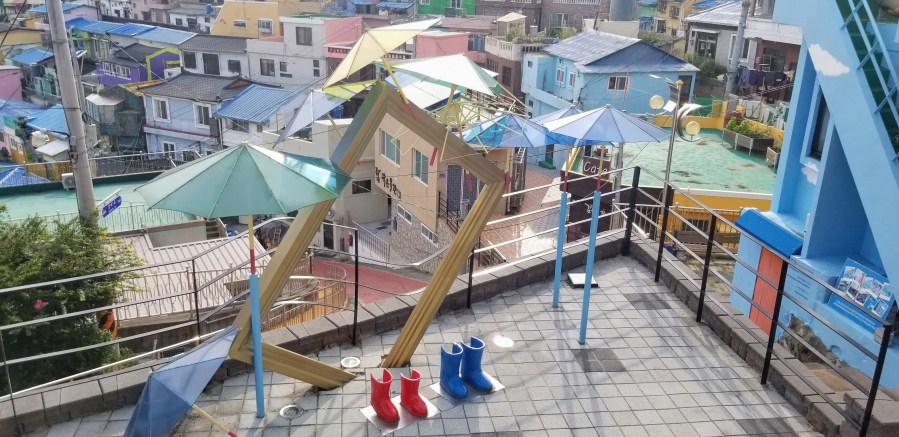
Frame Cafe 
Has a nice rooftop 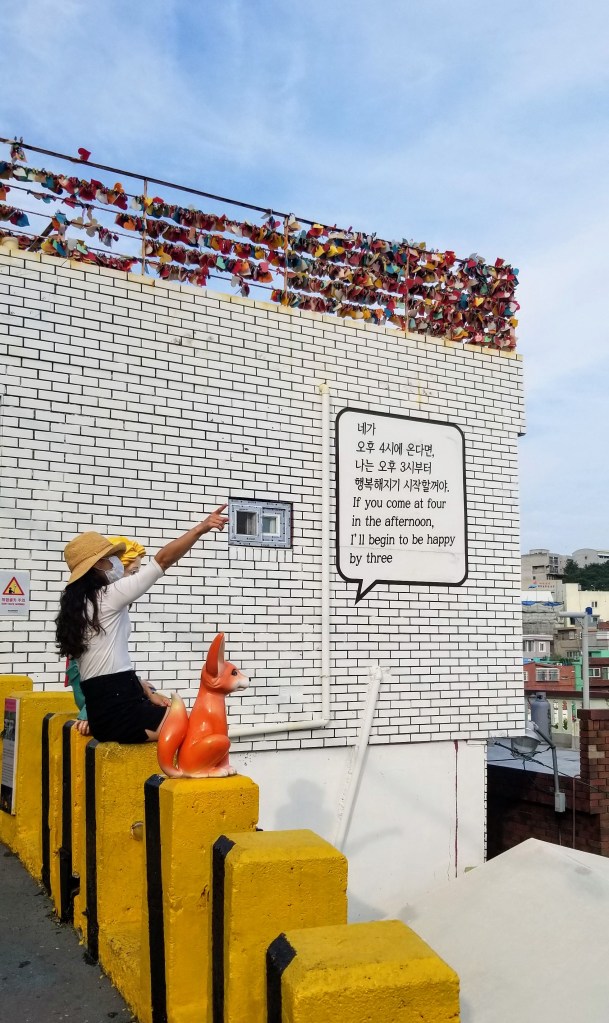
Side of the lock cafe 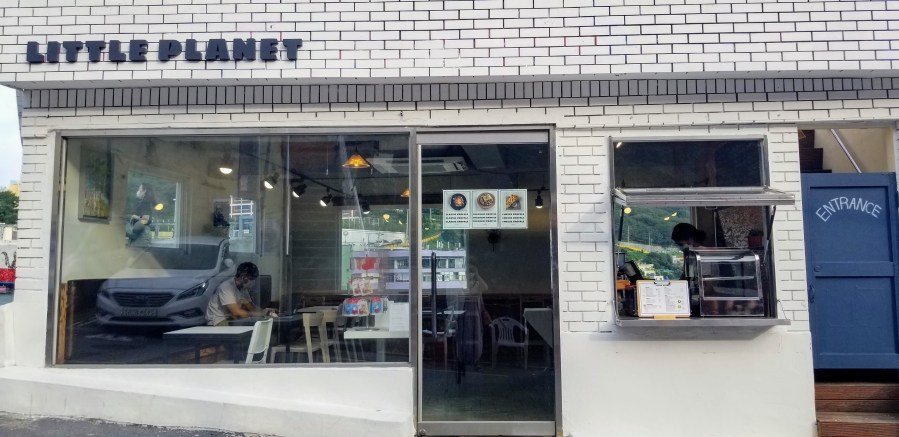
Front of the lock cafe 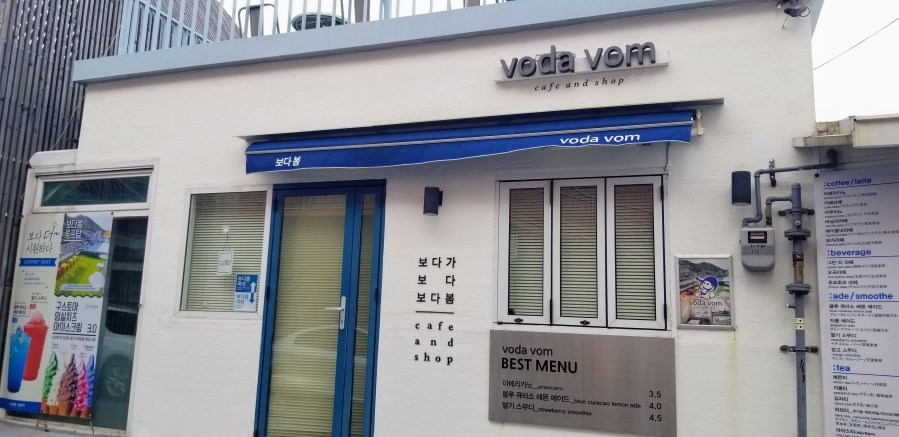
Cute cafe 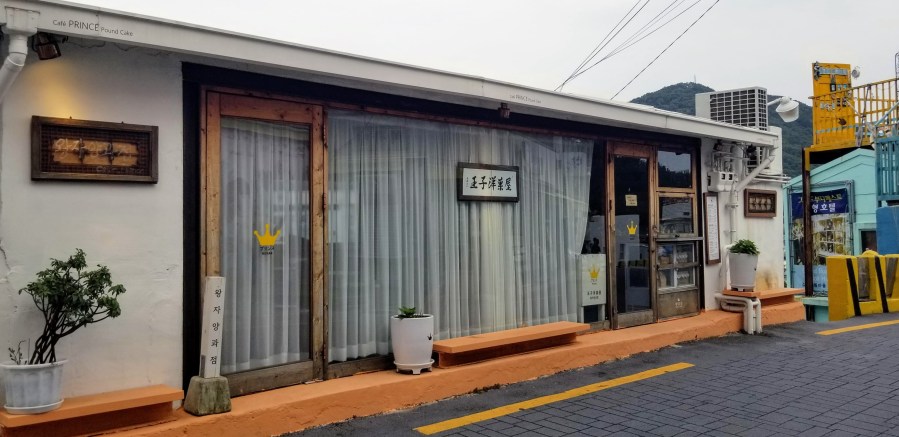
Cute cafe 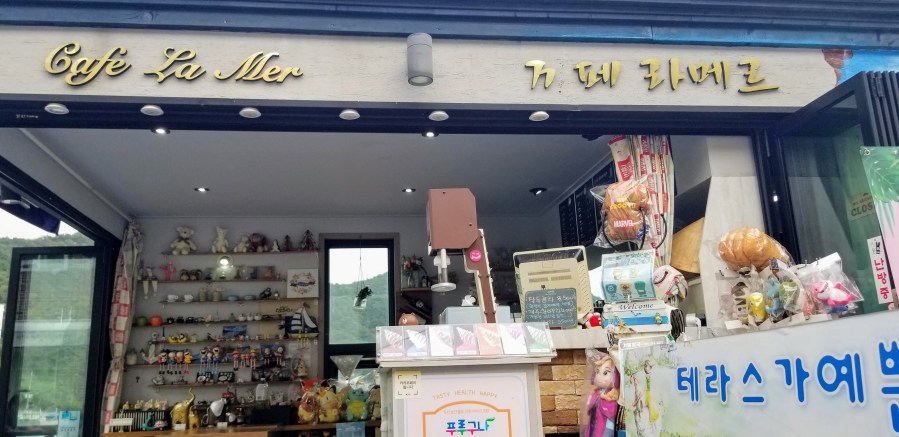
Souvenirs 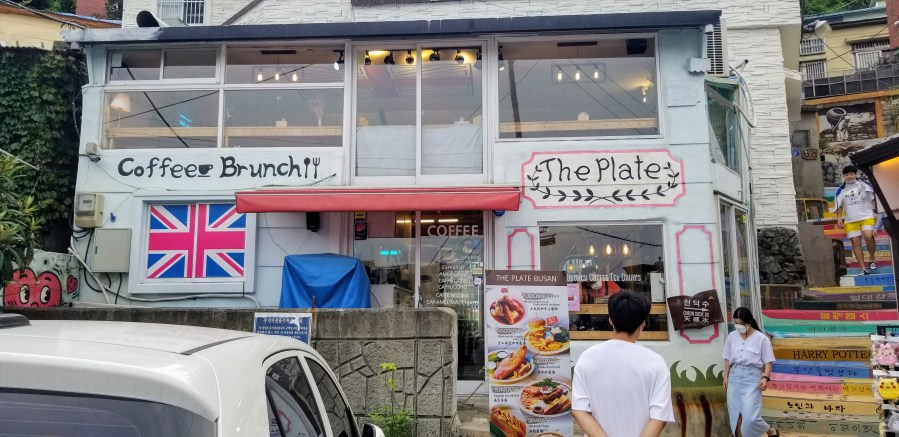
More souvenirs 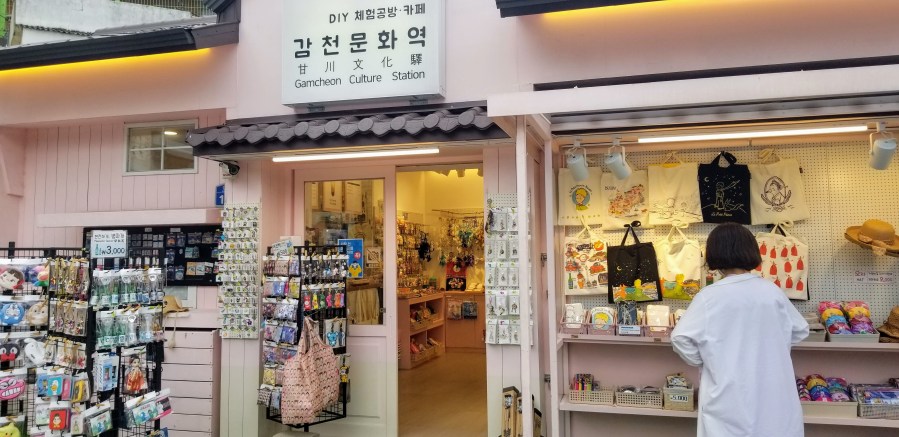
Souvenirs 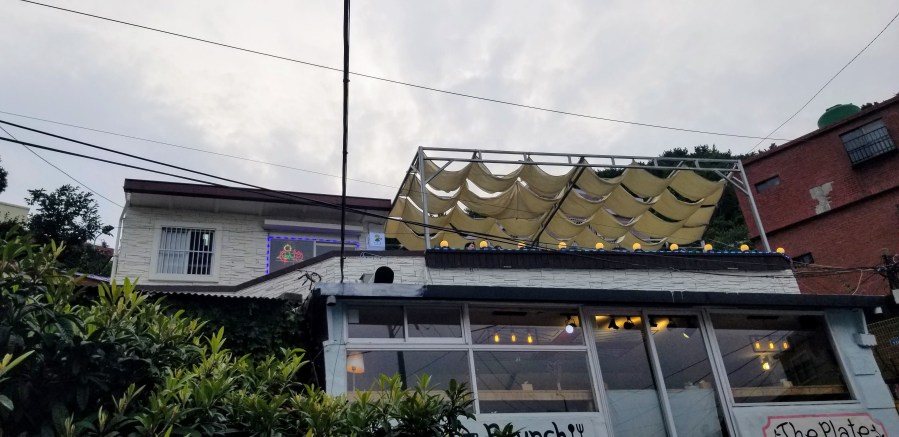
Cute cafe with rooftop! 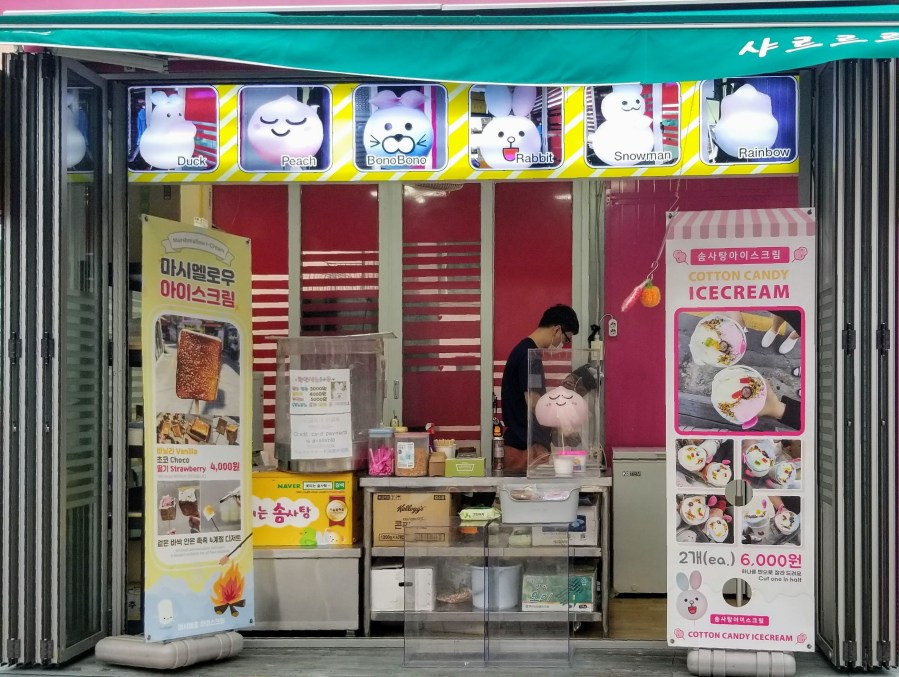
More like snacks~~
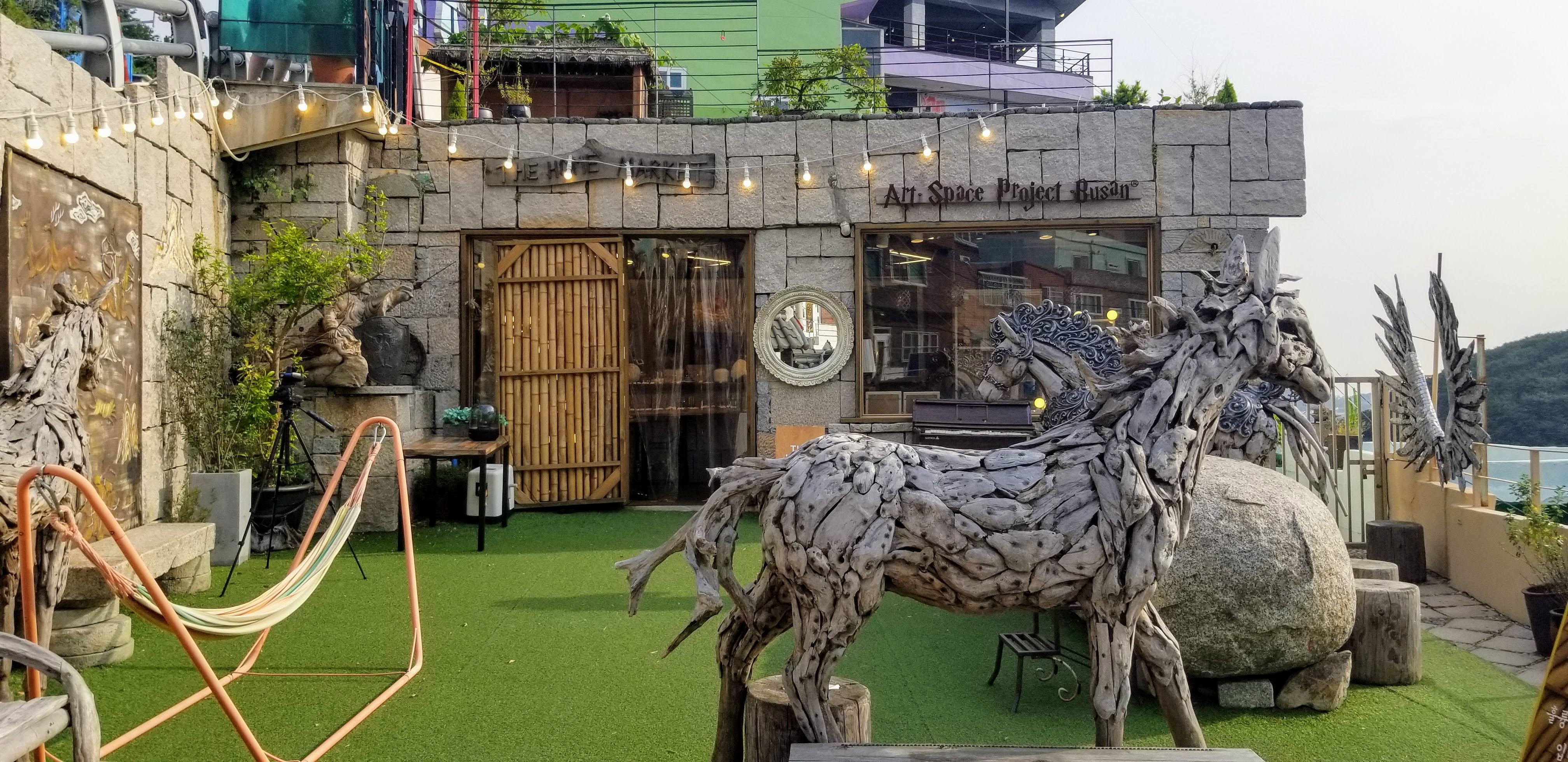
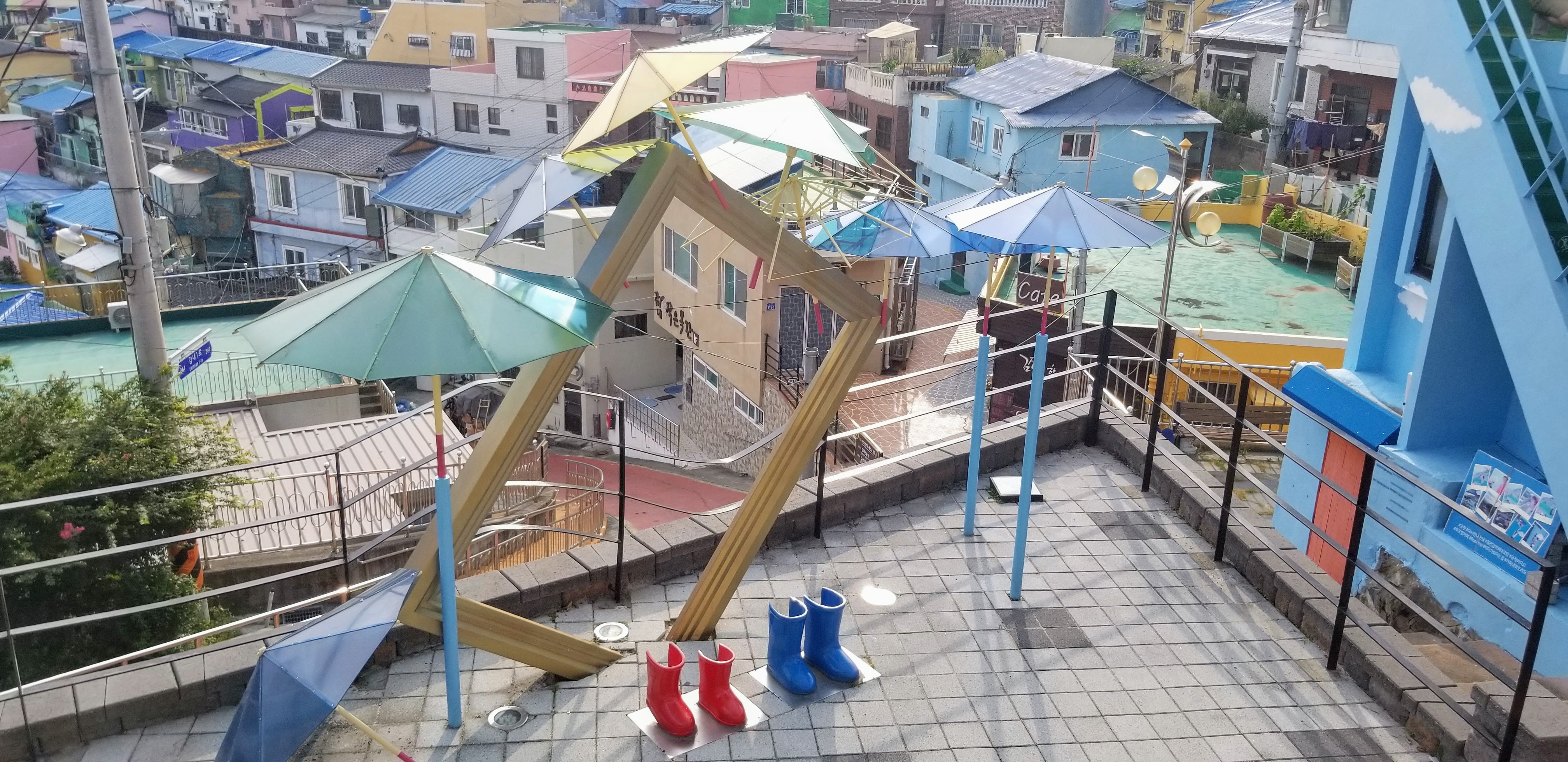
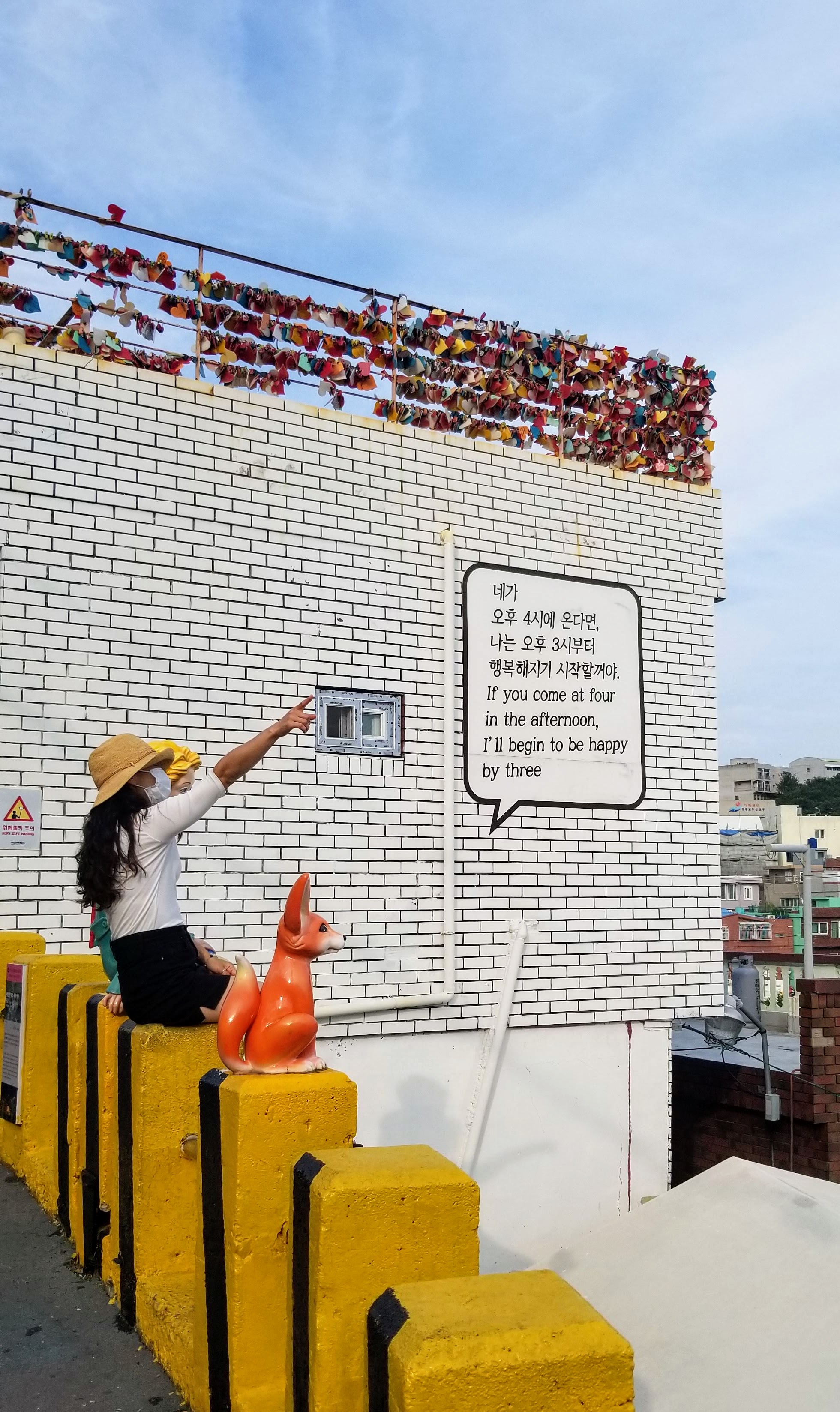
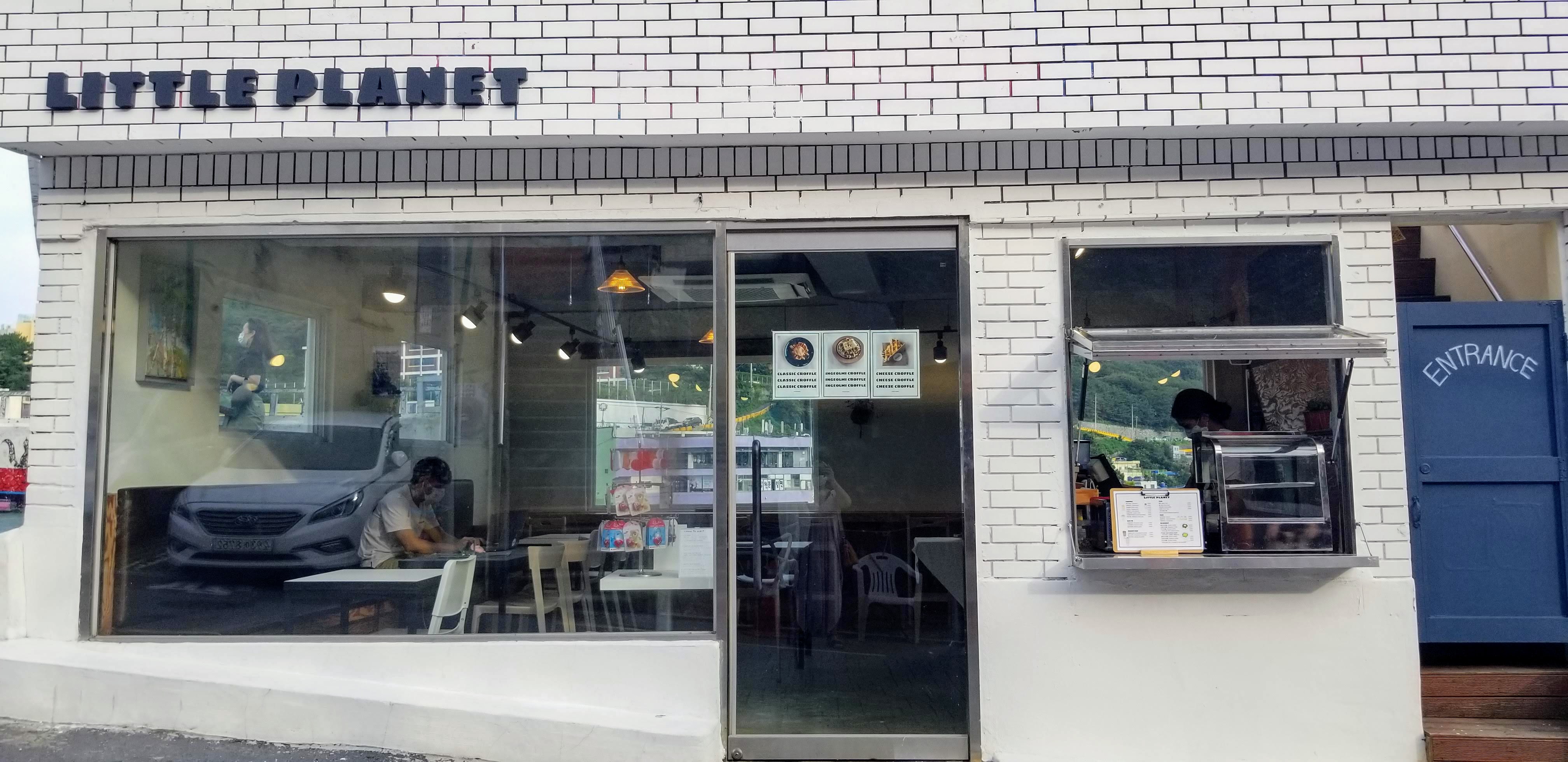
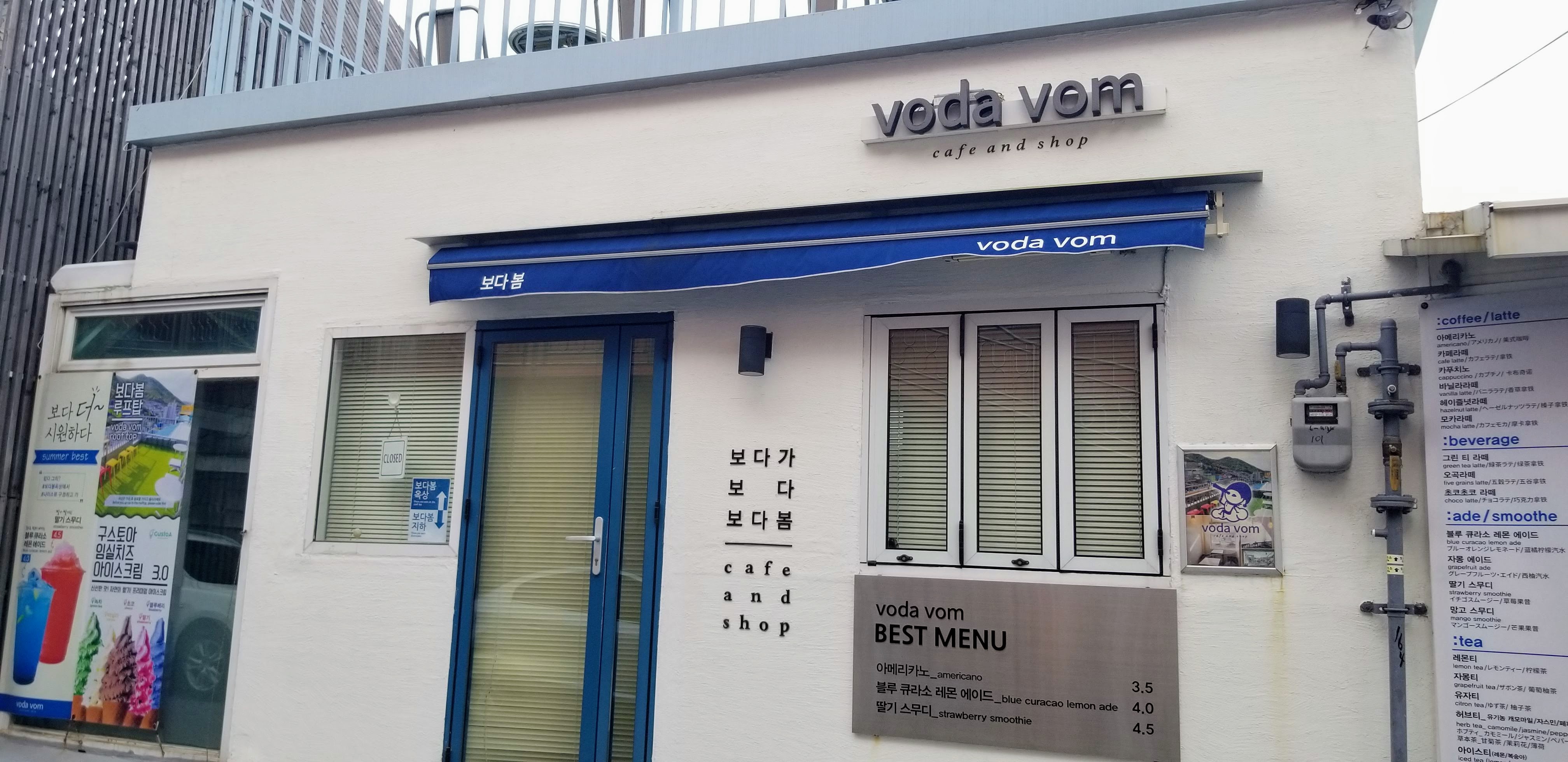
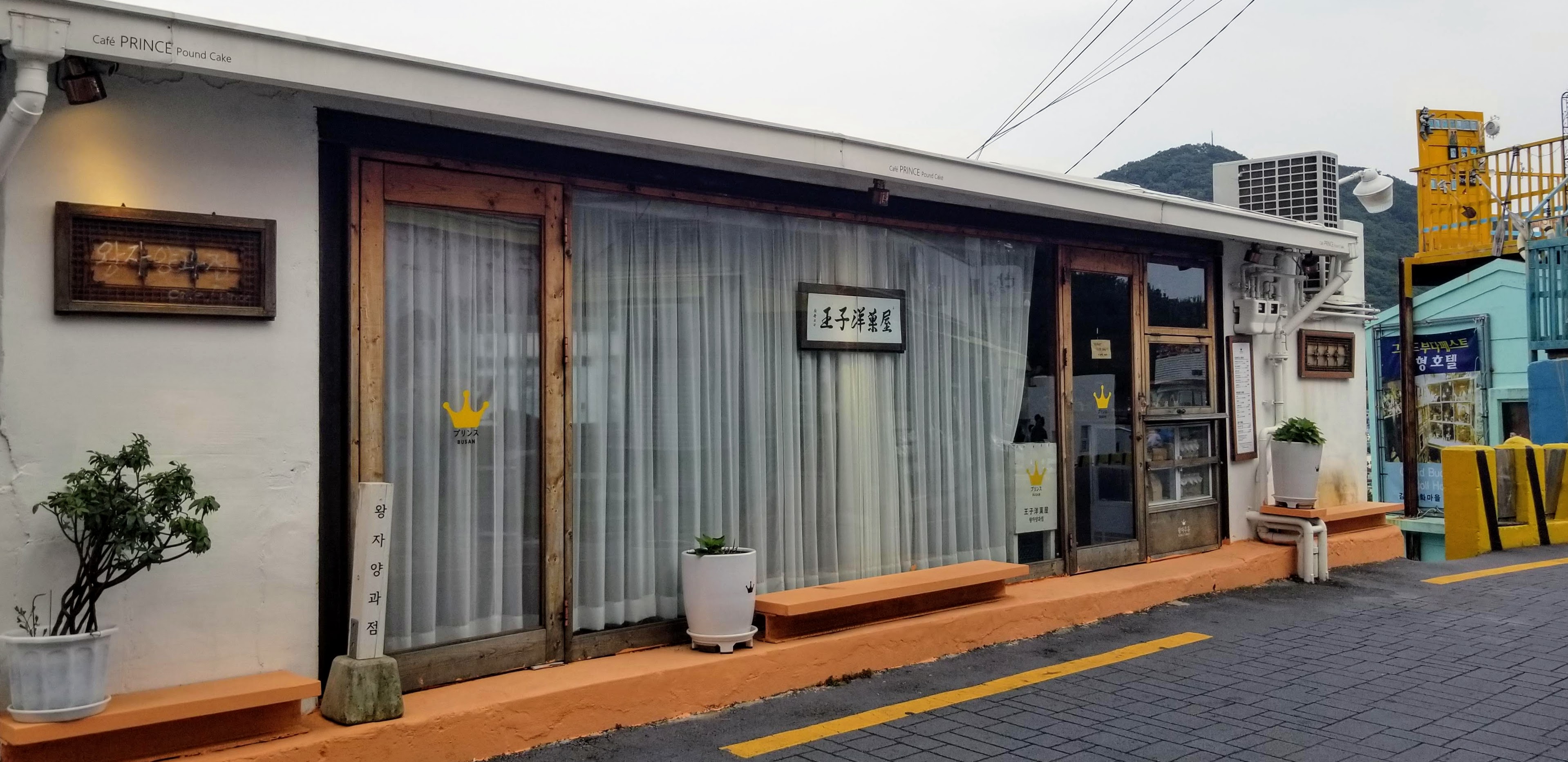
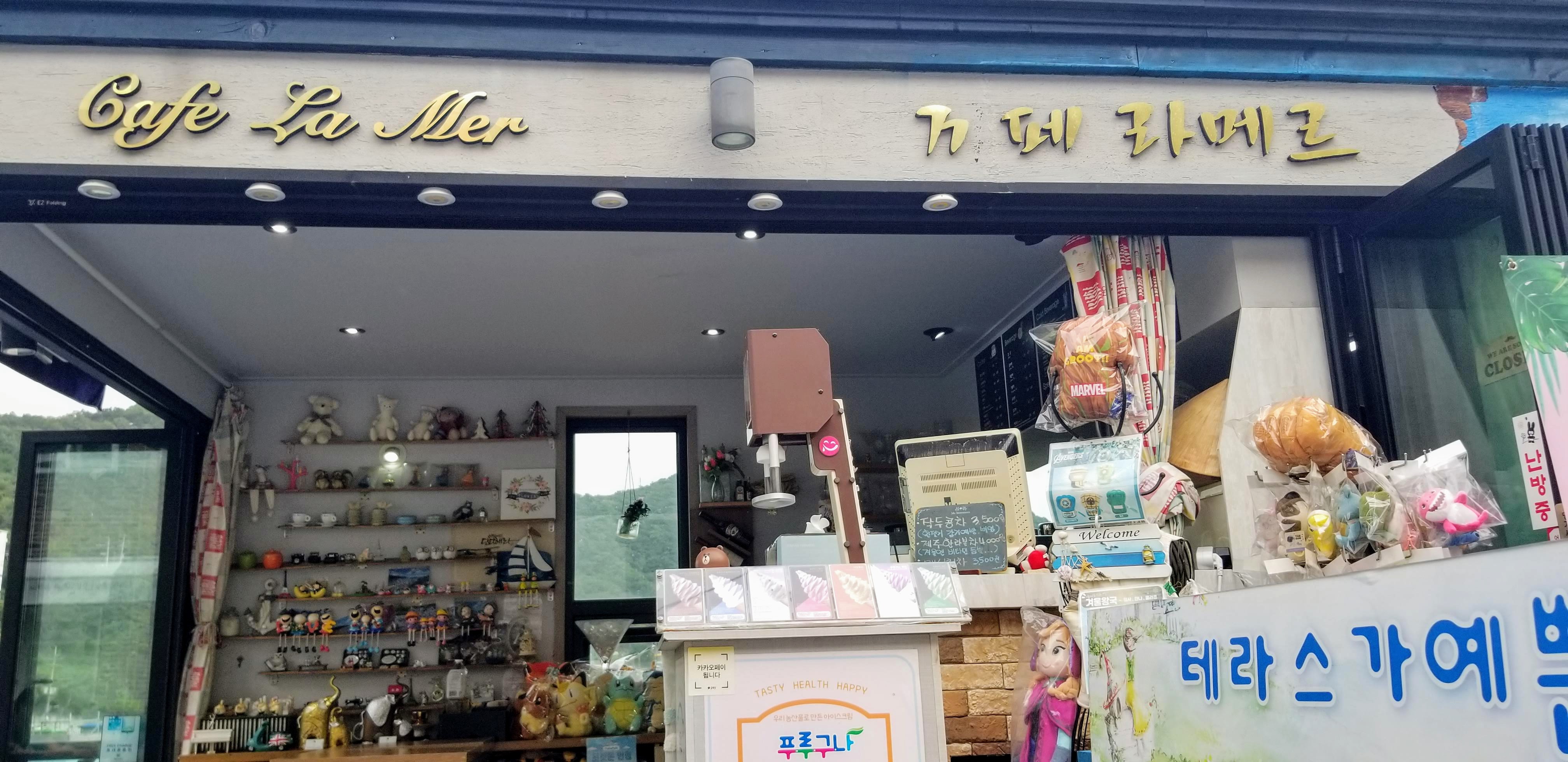
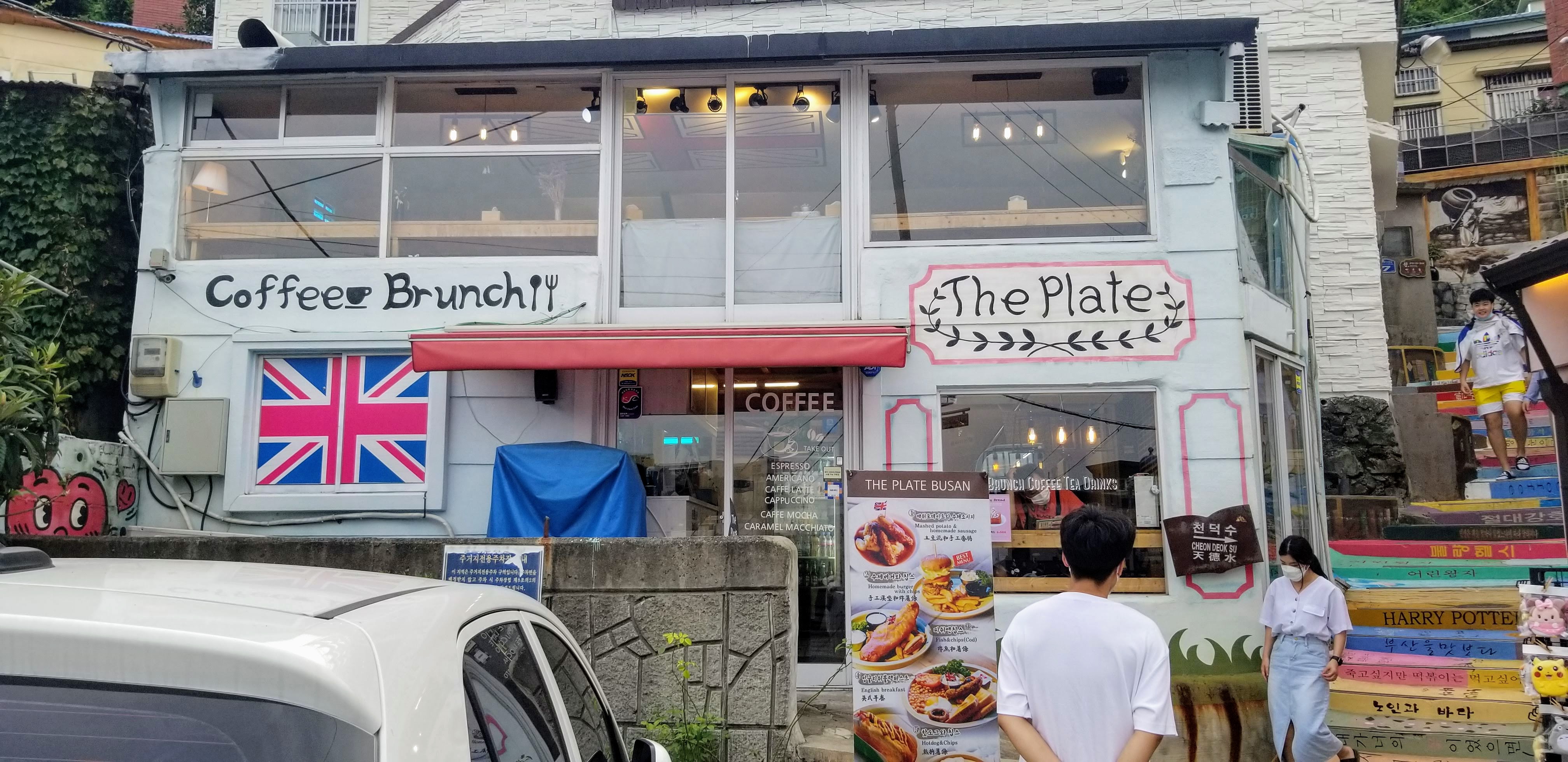
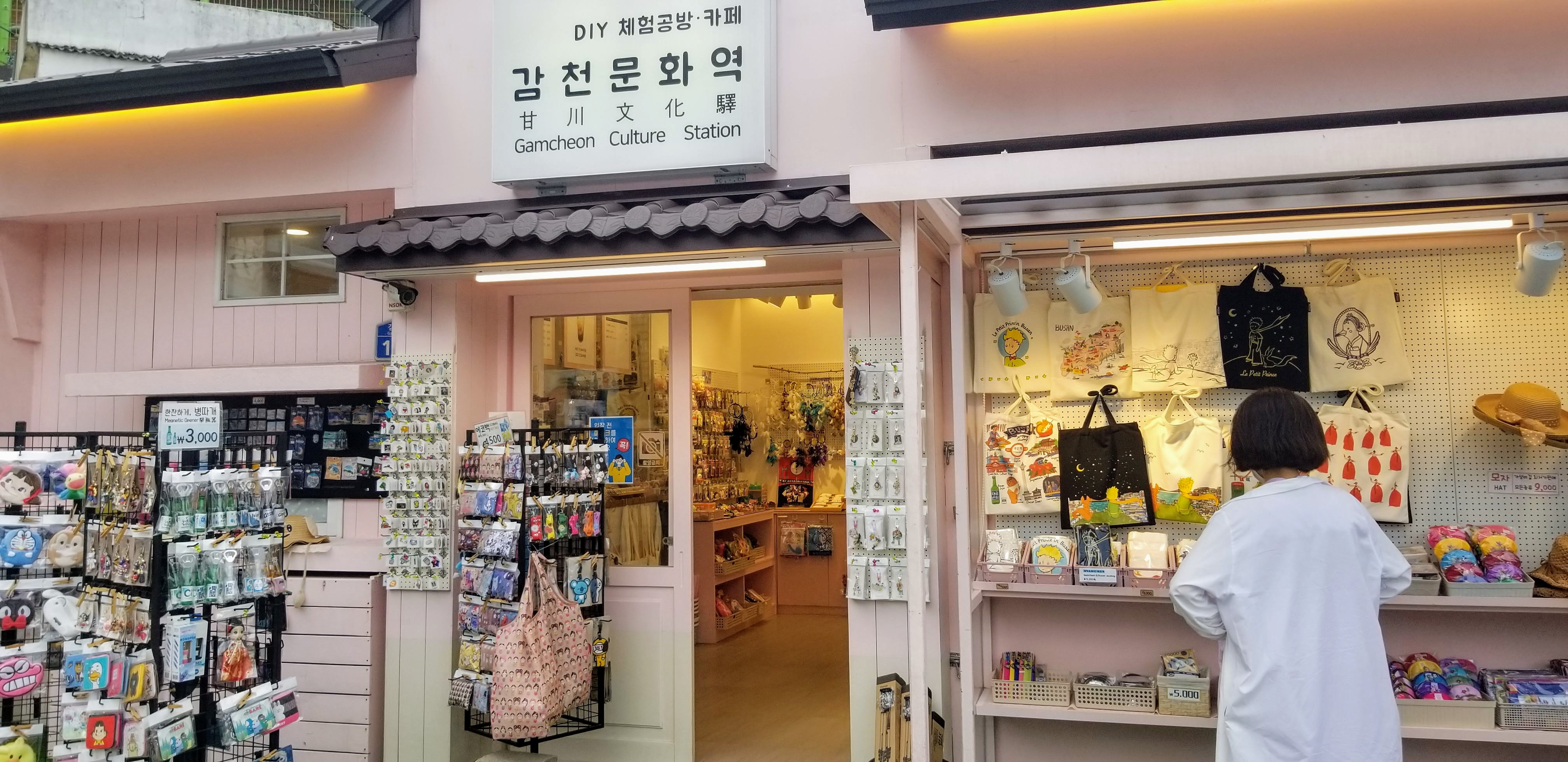
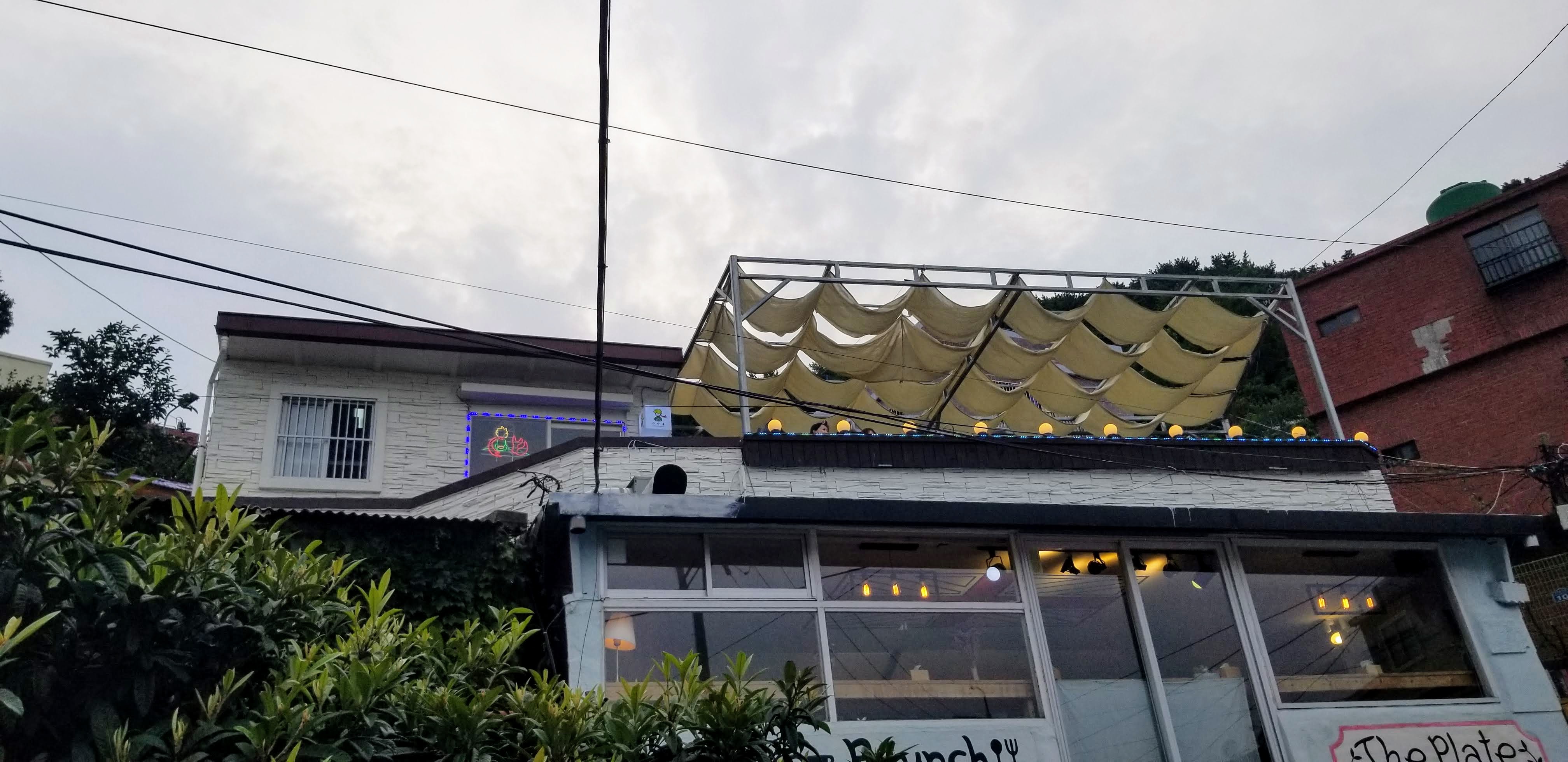
Today the area features winding roads filled with public art, cutesy cafés, restaurants, art galleries, shops, and numerous lookout points. It’s not a place you’ll want to miss.
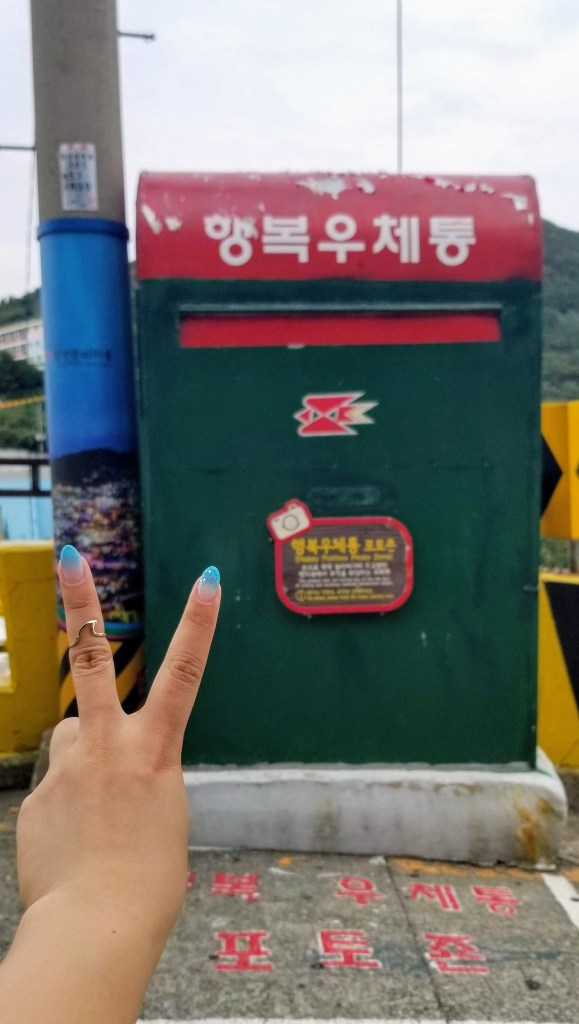
Big post office box. 
Lots of mirrors here. 
Portrait by Rabbit 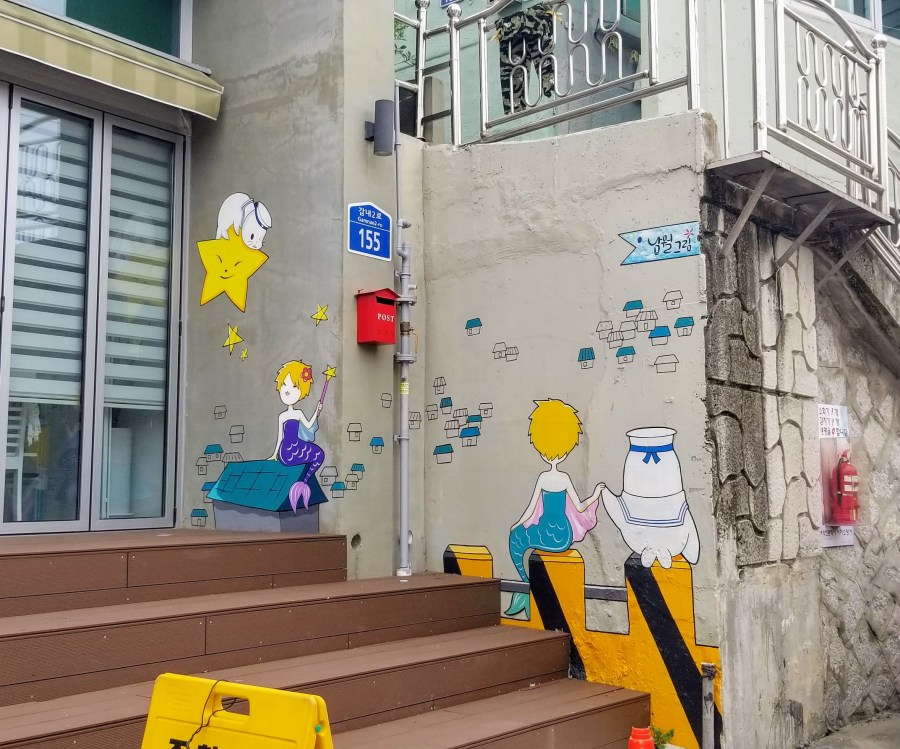
Little Prince 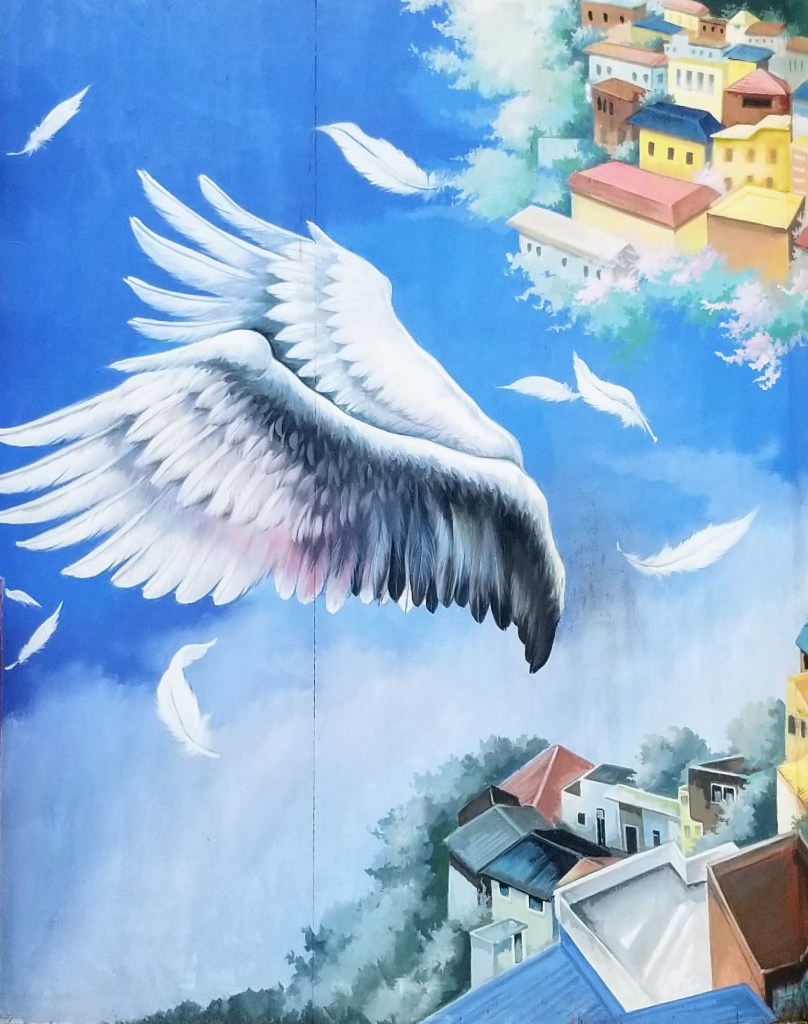
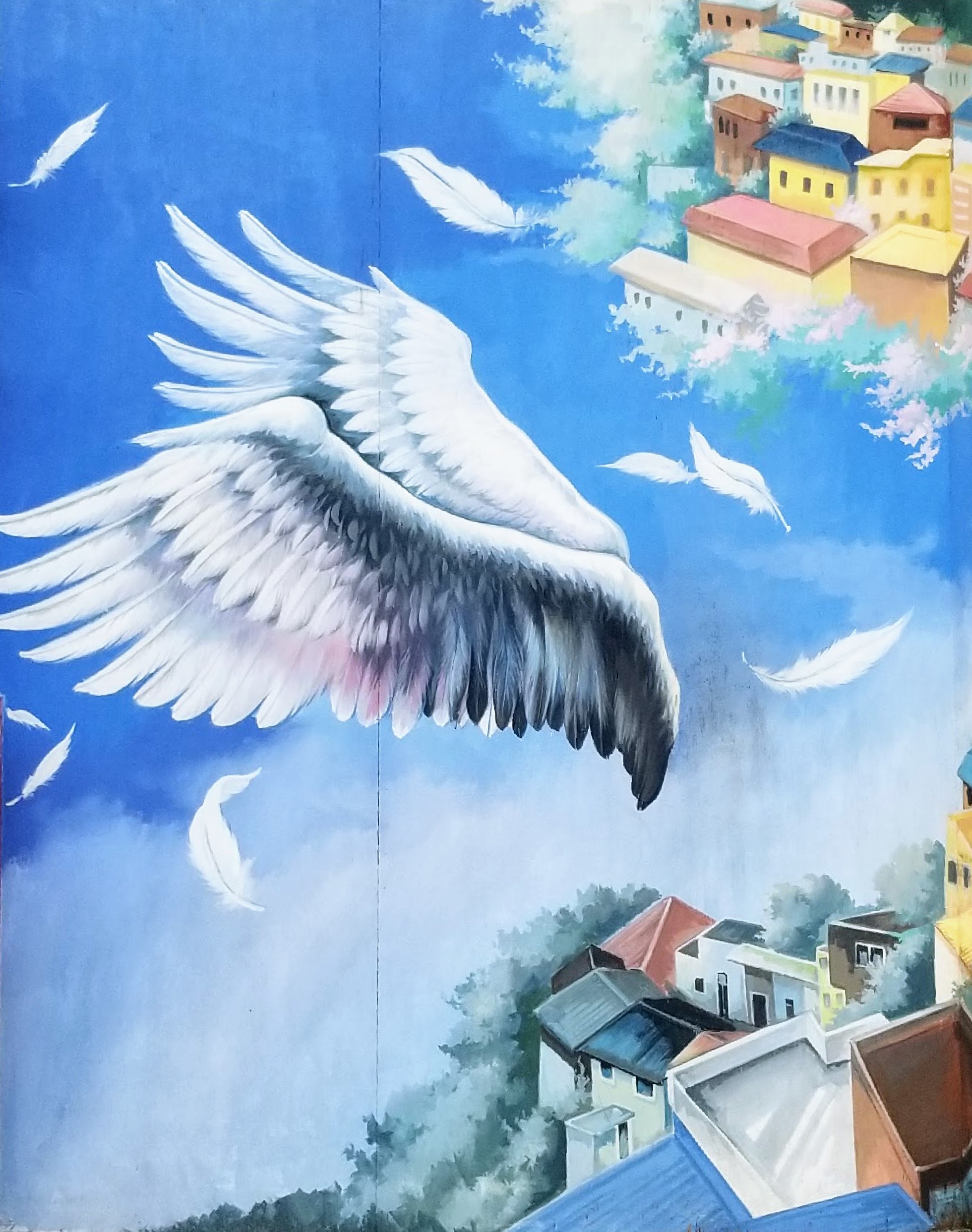
Angel wings



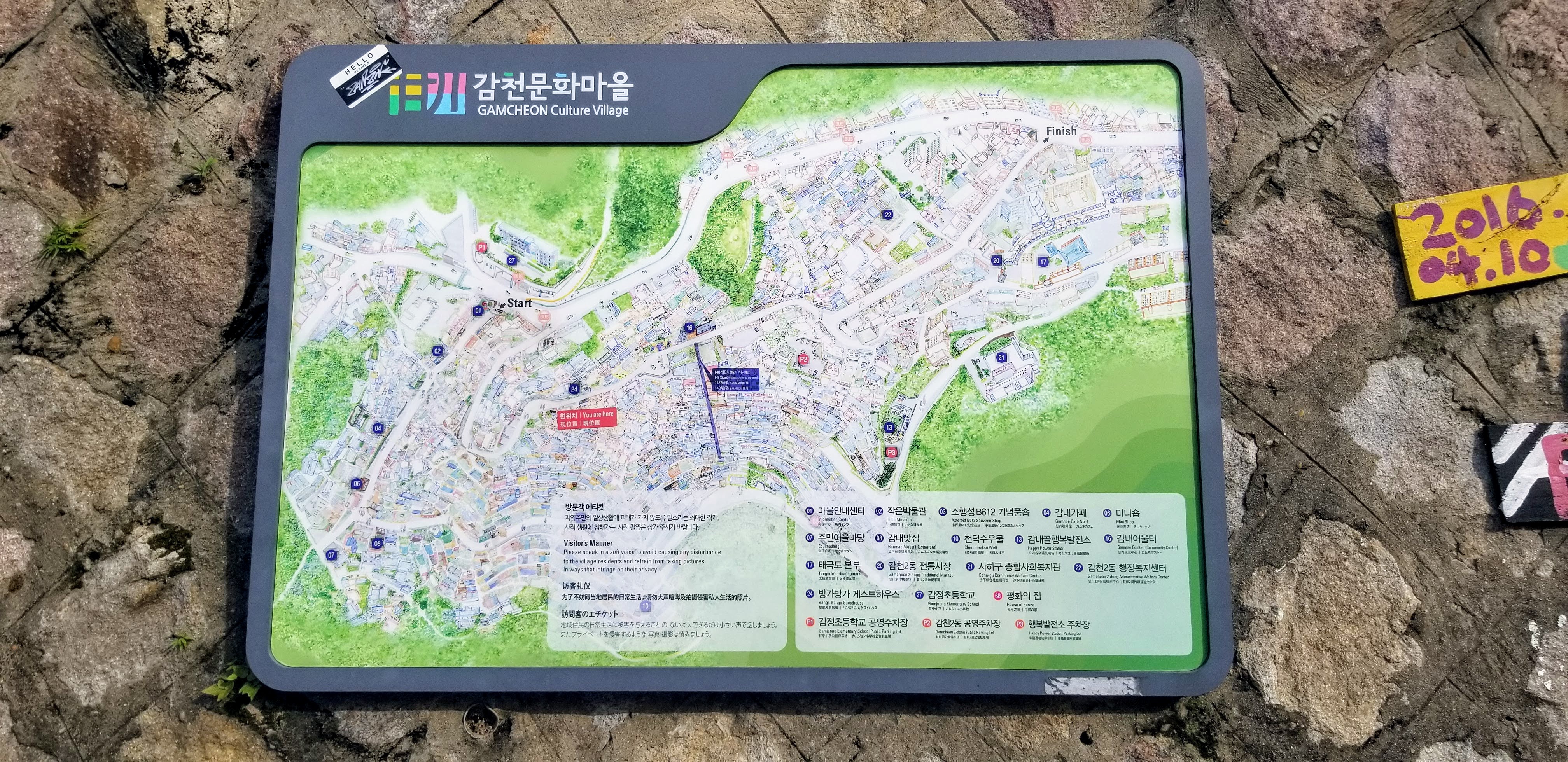
Make sure to grab a detailed map with suggested walking tours from the information center at the top.
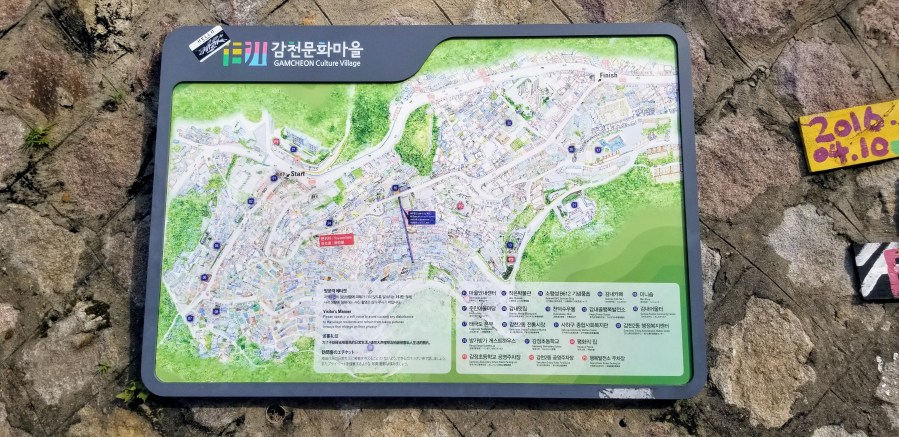
Map 
Cultural site 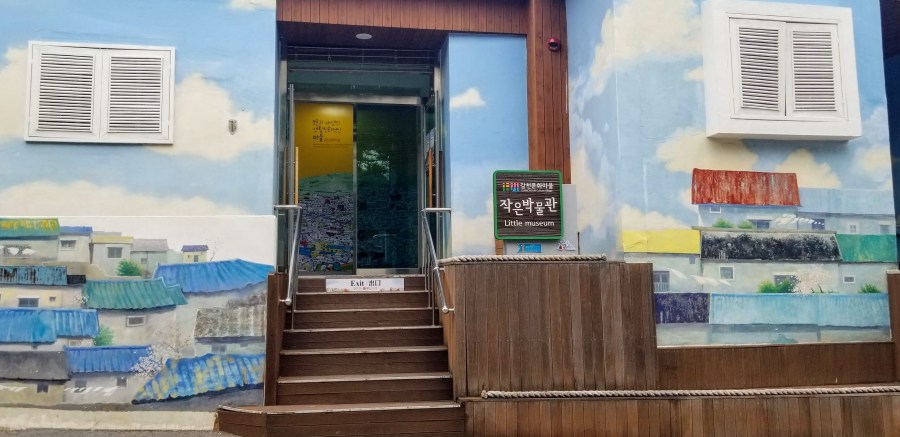
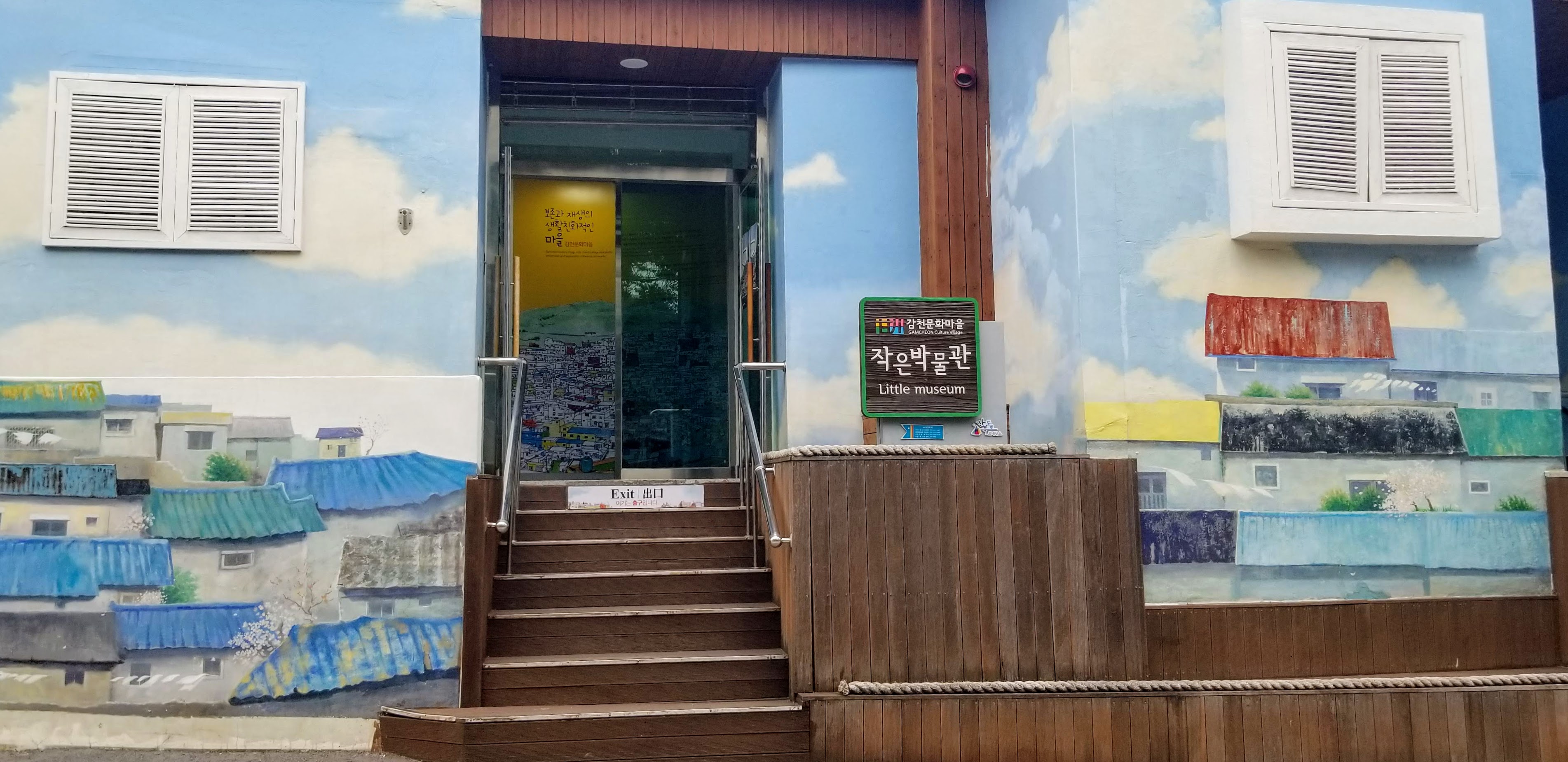
Gamcheon Cultural Village Museum 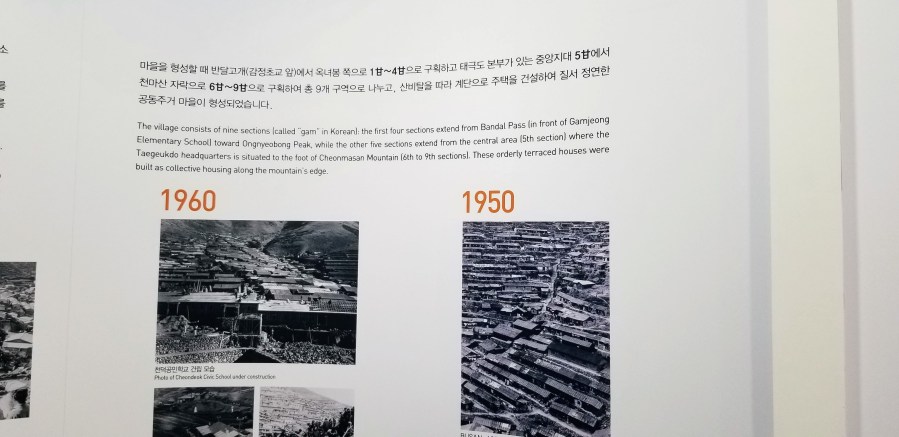
Inside the museum 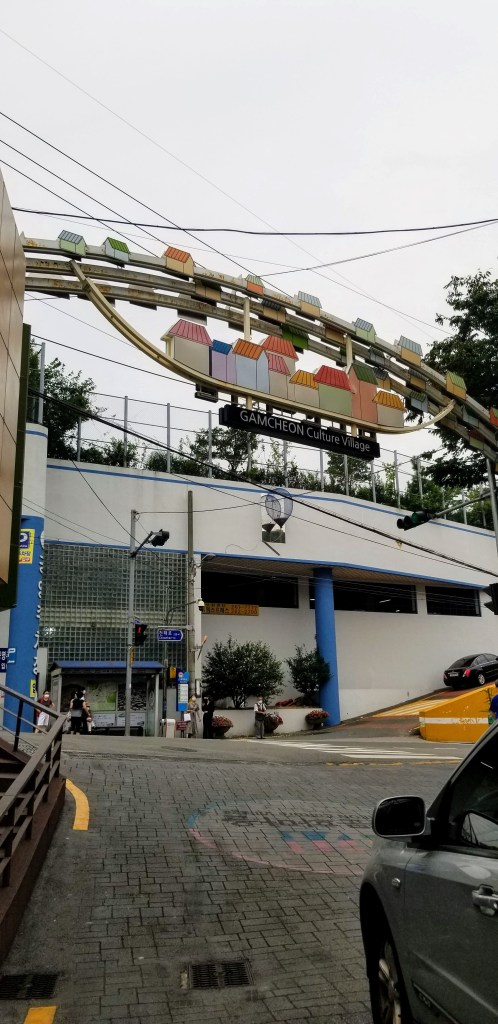
Entrance / exit
Gamcheon Culture Village Website
Seomyeon 서면: Shopping, Food Alley, and bar hopping
The commercial heart of Busan, Seomyeon, is also one of the best neighborhoods in town for shopping. Start with the huge Lotte Department Store or by exploring the maze of underground shopping streets lying below. Seomyeon is also the most crowded area in Busan, having an average floating population of 1,000,000 a day. Seomyeon has three underground shopping malls meeting beneath the Seomyeon road junction, a department store, many shopping stores, bars, restaurants, movie theaters, banks, bookstores, clinics, etc.
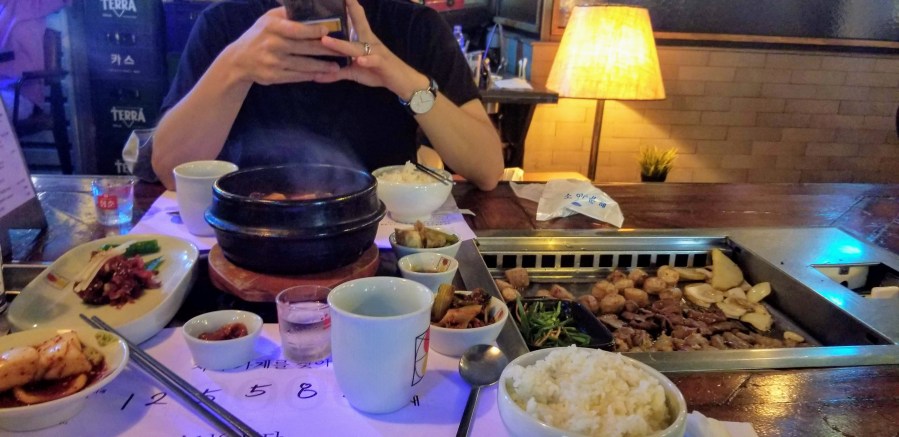
After you’re done shopping or night clubbing in Seomyeon, Busan’s fashionable commercial center, you’re likely going to need a snack. Head directly to Seomyeon Food Alley. More of an entire neighborhood devoted to food that one single alley, here small restaurants and food stalls abound. It’s also one of the best places in Busan to try eating in a pojangmacha (an enclosed tent where a handful of people can sit around a cook and dine on local foods).
The area southeast of Lotte Department Store with lots of eateries and cafés is also sometimes called Seomyeon Art Street.
Address: Bujeon-dong Busanjin-gu, Busan / 부산 부산진구 부전동
Nampo-dong 남포동
Nampo-dong is Busan’s shopping paradise and activity centers. In Korean maze-alley street shopping, you’ll find anything from boutique shops from moderate to inexpensive clothing, Korean skincare shops to street vendors selling street food. It is very lively at night when Koreans come out to eat, relax and shop. Nampo-dong also houses the annual Busan International Film Festival, Gukje, and Bupyeong Markets and is next to Yongdungsan park and Busan Tower.
Gukje Market 국제시장
Gukje Market, situated in Jung-gu, central Busan, is a representative traditional market in Busan. After the liberation in 1945, the history of Gukje Market began at the current location as a marketplace for trading goods left by Japanese people and goods brought by Koreans abroad. This vacant lot was crowded with people and was initially called Dottaegi Market (a flea market). The name changed to a Free Market with the erection of a building in 1948 and again the name Gukje Market was given as the market began handling items sourced from the US military in 1950.
Gukje Market, which is regarded as a must-see destination, has been a feature of Busan for over 70 years, along with Food Alley, Arirang Street, Youth Street, and Kujae Alley, and has abundant stories about modern Korean history. Even today, the area is bursting with the old-fashioned marketplace spirit, and it is stocked with shops in Gukje Market sell an assortment of new and used items, such as household appliances, clothing, and homeware products at inexpensive prices. It also houses Gukje Food Market, where you can snack on Korean street food bites like tteokbokki (spicy rice dumplings), hotteok (sweet pancake crackers), dried seafood, and more.
Address: 36, Junggu-ro, Jung-gu, Busan / 부산 중구 중구로 36
Hours: Daily 09:00-20:00, Closed the 1st and 3rd Sunday of every month.
Gukje Market Website
Gwangbokdong Food Street
Gwangbokdong Food Street is a narrow lane that feeds into Gukje Market. One of the most unique things to do in Busan is to choose a low chair at one of the many food vendors operated here by Korean ahjummas (grandmas) and dig in to a bowl of delicious and very cheap milmyeon (wheat noodles) or bibimyeon (glass noodles). Breakfast or lunch is the best time to come.
The street seems to have so many different names: Changseondong Meokja Golmuk is the street’s local name, while the actual street name is Gwangbok-ro 35 beon-Gil. A large red and white curving gate at the entrance says Arirang Street. Many websites simply refer to it as Gukje Market Food Street.
Bupyeong Market 부평시장
Across from Gukje Market is Bupyeong Market. It’s often referred to as Kkangtong Market (kkangtong meaning ‘cans’ in Korean) since canned goods used to be the market’s primary type of merchandise but now sells domestic to imported products and Korean snacks. . Nowadays, of course, Bupyeong Market sells virtually everything from domestic to imported goods. There’s something for everyone; sweet snacks for the kids and a variety of cookware for those building a nest. Quality clothing and bags are available at inexpensive prices year-round. Note: Cash mostly.
Tin Can Market is both very interesting and photogenic, and it’s nearly as huge as Gukje Market. While Gukje Market is more focused on household wares, Tin Can Market is almost entirely devoted to food, from seafood, herbs, and produce to ready-made meals, sushi, and even a pizza shop.
Address: 48, Bupyeong 1-gil, Jung-gu, Busan / 부산광역시 중구 부평1길 48
Hours: 08:00-20:00 (Varies by store), Night market 19:30-23:30
Bypyeong Market Website
BIFF Square 광장
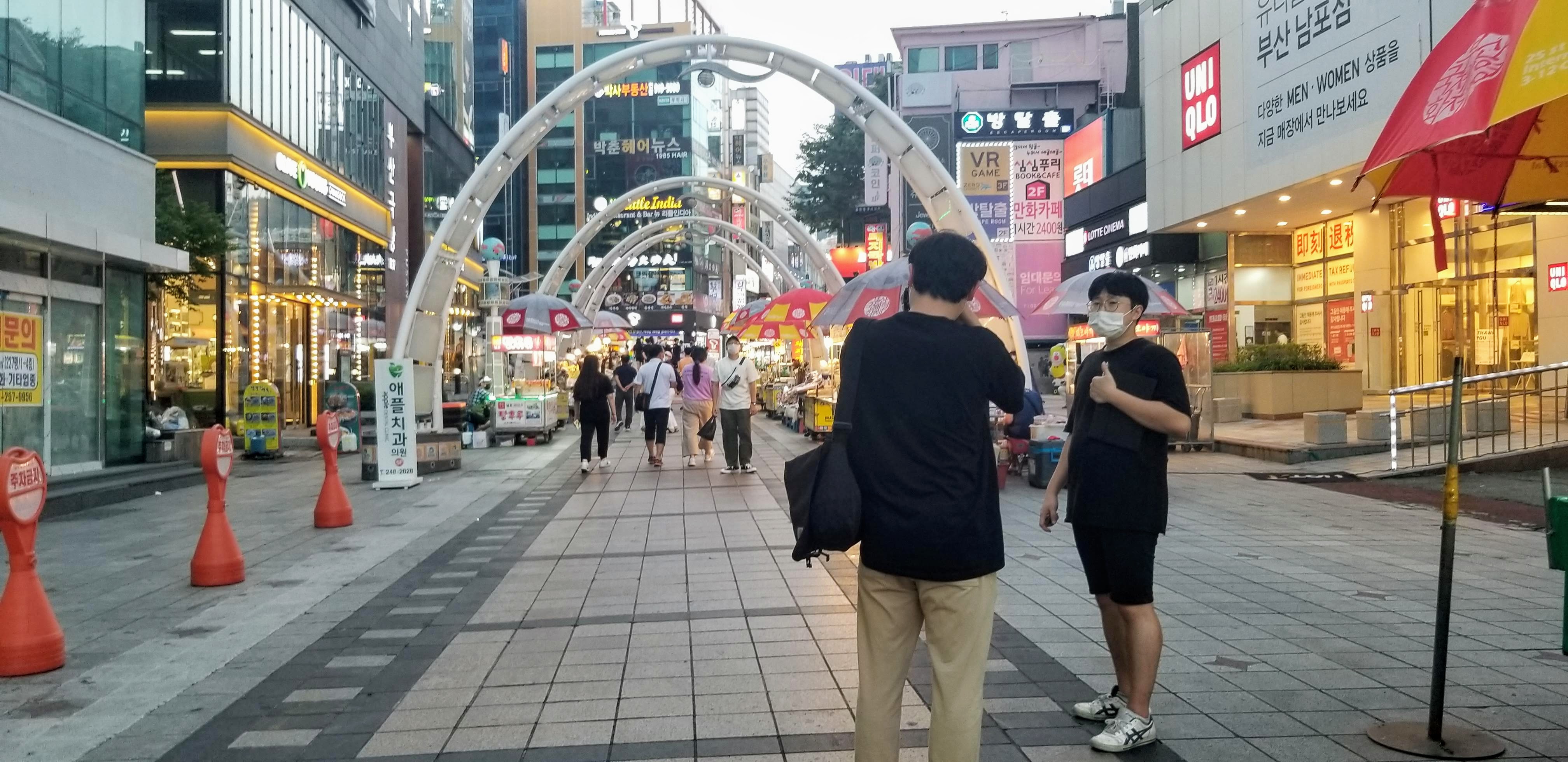
A giant maze-like shopping and restaurant area makes BIFF Square a fun spot, day or night. Local food and product vendors sprinkle throughout the alleys and streets to add to the flavor. But if you go deeper, you’ll find clothing shops and restaurants. Each October, Busan houses the annual Asian Cannes, and BIFF Square is flooded with fans wanting to see their favorite Asian stars, as the red carpets roll out for the Busan International Film Festival. It’s been running since 1996 in the Busan Cinema Center. Off-season, the area is still crowded with shoppers and tourists. Check out Star Street and Festival Street where you’ll see your favorite star’s handprints bronzed like the Hollywood Walk of Fame. The BIFF archway is also a favorite landmark for your Instagram selfies!
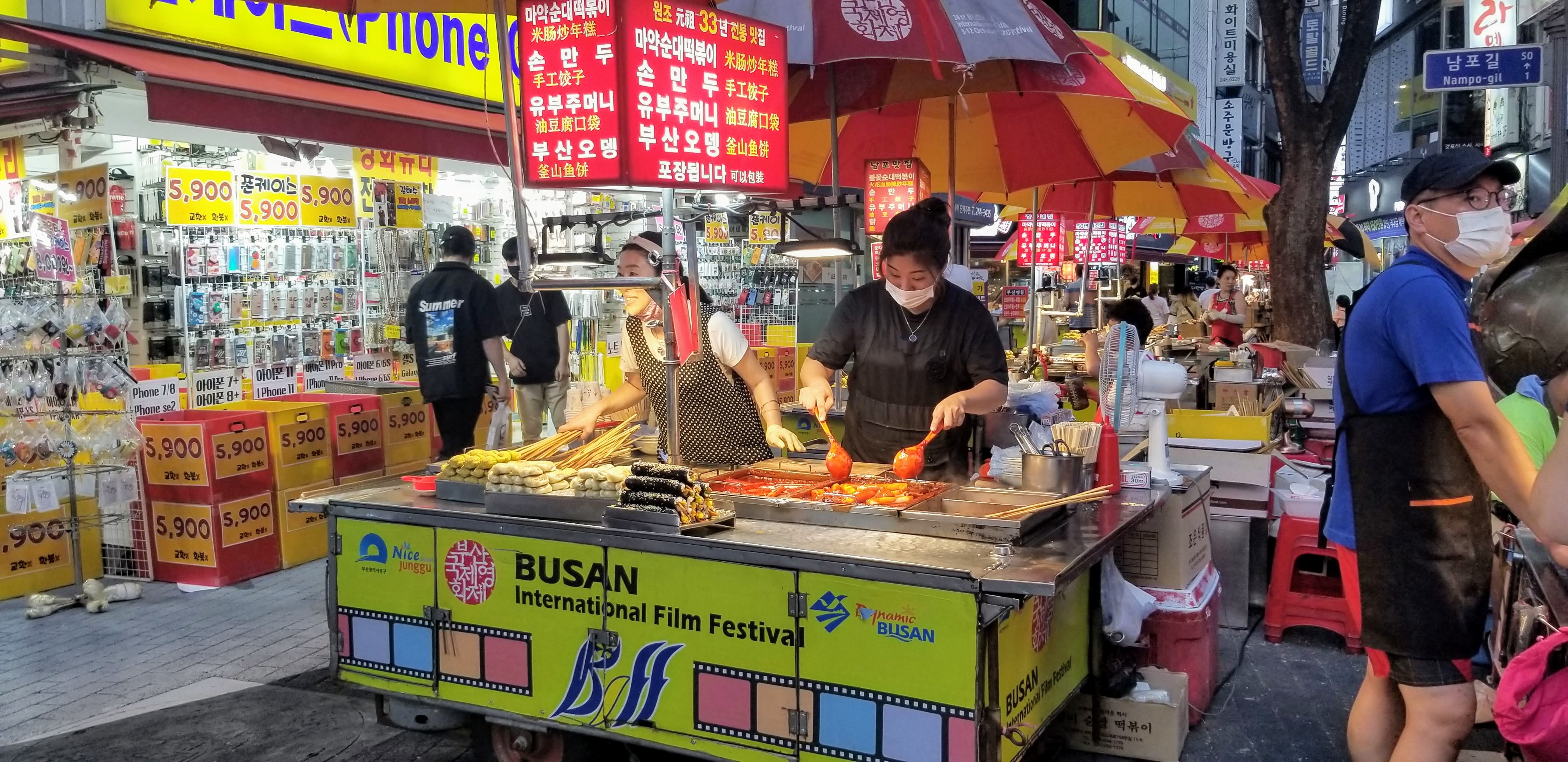
Many visitors, however, come just for the food. Be on the lookout for Ssiat Hotteok, a Busan specialty of fried pancakes stuffed with seeds, nuts, cinnamon, and brown sugar syrup, a street specialty of this area. You can also find kimbap, tteokbokii, and many other Korean street food classics.
For travelers who are still squeamish about trying Korean food, across the street from BIFF Square you’ll see a giant Lotte Mall. In the basement, there’s a food court, if you’re starved for something western or modern Korean. Check out Korea’s most western friendly stores.
Address: 4, Nampo-gil, Jung-gu, Busan / 부산광역시 중구 남포길 4 (남포동3가)
Gwangbokdong Cultural and Fashion Street 광복로문화패션거리
What used to be the best place in Busan to buy cameras and camera gear is now a trendy hub for buying brand name products. Gwangbok-ro (the street’s actual name) is a winding roadway lined with shops and is a center of art and fashion in the popular Gwangbok neighborhood. Located in Gwangbok-dong, Busan, this street captures the heart of fashion, art, culture, and shopping in Busan. As “Busan’s Myeong-dong, it stretches from the entrance of Yongdusan Park to Gukje Market.
Across from the site of the yearly Busan International Film Festival (BIFF), Gwangbok-dong Cultural & Fashion Street is full of shops selling everything from bargain finds to luxury items. Decorated with splendid lighting, abundant flowerbeds, pleasant resting spots, and exquisite sculptures, the street is one of the most popular places among domestic and international tourists to shop and walk around in Busan.
The street provides access to Yongdusan Park, Gukje Market, and BIFF Square. It is also the best place in Busan to see Christmas lights in December.
Address: Gwangbok-dong, Jung-gu, Busan / 부산광역시 중구 광복동
Museums
Busan Museum 부산광역시립박물관
Busan Museum was founded on July 11, 1978 to collect, preserve, display, and research the cultural hertiage of Busan. The museum houses 22,000 artifacts, displaying just 1,300 through regular exhibition rooms. The museum underwent a remodeling project in 2002 along with the opening of Exhibition Hall 2 to expand to ten permanent exhibition rooms, as well as a planned exhibition space, heritage research room, experience hall, lecture hall, and more. The museum aims to provide more extensive research into uncovering historical artifacts, and provide educational programs to visitors.
When you enter, don’t forget to sign up for the cultural experiences on offer, including Korean tea making and dressing up in traditional local clothing.
Address: 63, UNPyeonghwa-ro, Nam-gu, Busan 48852 / 부산 남구 유엔평화로 63
Hours: Tuesday-Thursday, Sunday 09:00-18:00; Friday-Saturday 09:00-21:00 (Admission ends 1 hour before closing.)
Entrance Fee: Free
Busan Museum Website
Busan Museum of Contemporary Art (MoCA Busan)
Busan Museum of Art is conducting many different activities to fulfil the cultural nostalgia and aesthetic needs of the general audience through collection and research of artworks of different genres, a variety of different planned exhibitions and international exchange exhibitions. It is also activating art culture by conducting cultural activities fitting of the status of marine capital of Northeast Asia in the twenty-first century, and making efforts to promote a variety of different socio-cultural activities. Besides numerous exhibitions, the museum features the largest hanging garden in Korea, a children’s art library, café, and more.
Address: 58, APEC-ro, Haeundae-gu, Busan 48060 / 부산 해운대구 APEC로 58
Hours: Tuesday-Thursday, Sunday 10:00-18:00; Friday, Saturday 10:00-21:00; Closed Monday
Entrance Fee: Free; separate fee for Special Exhibition
Busan Museum of Contemporary Art Website
Samjin Eomuk Main Store & Museum
Fish cakes are one of the most popular snacks in Busan. Among many fish cake makers in the city, Samjin Fish Cake is the oldest fish cake producer, a Busan specialty famous across South Korea. Samjin Eomuk headquarters on Yeongdo Island is the most popular, where you can see the eomuk being made through windows in the shop, check out the eomuk museum and even take a class to make eomuk yourself.
The store is sometimes called a bakery, as customers grab the items with tongs and place them on a tray just like in a bread bakery. Most locals take items home to prepare, but you can also ask them to heat the fish cakes up to eat on the spot. Visitors can choose among a variety of fish cakes and there is a separate space in the store where they can eat purchased fish cakes.
Address: 36, Taejong-ro 99beon-gil, Yeongdo-gu / 영도구 태종로99번길 36 (봉래동2가)
Hours: 09:00-18:00, Closed Sundays and holidays
Entrance Fee: Adults, 15,000; Students 12,000; Groups (20 or more) 13,500
Samjin Eomuk Website
3D Trick Eye Museum
For something a little sillier (and for good Instagram photo ops), head to Trick Eye Museum at the northeast corner of Yongdusan Park. Trick Eye Museum brings a new concept of culture and entertainment space, where visitors can explore 3D optical illusion paintings and installations by “becoming one” with the artworks.
Trick Eye is shortened from ‘Trick of the eye’ and refers to a traditional art technique Trompe-l’oeil that turns two-dimensional paintings into three-dimensional images through the use of optical illusions. Paintings on museum walls, floors and ceilings come alive! Visitors are invited to step inside Trick Eye paintings and installations and create their own original stories. You can also download their app to interact with the installations. You can also get a combined ticket that includes the nearby Museum of Movies.
Address: 12 Daecheong-ro 126beon-gil, Jung-gu / 중구 대청로126번길 12
Hours: 10:00-18:00; Closed Monday (Last admission at 17:00)
Entrance Fee: Adults 8,000; Students 6,000 (check more prices here)
Trick Eye Museum Busan Website
National Maritime Museum 국립해양박물관
The National Maritime Museum is a comprehensive venue offering exhibitions on maritime culture, history, ocean life, science, and more. The exterior of the museum was designed to resemble a water droplet, and is the third largest museum in Korea. The museum holds over 14,000 historic items and relics that have witnessed history and are relevant to the future of ocean life. These are on display in eight permanent exhibition halls, a special exhibition hall and children’s exhibition hall. The museum also has a library, aquarium, grand auditorium, outdoor performance stage, and a 4D theatre for a multicultural experience.
Address: 45 Haeyang-ro 301beon-gil, Yeongdo-gu / 영도구 해양로301번길 45 (동삼동)
Hours: Weekdays 09:00-18:00; Saturdays (May-Aug) 09:00-21:00 / (Sept-Apr) 09:00-19:00; Sundays & Public Holidays 09:00-19:00 Closed Monday (Last admission is 30 minute before closing)
Entrance Fee: Free (excluding 4D Theater & Special exhibitions)
National Maritime Museum Website
Busan Aquarium SEA LIFE 부산아쿠아리움
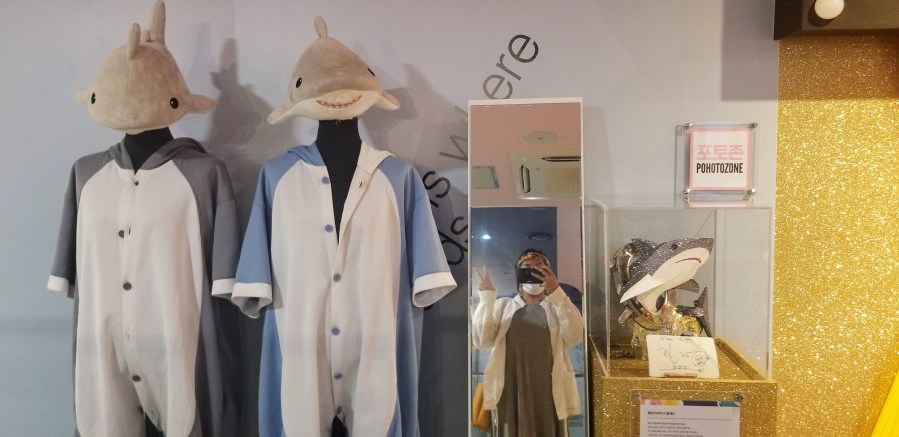
Shark hat 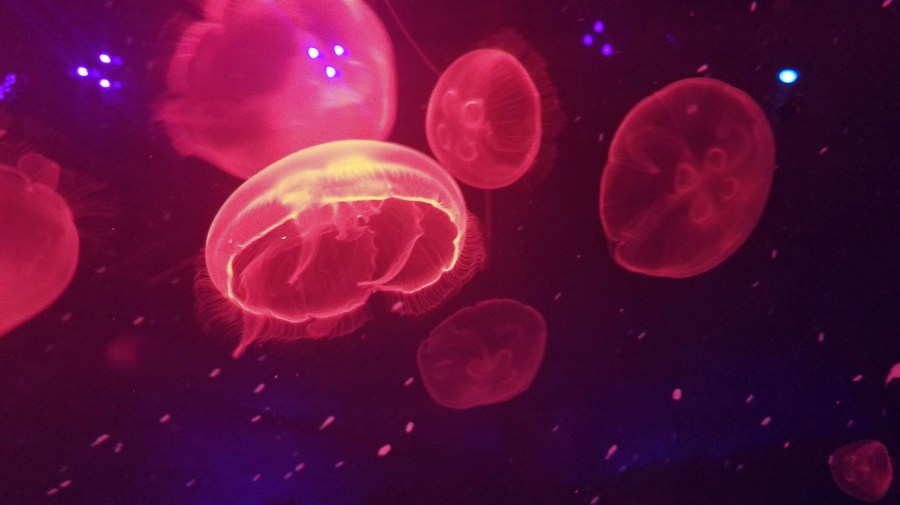
JELLYS 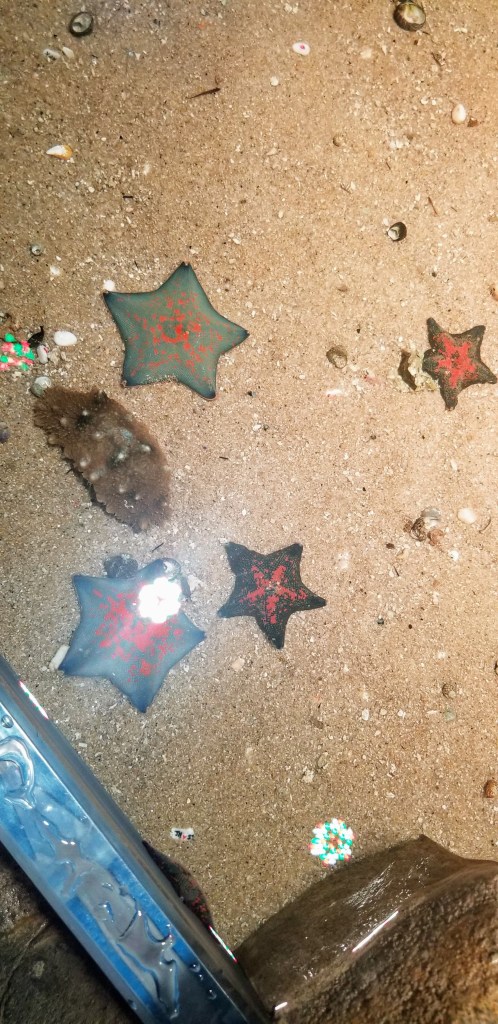
Stars 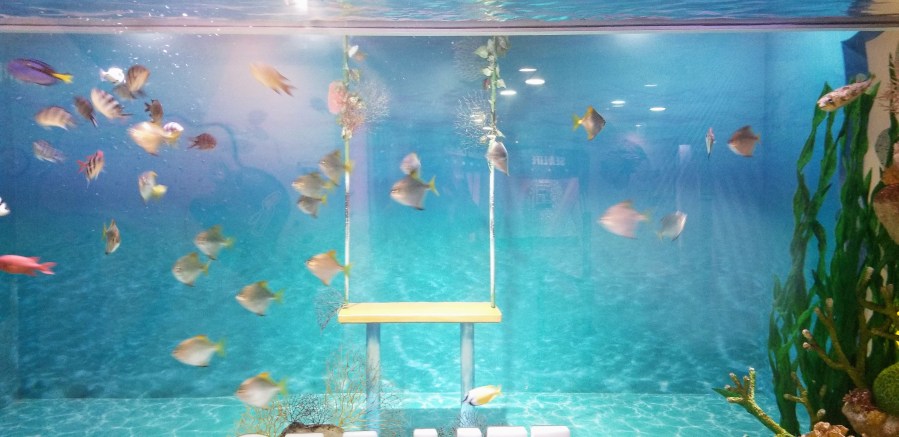
Swing seat to take cute pics 
lol hey~ 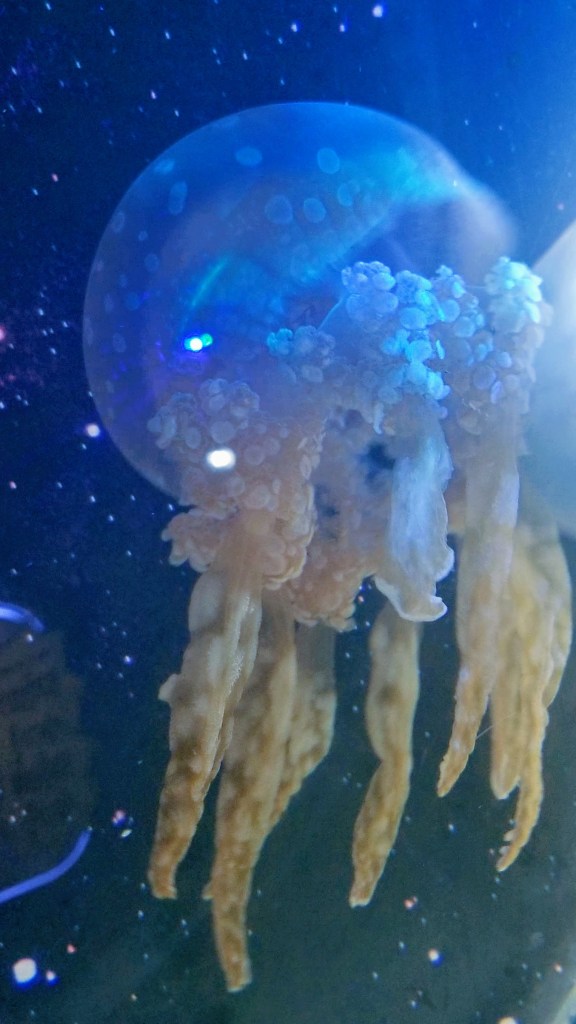
MORE JELLYS
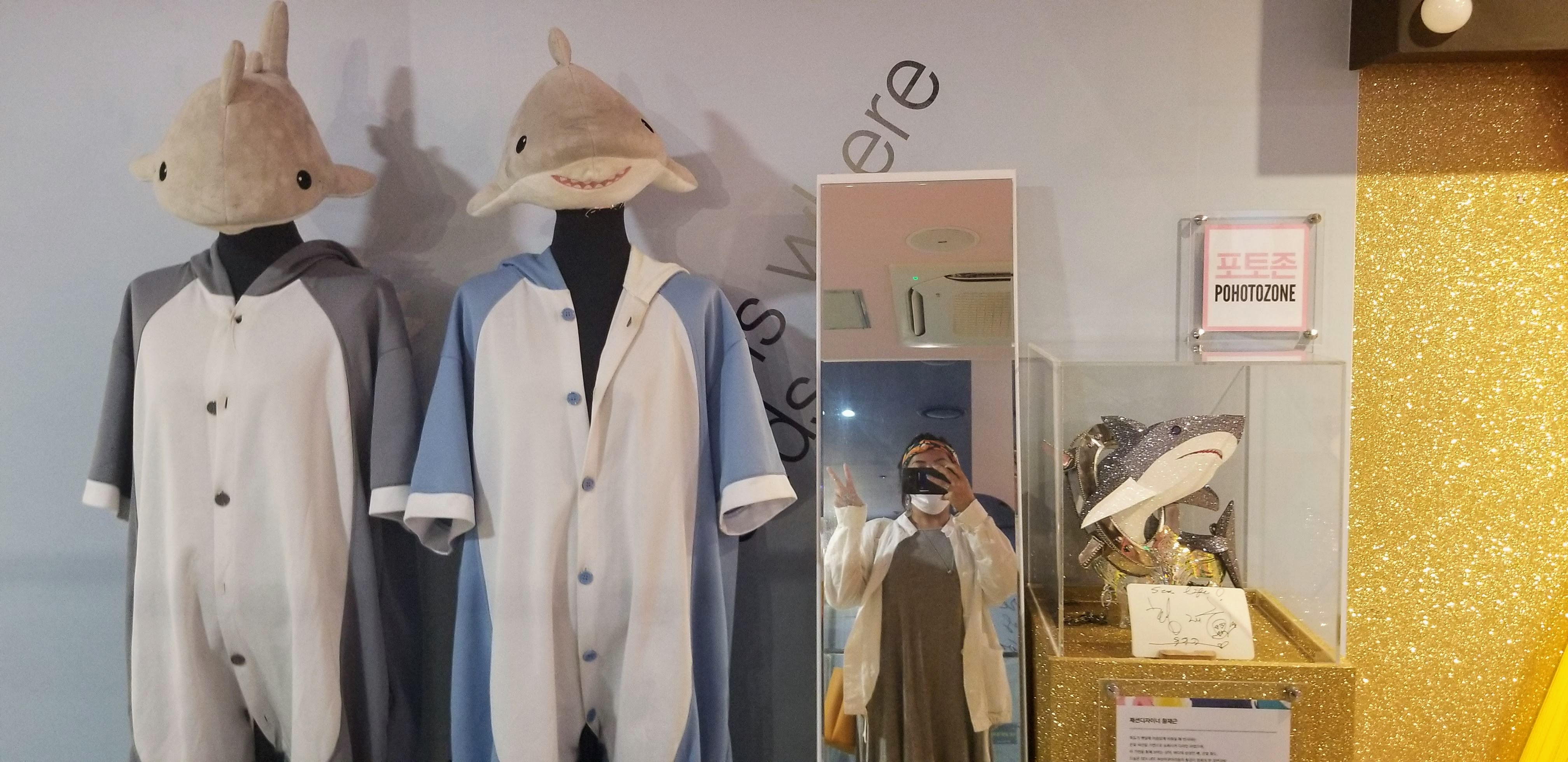
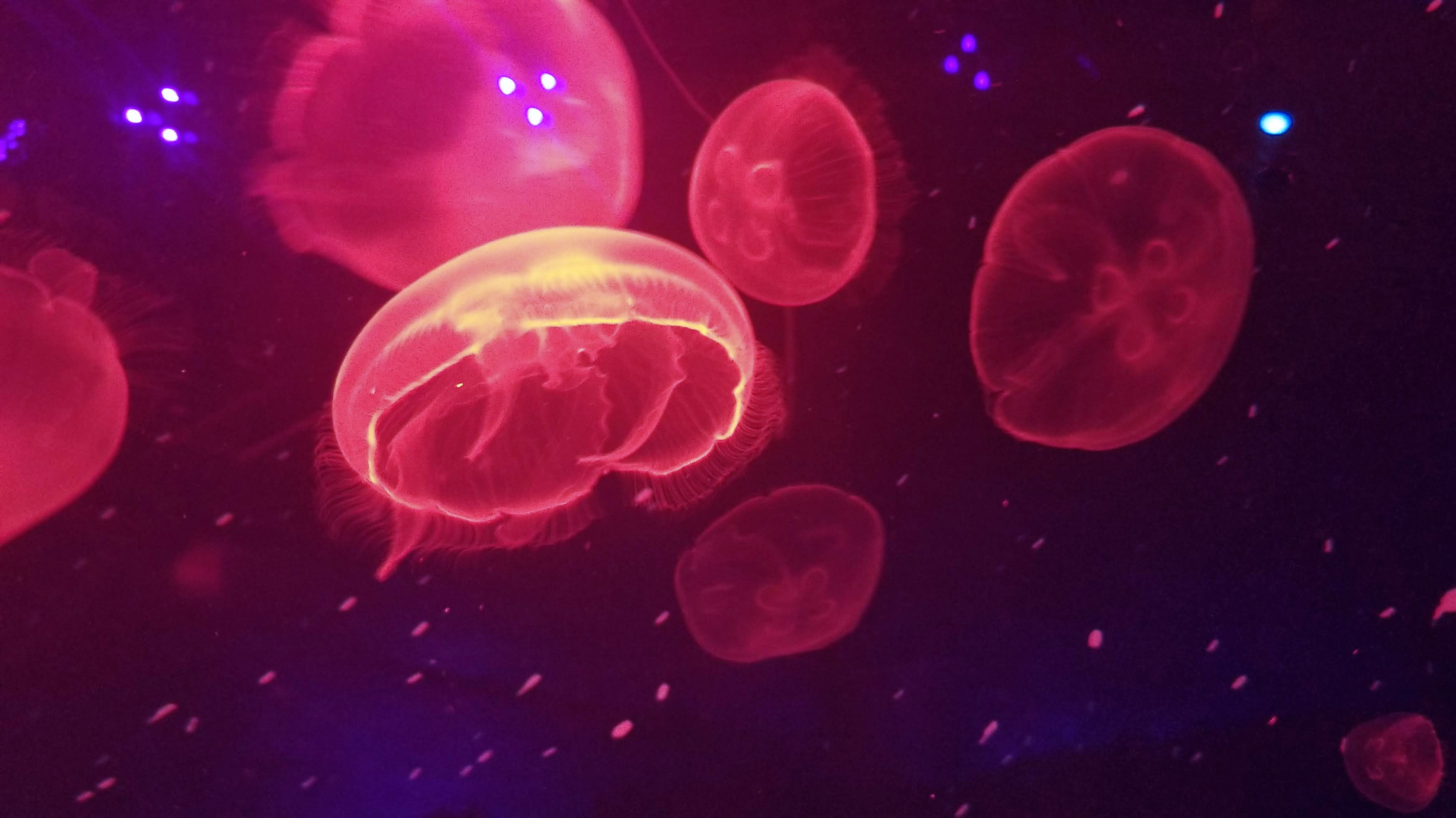
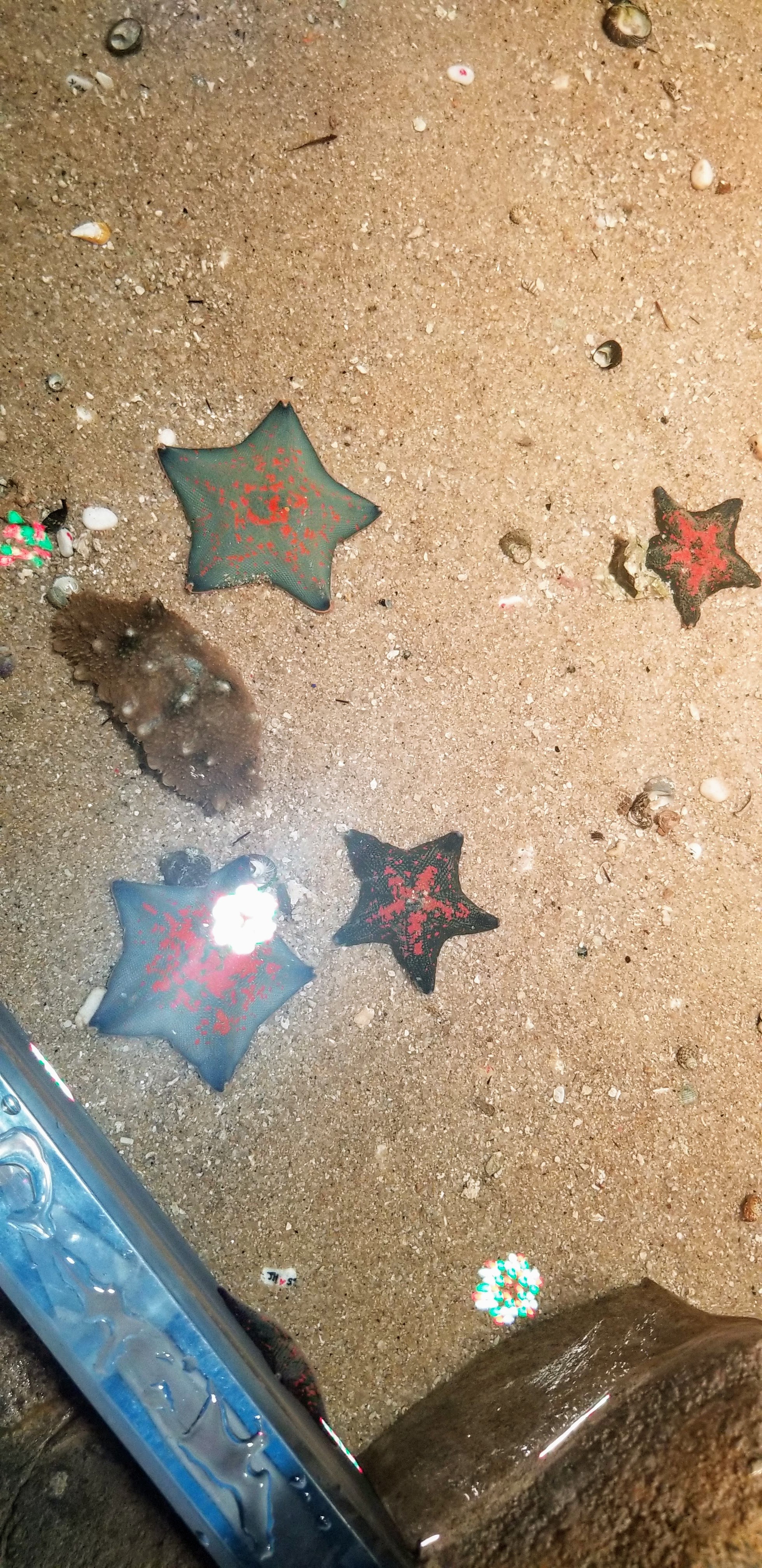
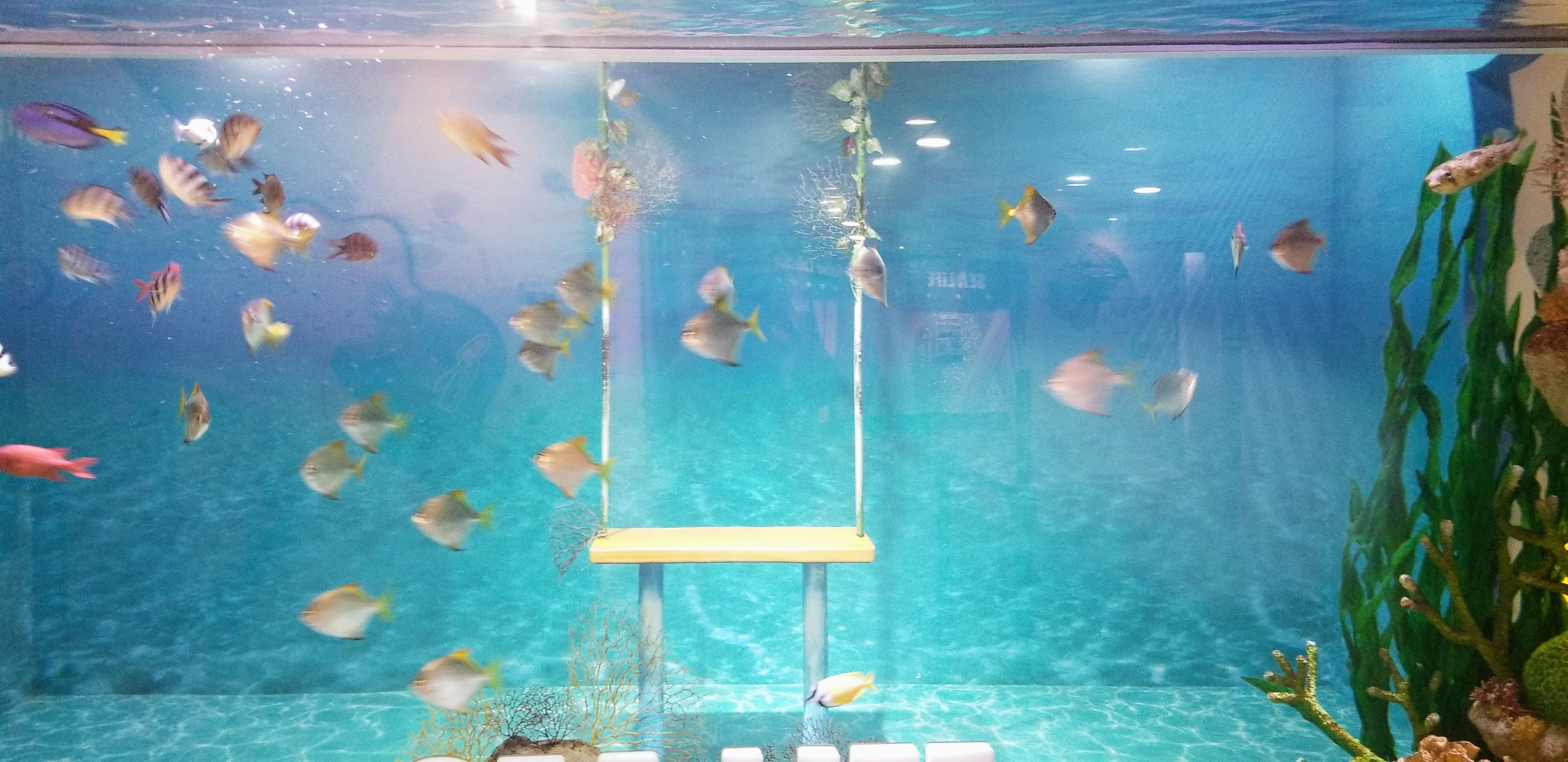

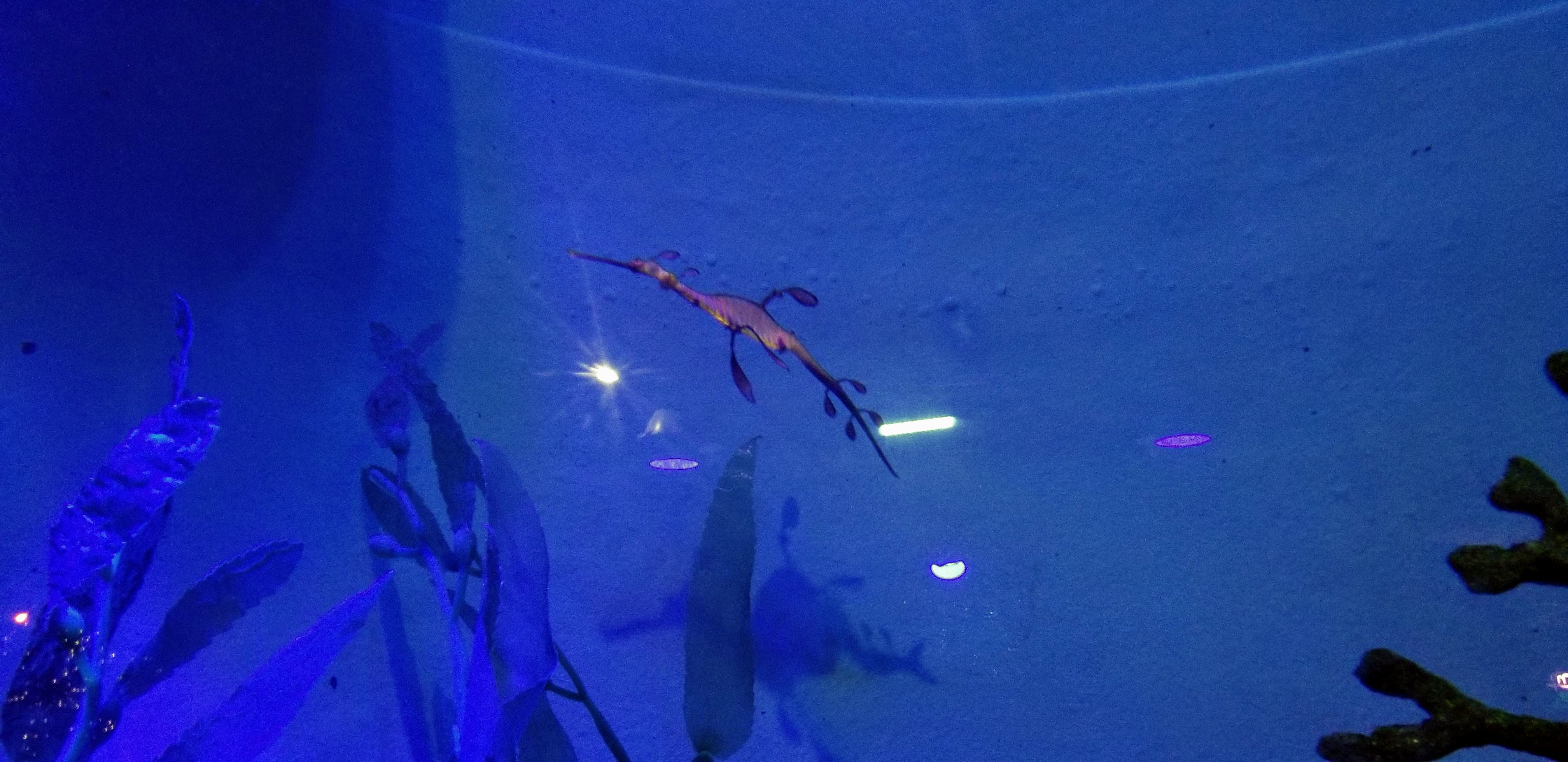
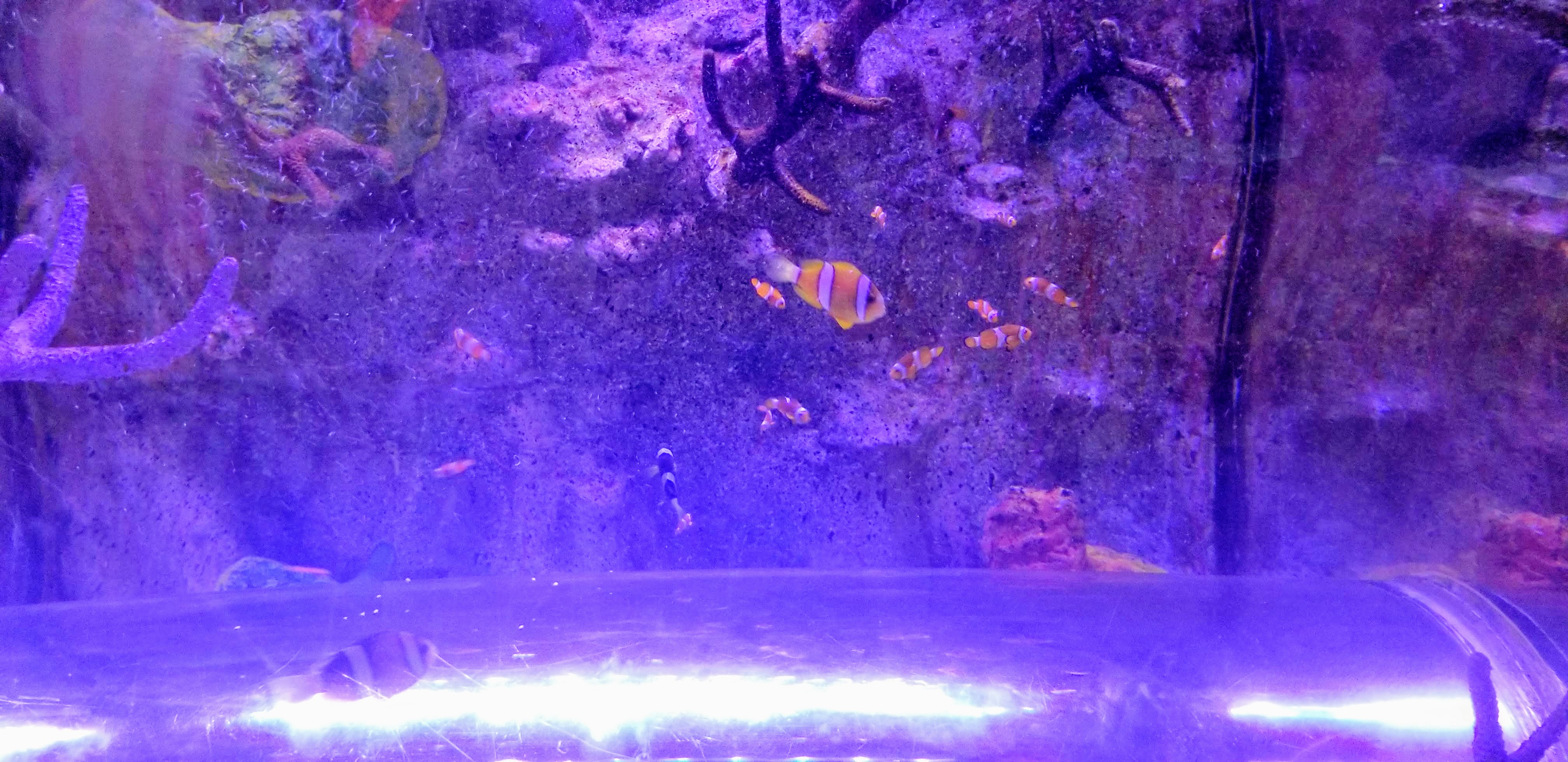
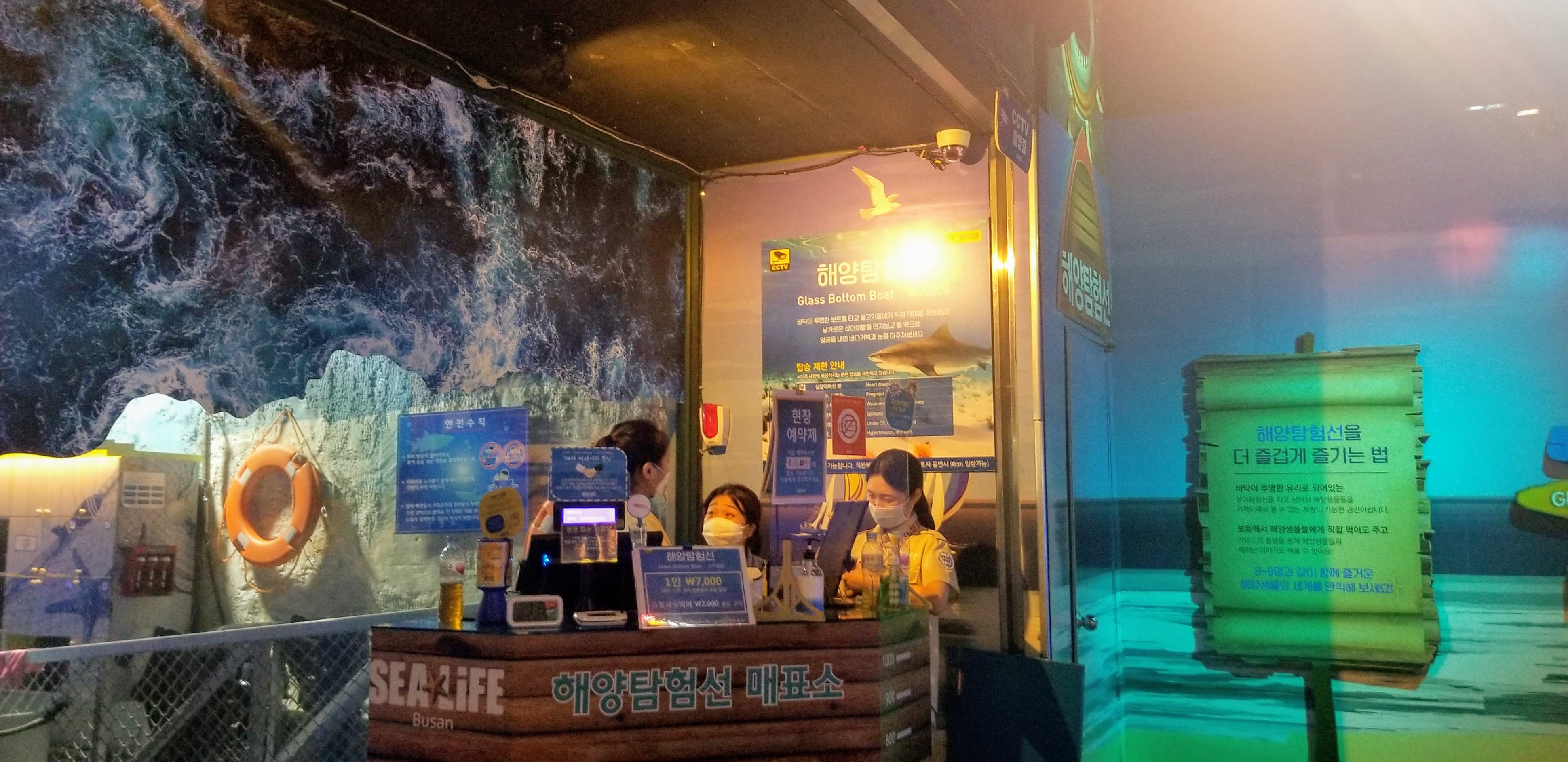
This is Sea Life, the world’s best aquarium brand. Sea Life Busan aquarium introduces to you the incredible world deep in the ocean. From big sharks to sea turtles, small starfish, sea horses and elegant stingrays, you can meet all those sea creatures at the aquarium.
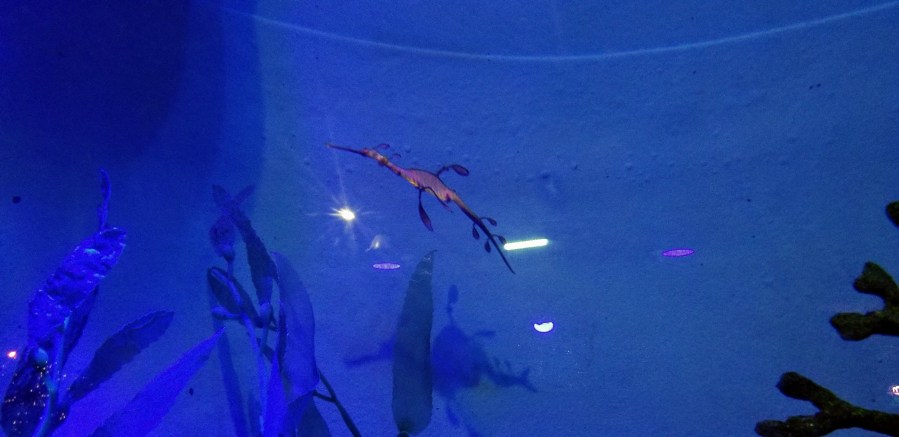
Horses in the sea 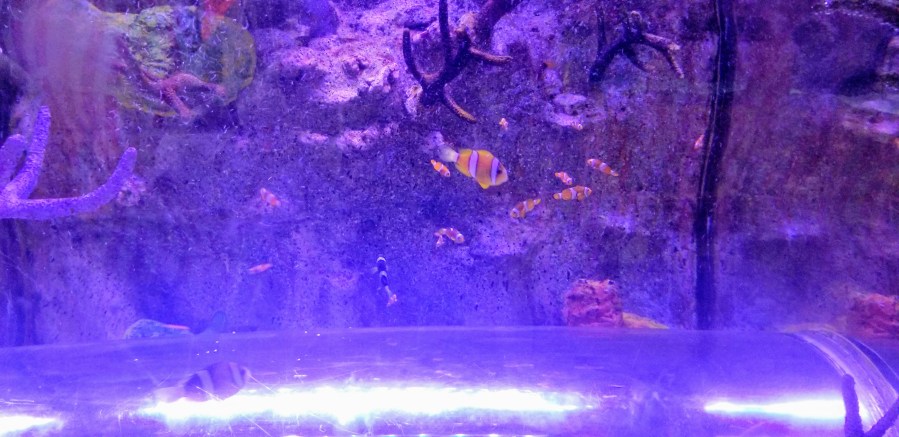
Quit clownin’ 
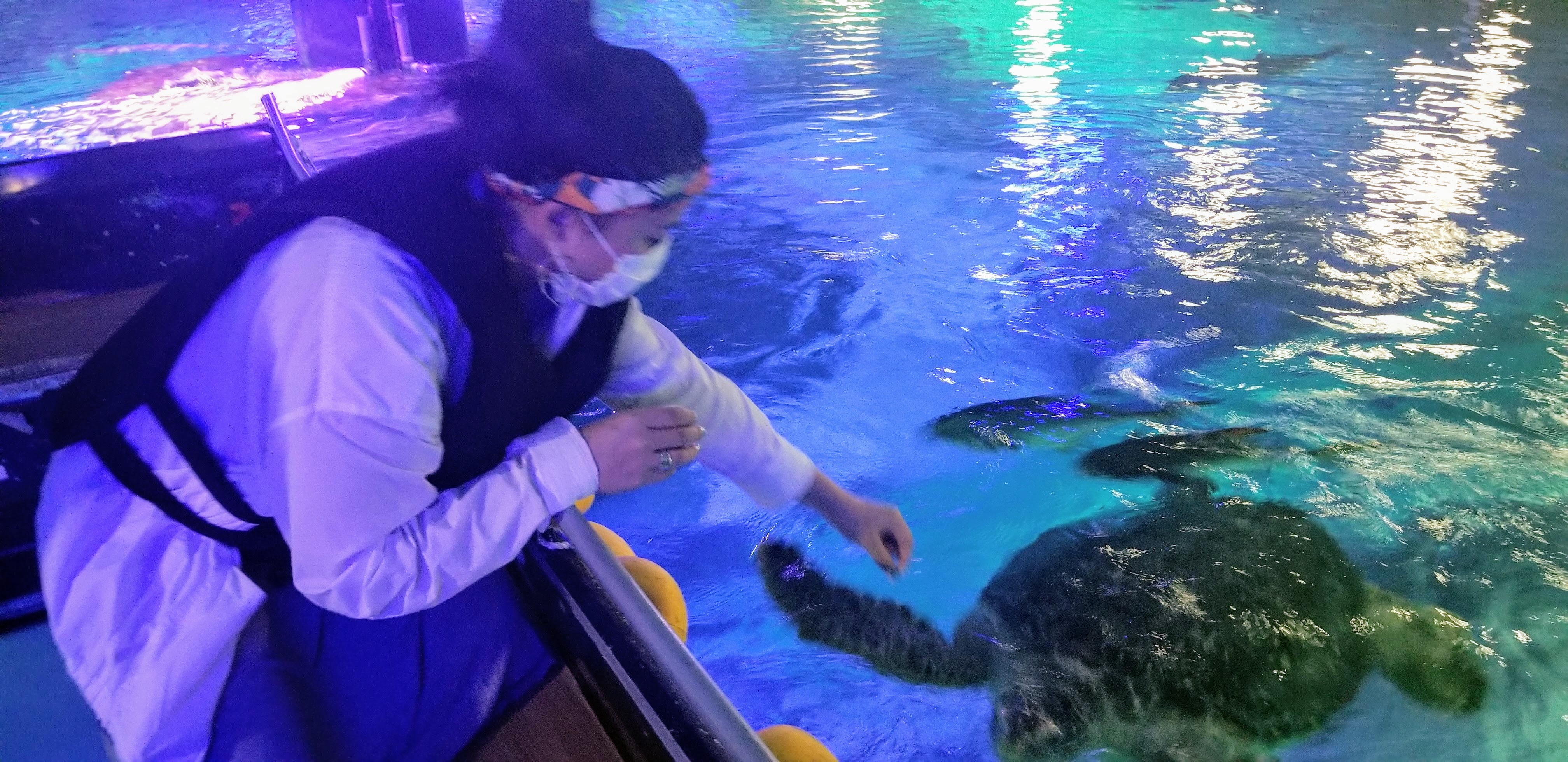
You can feed the fishes too! 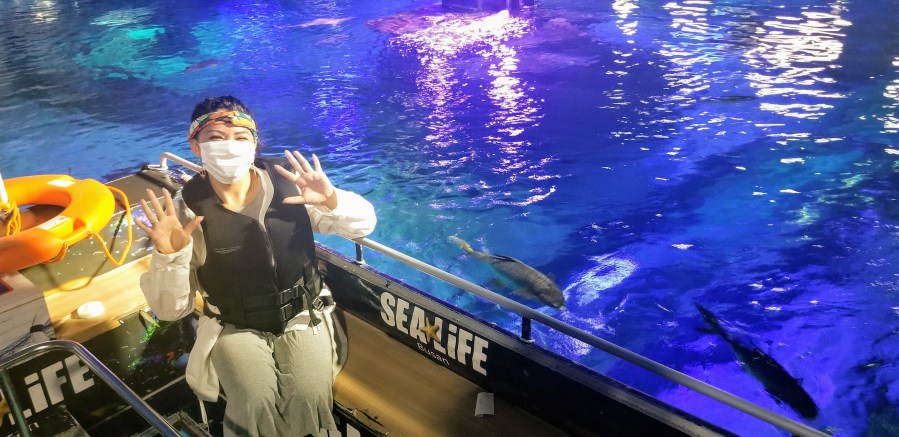
heyo~ 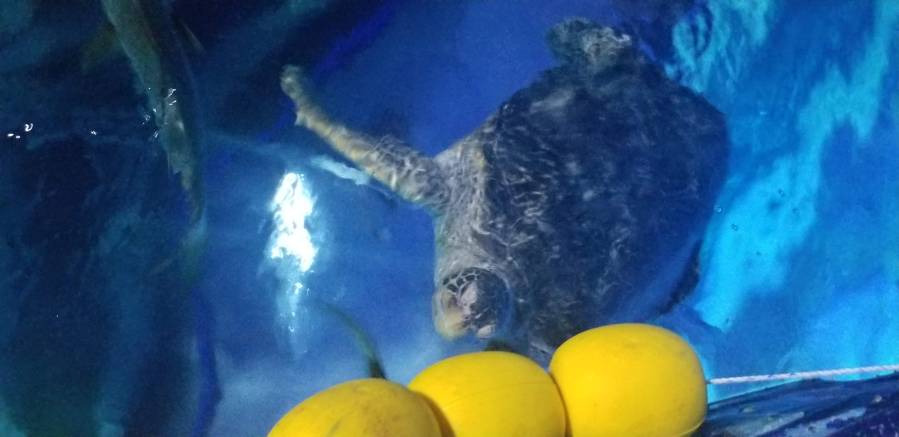
omg 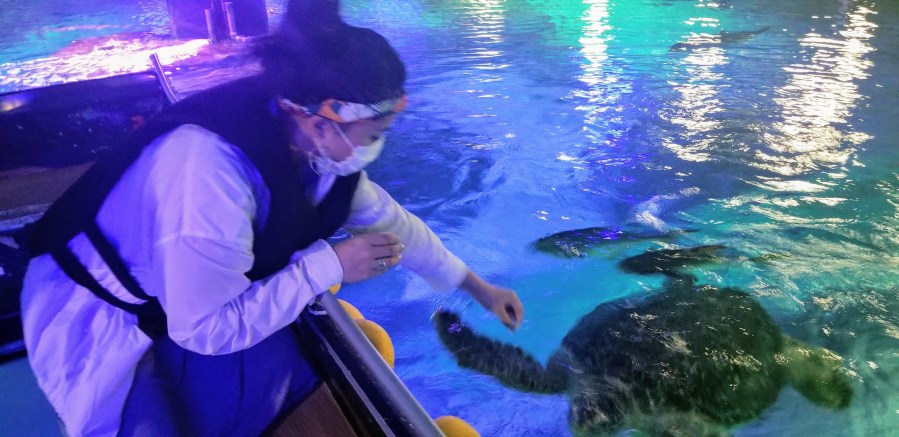
Craigslist: missed connection


Address: 266, Haeundaehaebyeon-ro, Haeundae-gu / 해운대구 해운대해변로 266
Hours: Sunday-Wednesday 10:00-20:00; Thursday-Saturday 9:00-21:00 (Last entry 1 hour before close.)
Entrance Fee: Adults 29,000; Children 23,000 [30% discount entry online coupon]
Sea Life Website
Hidden Gems
Busan Cinema Center 영화의전당
Yet another towering construction in the Centum City area, Busan Cinema Center is the headquarters of BIFF (the Busan International Film Festival, see also BIFF Square). Busan Cinema Center is a film culture complex showing performances and films across all genres. The facility features large and small theaters, cinematech, sky theater, indie plus, as well as the 4,000-seat outdoor theater which serves as the venue for the opening and closing ceremonies of Busan International Film Festival.
The structure’s most unique feature is its enormous sloping roof, which is listed as the largest cantilever roof in the world. Busan Cinema Center is especially lovely in the evening or at night when parts of it are lit up, and is a good spot for urban photography in Busan.
Address: 120, Suyeonggangbyeon-daero, Haeundae-gu / 해운대구 수영강변대로 120 (우동)
Busan Cinema Center Website
Craft Beer at Galmaegi Brewing 갈매기브루잉
Like just about everywhere in the world, craft beer has caught on big time in South Korea and Busan. In Busan, the leader of the bunch is Galmegi Brewing, the city’s first American style craft beer operation. There are many locations throughout the city, but the original one is in Gwangan just off Gwangalli Beach.
Near the Nampo location, which boasts an open front looking down on Gwangbokdong Cultural & Fashion Street, you can start with a sample rack featuring some of the latest offerings, followed with pints of Yuja (yuzu)-flavored gose, espresso vanilla stout, and 4-cheese pizza. Drool…
Galmaegi Brewing Locations (hours vary by location)
Galmaegi Brewing Company Website
Jukseong Dream Church 죽성성당
Jukseong Catholic Church 죽성성당 is a building located in the village of Jukseong-ri 죽성리 in Busan’s Gijang County. While it may look like a beautiful place of worship by the sea, Jukseong Dream church is a fake church built for the Korean series Dream. Nevertheless, the church and surroundings are quite beautiful, and worth the trip for photographers or Korean drama fans.
Address: 134-7 Jukseong-ri, Gijang-eup, Gijang, Busan / 부산시 기장군 기장읍 죽성리 134-7
UN Memorial Cemetery 유엔기념공원
In Nam-gu, the UN Memorial Cemetery inters soldiers from 16 countries who died during the Korean War. There are numerous halls paying tribute to the brave, and many annual events are held here. The cemetery is very tranquil and beautifully maintained.
Address: 93, UN Pyeonghwa-ro, Nam-gu, Busan 48852 / 부산 남구 유엔평화로 93
UN Memorial Cemetery Website
Traditional Korean Tea in Busan
Few people in the West know it, but Korea is a tea-producing nation, especially green tea (nokcha), yellow tea (hwangcha, similar to oolong), and black tea (hongcha). Korea also specializes in a variety of tea-based beverages infused with other ingredients, including herbs, grains, roots, flowers, fruits, and even mushrooms or seaweed.
Chinese pu-er tea is also quite popular in South Korea, and this is what you may encounter if you visit a traditional tea shop in Busan.
How to find traditional tea in Busan: Try Da Hae Jeong in Nampo-dong for great Pu-er tea and delicious accompanying treats, or Nae Go Hyeong Jun Tong Chat Jib in Seomyeon for medicinal and flavored teas. Find more details for both in this article on best places to have tea in Busan.
Living in Luxe, Shopping, & More
Gwangbokdong: Lotte Department Store 롯데백화점 광복점
Don’t be turned off by the fact that it’s a department store; the 11th to 13th floors boast connected rooftop areas that offer some of the best city views you can get of Busan, all for free. Besides the awesome views from the roof, this iconic department store on the Busan Port gets another mention for its incredible indoor musical water fountain, the largest in the world. The best place to see the water fountain is from B1, and it plays every day at 11:00, 13:00, 15:00, 17:00, and 19:00.
Address: 2, Jungang-daero, Jung-gu, Busan / 부산광역시 중구 중앙대로 2
Hours: 10:30-20:00
Lotte Department Store Website
Haeundae Spa 해운대온천센터: Spend a night at a Jjimjilbang
Wondering where to bathe, sleep in, and spend part of your weekend? Why not experience a jjimjilbang on your Busan trip. Unwind in the herbal and mineral pools, get your sweat on in the sauna and then scrub yourself down for bedtime. It’s an 8-minute walk from Haeundae Beach. Once known as Halmaetang (aka Grandma Bathtub), Haeundae Spa’s natural mineral waters were known to heal many ailments and illnesses. You get a night smock and towel. You provide your own toiletries. Sleeping rooms are communal as you can see below and there is a snack area for fast food and treats.
Address: 1378-18, Jung-dong, Haeundae-gu, Busan / 부산시 해운대구 중동 1378-18
Hours: 24 hours
Haeundae Spa Website
Shinsegae Centum City 신세계 센텀시티
Shinsegae Centum City Department Store is registered in the Guinness World Records as the largest shopping complex in the world, offering a full range of entertainment options, from an ice rink to movie theater, golf range, and a spa. Shops include 21 designer brands and 622 famous brands.
Opened as the first department store in Korea, Shinsegae reflects decades of retail experience in this flagship location. Globally renowned experts such as Italian architect Claudio Silvestrin and an American architecture and design firm Callison completed Centum City under the concept of a “golden sea”. The department store has emerged as a defining landmark in Busan.
Address: 35, Centum nam-daero, Haeundae-gu / 해운대구 센텀남대로 35 (우동)
Hours: Monday-Thursday 11:00-20:00; Friday-Sunday & Public Holidays 11:00-20:30
Food Court 11:00-21:30; Spa Land 06:00-24:00 (Hours are subject to change and vary by store)
Shinsegae Department Centum City Website
BEXCO 벡스코
The Busan Exhibition and Convention Center is another gigantic building, or network of interconnected buildings. The main exhibition hall is as large as three football fields combined. The facility hosts a wide range of international events and concerts. If you stroll by or view it from MoCA Busan, you can get a feel for just how large it is.
Address: 55, APEC-ro, Haeundae-gu, Busan 48060 / 부산 해운대구 APEC로 55
BEXCO Website
Heosimcheong Spa 허심청
Heosimcheong Spa (also spelled Hurshimchung Spa) was billed as the largest hot spring spa in the world. Located about 10 km north of downtown Busan, South Korea in its Dongnae district, it has facilities to accommodate 3000 guests on five floors.[1] Known to have been bathed in by kings of Silla (57 BCE – 935 CE), the spring has been developed into a 4,300 m2 urban complex with 4 million visits a year.[2]
Many still claim this one is their favorite, though. its enormous and very impressive domed main room, which features a mind-boggling assortment of scented pools, massage tubs, saunas, steam rooms, and more.
The spa is at the base of Mt. Geumjeong, so it makes sense to visit it after hiking to Seokbulsa or and/or riding the Geumgang Park Ropeway to Geumjeong Fortress. If you don’t want to get nude, you can just soak your feet in hot spring water at nearby Dongnae Outdoor Footbath.
Address: 32, Oncheonjang-ro 107beon-gil, Dongnae-gu / 동래구 온천장로107번길 32
Hours: Daily 5:30-24:00
Heosimcheong Spa Website
Spa Land Centum City 스파랜드 센텀시티
Spa Land, equipped with all the benefits of a traditional Korean spa, is located in Shinsegae Centum City in Haeundae, Busan. Spa Land consists of 22 spas fed by two different kinds of all-natural spring water pumped up from 1,000 meters underground, 13 distinctively themed jjimjilbang and saunas, and an open-air foot spa.
Featuring numerous themed rooms, outdoor rock pools, and so much more, the spa is a testament to South Korean’s love for soaking in hot water. Kids under 13 are now allowed, which is unusual for a large Korean spa, so you may enjoy a quieter soak than at Heosimcheong.
Address: 35, Centumnam-daero, Haeundae-gu / 해운대구 센텀남대로 35 (우동)
Hours: Daily 06:00-23:00
Entrance Fee: Adults Weekdays 17,000, Weekends & Public holidays 20,000
SpaLand Shinsegae Website
Love what you see? Any questions? Comments? Anything to add? Comment below! Email me at MMatthewMZaqD@gmail.com & follow me on Instagram & Twitter at Matthewzaq!
Extra Sources: Trazy TheCultureTrip RachelEnRoute Lady Iron Chef BlakeErik MyKoreaTrip Sprudge IAmAileen WeAreTravelGirls GinaBearsBlog Grrrltraveler Spiritual Travels
 To & From the Void